Tom Stone delivers a compelling re-evaluation of Dave Parker's Hall of Fame case, moving beyond the usual narrative of "what if" to construct a statistical and cultural argument for why the "Cobra" was long overdue. While the announcement of Parker's election by the Classic Baseball Era Committee is the headline, Stone's piece is notable for its forensic dismantling of the voting disparity between Parker and Jim Rice, suggesting that off-field baggage and career mobility, rather than on-field production, dictated the delay.
The Case for the Cobra
Stone opens by acknowledging the surprise of Parker's election, noting that he "didn't really come close the three other times his name was included in such committee ballots." Yet, rather than dwelling on the snub, Stone pivots to a personal connection that grounds the analysis: "I'm a Pittsburgh Pirates fan, and Parker had many of his best years for the Pirates—specifically when I was first a baseball fan in the late 1970s and early 1980s." This personal stake isn't just nostalgia; it frames the subsequent data as a defense of a player whose legacy was unfairly tarnished. Stone argues that Parker's inclusion is a correction of history, especially poignant given the player's current health struggles. "My understanding is that he is not in good health, as he is 73 and has had Parkinson's Disease for over 10 years—but I hope he can make it to inauguration weekend next summer."
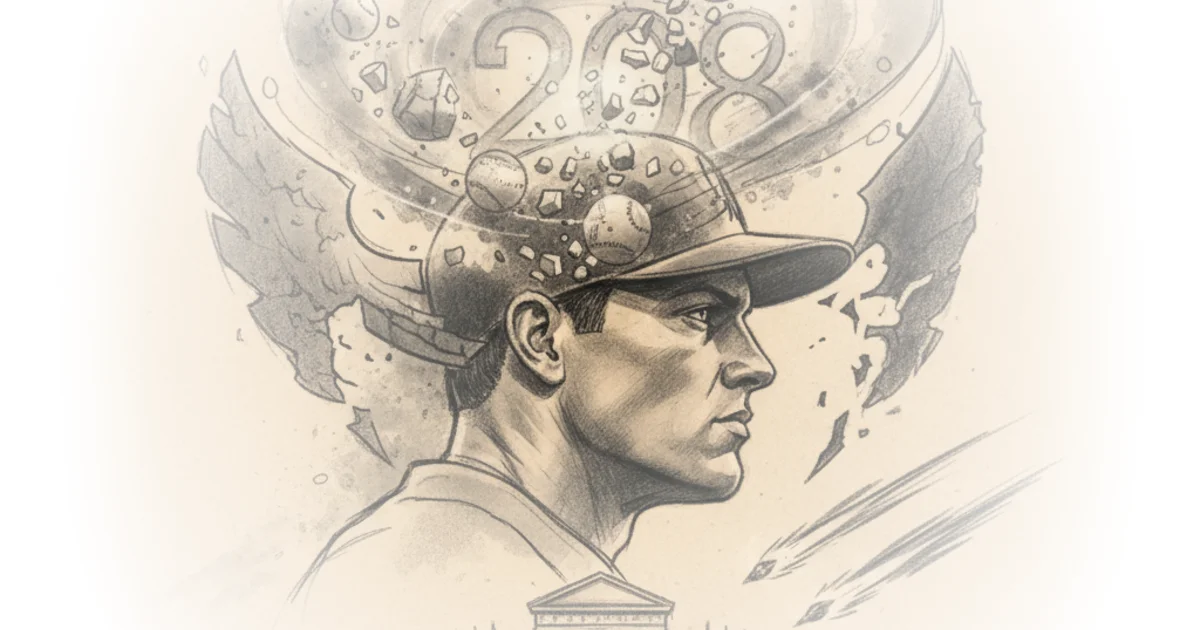
The core of Stone's argument rests on a direct comparison with Jim Rice, a contemporary who received significantly more support from the Baseball Writers' Association of America (BBWAA). Stone writes, "It never made much sense to me that Rice got so much more support for the Hall of Fame." He meticulously lists the shared accolades—both won MVP awards in 1978, both were seven-time All-Stars—before highlighting Parker's defensive superiority and speed. Stone suggests that the disparity stems from Parker's lack of loyalty to a single franchise and, more critically, his involvement in the drug scandals of the 1980s. "The elephant in the proverbial room here is Parker's cocaine use and involvement in the Pittsburgh drug scandal of the 1980s—surely that was a factor for some voters." This is a sharp, necessary observation. While critics might argue that Hall of Fame voting should strictly reflect on-field merit, Stone effectively demonstrates that the "character clause" was applied unevenly, penalizing Parker while Rice, who was "not particular well-loved by the press," sailed through.
"If you hear any noise, it's just me and the boys boppin."
The "2700/300/.290" Club
Stone's most distinctive contribution is the invention of a new statistical benchmark: the "2700/300/.290 Club." By isolating players with at least 2,700 hits, 300 home runs, and a .290 batting average, Stone places Parker in elite company. He lists legends like Henry Aaron, Stan Musial, and Willie Mays alongside Parker, noting that "Dave Parker 2712, 339, .290" sits right next to "Billy Williams 2711, 426, .290." This framing is powerful because it bypasses the noisy debate over Wins Above Replacement (WAR) and focuses on the raw, traditional accumulation of hits and power that defined Parker's era.
Stone takes this a step further by adding a speed component: "If you add 150+ SB into the club definition, then the membership shrinks to only eight: Aaron, Mays, Brett, A-Rod, Robinson, Bonds, Chipper… and Parker." This specific filter highlights Parker's unique five-tool potential, a trait often overlooked in modern analytics that prioritize defensive range over raw arm strength. Stone notes Parker's "cannon was also famously on display in the 1979 All-Star game," where he "gunned down Jim Rice at third base and Brian Downing at first base." By focusing on these tangible, visual feats of athleticism, Stone reminds readers that Parker was not just a hitter, but a complete player whose defensive prowess was once considered unmatched.
Outliers and Oddities
The piece shines when it explores the "oddities" of Parker's career, revealing a player who was a pioneer in ways that transcended the diamond. Stone points out that Parker was "the second professional athlete to earn an average of $1 million per year," a contract that reshaped the economics of the sport. He also highlights Parker's longevity and late-career resilience, noting he was "still going strong in his age-39 season... ending the year with 21 HR, 92 RBI, and a 118 OPS+."
Stone weaves in quotes that capture Parker's larger-than-life personality and the respect he commanded from peers. Phil Garner is quoted as saying, "Until I joined [the Pirates] I'd never realized how big Dave Parker was. I'd put him up against the French Army." Another quote from Garner reveals Parker's psychological impact: "If you feel down, sorry for yourself, he gets the spark going in you... It's group therapy." These anecdotes humanize the statistics, painting a picture of a leader who brought intensity and joy to the clubhouse. Stone also touches on Parker's background, noting he was born in Mississippi but grew up in Ohio, and that "Football was my first love," which explains his physical style of play. "I loved it because it's a contact game. I liked to run over people," Parker confessed. This context helps explain the "all-out approach" Parker brought to baseball, a philosophy he described as "whatever it takes to win."
The Verdict on Voting Bias
Stone's analysis of the voting patterns offers a sobering look at how off-field narratives can distort historical evaluation. He notes that while Parker's career bWAR of 40.1 "isn't very impressive by Hall of Fame standards," other metrics like the HOF Monitor suggest he is a "likely HOFer." The author suggests that the "end-of-career" trajectory, where Parker played for six different clubs, may have hurt his perception among voters who favor "players who stayed with one team their entire careers." This is a crucial insight into the psychology of voters, who often conflate loyalty with greatness. Stone's argument is that Parker's statistical profile, combined with his championship pedigree in 1979, should have been enough to overcome the stigma of his later years and personal struggles.
Critics might note that the "2700/300/.290" club, while illustrative, is an arbitrary construct that doesn't necessarily correlate with Hall of Fame worthiness, as it ignores the era of play and league difficulty. However, Stone uses it effectively as a rhetorical device to force a comparison with the absolute titans of the game, making Parker's exclusion seem even more absurd.
"There isn't a player alive who plays the game the way Dave Parker does. Every game is the seventh game of the World Series to him."
Bottom Line
Tom Stone's commentary is a masterclass in using data to correct a historical injustice, successfully arguing that Dave Parker's Hall of Fame induction was not just a matter of timing, but a necessary correction of a biased voting process. The piece's greatest strength is its refusal to let the drug scandal define Parker's entire legacy, instead focusing on his elite production and the unique "five-tool" profile that places him alongside the game's immortals. While the arbitrary nature of the "2700/300/.290" club is a minor weakness, the broader argument that Parker was unfairly penalized for his mobility and off-field struggles remains compelling and well-supported.