This piece by Some Guy bypasses the usual political commentary to deliver a raw, unflinching portrait of childhood trauma that feels less like a story and more like a forensic examination of survival. It challenges the reader to confront the quiet, domestic violence that often goes unreported because it lacks a single, identifiable villain or a clear policy debate, focusing instead on the psychological erosion of a thirteen-year-old boy forced into the role of a parent. The author's choice to anchor the narrative in the visceral details of a broken home—where a stepfather's cruelty is as casual as a bathroom habit and a mother's neglect is framed as a debt owed—creates a haunting argument about the resilience required to find love in the darkest of places.
The Architecture of Silence
Some Guy constructs the protagonist's internal world not through grand declarations, but through the accumulation of small, terrifying realities. The author writes, "He carries a sense of darkness that he knows he's supposed to keep secret. It's a feeling like the breath of the Nothing from the Neverending Story on the back of his neck." This metaphor effectively captures the paralyzing weight of a child who senses a fundamental wrongness in his existence but lacks the vocabulary or agency to name it. The narrative suggests that this silence is not a lack of thought, but a survival mechanism; the boy punches cement walls to feel something other than the numbness of his circumstances, a futile attempt to "make his bones stronger than rock."
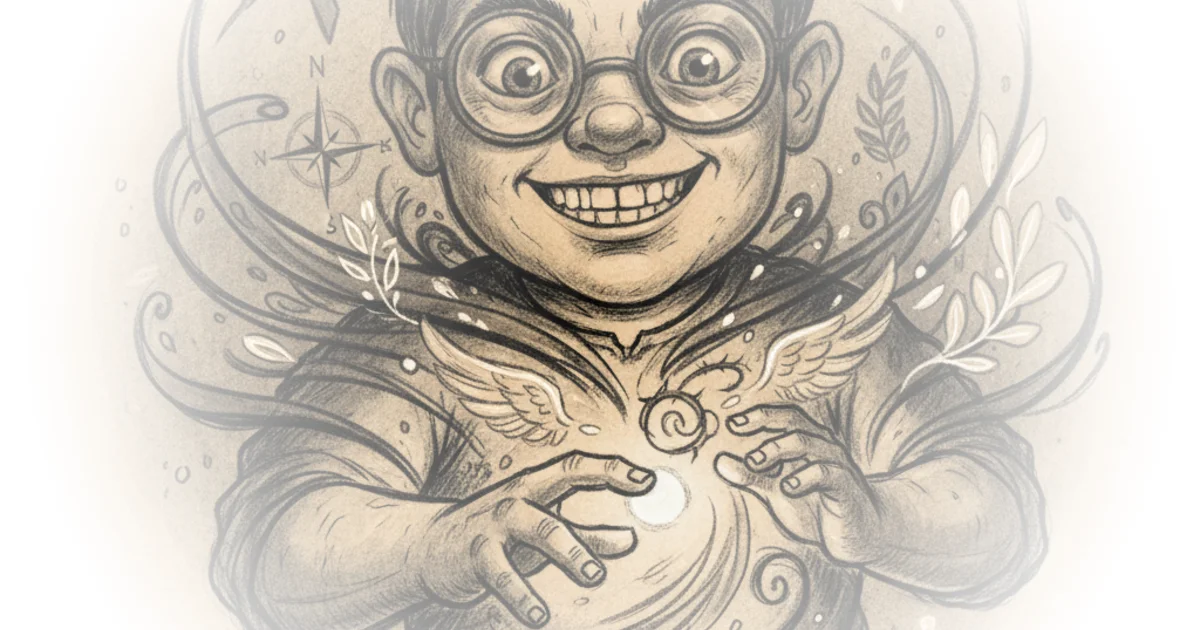
The author's framing of the boy's intellect as both a burden and a shield is particularly striking. Some Guy notes that the boy possesses an "embarrassing and precocious intellect unpruned by peers of equal ability," which leads him to retreat into fantasy novels where justice is clear and heroes act. In reality, however, the boy finds that "Rand al'Thor would do something... None of them would let a man hit a woman, let alone their mother." The tragedy lies in the gap between the fictional world where the boy wants to live and the domestic reality where his attempts to intervene are met with mockery. When he tries to protect his mother, she "rolled her eyes at his thirteen-year-old dramatics," teaching him that his moral instincts are a liability rather than a virtue.
He tells her it's going to be okay when she's burning with fever or teething pain. He quickly learns how to dose the medicines because he called his grandparents once in a panic and his mother had screamed at him like nothing ever before.
This section of the piece highlights a disturbing inversion of family roles. The author argues that the mother justifies her neglect by claiming the boy owes her a debt for raising him, shouting that "Thirteen years is an unfathomable amount of time for a child to be at home!" Some Guy's portrayal of this transactional view of motherhood is devastating because it reveals how the child is forced to internalize the blame for his own suffering. The boy is not just a victim of abuse; he is a victim of gaslighting, told that his need for safety is an unreasonable demand on a woman who is merely "having fun."
The Banality of Cruelty
The piece takes a sharp turn when detailing the stepfather's behavior, moving from emotional neglect to active, grotesque humiliation. Some Guy describes a scene where the stepfather, a meth addict, deliberately leaves the bathroom door open and later threatens the boy with feces, screaming, "Does the stuck up fucking white boy think his fucking shit doesn't stink?" The author uses this visceral imagery to illustrate a specific type of power dynamic: the abuser asserting dominance by forcing the victim to confront the most base, dehumanizing aspects of existence.
The commentary here is powerful because it refuses to sanitize the abuse. Some Guy writes, "The smell is awful, psychologically amplified by the proximity and the fact he can't get away." This description forces the reader to feel the claustrophobia of the boy's situation. The stepfather's logic—that everyone shits and therefore the boy's disgust is a sign of arrogance—is a classic tactic of the abuser: reframing the victim's reasonable boundaries as a moral failing. The author notes that the boy eventually connects to his anger, promising, "If you ever do something like this to the baby, I'll fucking kill you!" This threat, delivered while being shoved against a wall, marks a pivotal moment where the boy's survival instinct shifts from passive endurance to active, albeit desperate, protection of the only innocent party left.
Critics might argue that the depiction of the stepfather's behavior borders on caricature, given the extreme nature of the acts described. However, the author grounds these moments in the boy's psychological reality, where the threat is not just physical pain but the total destruction of dignity. The narrative suggests that for a child in this environment, the line between reality and nightmare is already blurred, making such extreme behavior feel entirely plausible.
The Spark in the Dark
Amidst the darkness, the author finds a singular source of redemption: the baby sister. Some Guy writes, "He's surprised to find that he does love the baby. He didn't think he could love anything. Hadn't even thought love described anything real, but it's there inside him and undeniable." This discovery is the emotional core of the piece, transforming the boy from a passive victim into an active agent of care. The baby's lack of judgment—she "doesn't care that the boy is ugly"—provides the validation he cannot find elsewhere.
The author's choice to focus on the baby's first steps and her cooing of "An-Roo" serves as a counterpoint to the chaos of the household. Some Guy observes, "The biggest, Ernest-Borgnine-level-ugly grin you ever steals over the boy's face when she turns to him and claps, excited to see him come home from school." This moment of connection is not just a plot point; it is the author's argument that love can exist even when the world has failed to provide it. The boy realizes that "if he could choose to be anything that he is not, he would choose to be a good man," and in the eyes of his sister, he already is.
The boy likes this because if he could choose to be anything that he is not, he would choose to be a good man. He would choose to be whoever it is that she sees when she looks at him.
The narrative concludes with the boy accepting his role as the baby's protector, a role that offers him a sense of purpose that the adult world has denied him. The author suggests that this bond is the only thing that keeps the "Nothing" from consuming him entirely. While the external circumstances remain unchanged, the internal landscape has shifted; the boy has found a reason to endure, a reason to be "righteous and without hate" in a world that has given him every reason to be otherwise.
Bottom Line
Some Guy's piece is a masterclass in using intimate, sensory details to explore the profound impact of domestic instability on a child's psyche. Its greatest strength lies in its refusal to offer easy resolutions, instead presenting a raw, unvarnished look at how a child can find meaning in the midst of chaos. The narrative's vulnerability is its reliance on the reader's willingness to sit with discomfort, but this is precisely what makes the eventual moment of connection so powerful and necessary. Readers should watch for how this kind of storytelling shifts the focus from policy solutions to the human cost of inaction, reminding us that behind every statistic of family breakdown is a child learning to survive.