This piece cuts through the noise of high-level strategy to reveal a chilling tactical shift: the systematic dismantling of Ukraine's railway network is no longer collateral damage, but a primary objective. Tim Mak anchors this analysis not in satellite imagery or troop movements, but in the trembling hands of a man who once showed his son the magic of a train cab, now forced to dismantle the very machines that keep a nation alive.
The Human Cost of Logistics
Mak's framing is deliberate and devastating. He introduces us to Oleh Panov, a high-speed railway electromechanic whose story serves as the narrative spine for a broader geopolitical reality. The author writes, "Not every child can say, 'I was in the driver's cab and saw how everything works,'" capturing a moment of innocence that the war has violently erased. This isn't just a story about infrastructure; it is a story about the loss of normalcy. Mak effectively uses Panov's transition from a father sharing a moment of pride to a worker responsible for "hundreds of lives behind his back" to illustrate the crushing weight placed on civilians.
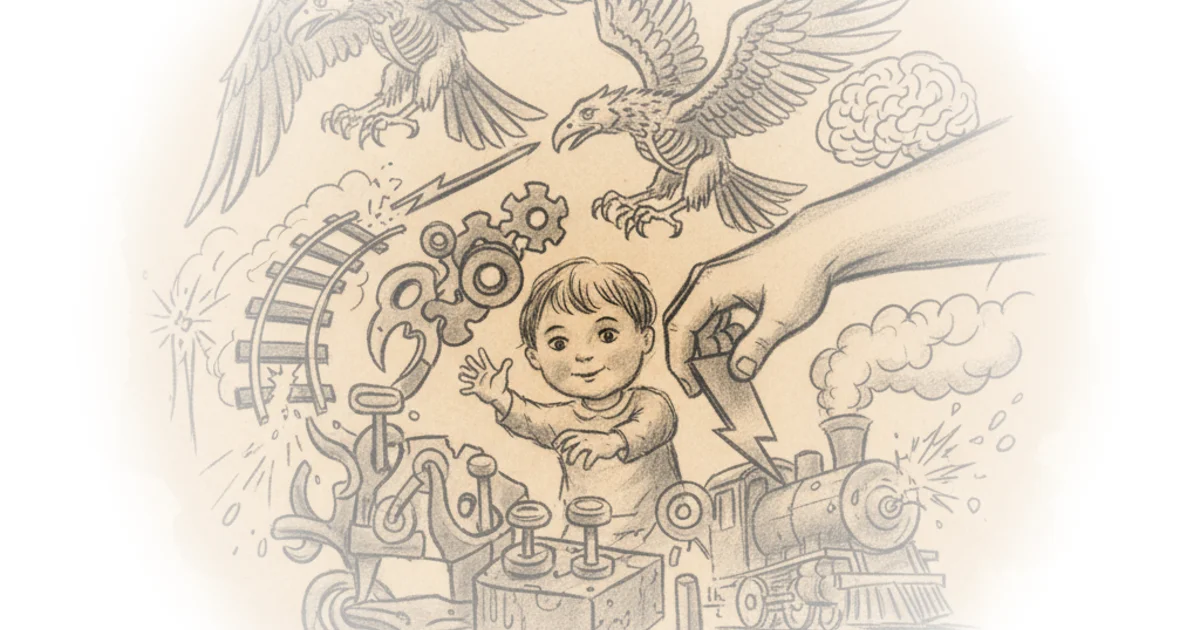
The article argues that the railway has become the singular artery of survival since the airspace closed in 2022. Mak notes that in the first six months of the full-scale invasion, trains evacuated four million people and moved 300,000 tons of humanitarian aid. The stakes are existential. As Mak puts it, "Disrupting railway operations could paralyze the means by which millions of Ukrainians evacuate, receive humanitarian aid, and transport foreign delegations." This is a stark reminder that in modern total war, logistics are the frontline.
"The choice was simple: either the suitcase or a person."
This quote from Panov, describing the evacuation chaos of 2022, is perhaps the most haunting line in the piece. It strips away the abstraction of "refugee flows" and reduces the crisis to a brutal, immediate triage. Mak's choice to center this human dilemma rather than the volume of tonnage moved makes the strategic importance of the railways undeniable.
The Evolution of the Threat
The coverage takes a sharp turn into the technical evolution of the Russian campaign, moving from static strikes to dynamic targeting. Mak details how the adversary has upgraded its arsenal, specifically noting that "Russia has now learned to attack trains with Shahed drones equipped with a thermal camera and an internet modem, through which a live video feed is transmitted to the pilots from a distance." This is a critical distinction. Unlike the GPS-programmed drones of the past, these new systems allow for real-time adjustments, turning moving trains into viable targets.
The data Mak presents is alarming: between August and October 2025 alone, railways were targeted 300 times. This represents a tenfold increase in frequency compared to earlier phases of the conflict. The author connects this tactical shift to the broader strategy of the executive branch's adversary, noting that strikes have moved from energy grids to logistics hubs. This mirrors the devastation seen in Mariupol, where the siege was tightened by cutting off supply lines, but here the attack is mobile and relentless.
Critics might argue that focusing on the technical specifications of drones risks overshadowing the human toll, yet Mak balances this by returning to the workers. He highlights that about 100 railway workers have been killed since the invasion began. "The very concept of danger has become part of everyday life," Panov tells him. The author's inclusion of this statistic grounds the high-tech analysis in the grim reality of mortality.
Adaptation and Resilience
Despite the escalating threats, the narrative does not descend into despair. Mak documents the improvisation of the railway staff, who have shifted to bus transfers and altered safety protocols, moving trains to different depots at night. Vadym Busurulov, the head of the Dnipro station, is quoted describing the inconvenience but also the adaptation: "The staff handling the bus transfers have adapted as well, and the buses arrive on schedule."
However, Mak does not shy away from the fragility of this adaptation. He notes that power shortages caused by strikes on the energy grid are now damaging the sensitive electronic equipment used to repair the trains. The cycle of destruction is self-reinforcing: hits on the power grid break the repair tools, which makes the trains more vulnerable to the next hit. This systemic vulnerability is a crucial insight that goes beyond the immediate headlines of missile strikes.
Panov's personal coping mechanism—writing songs with artificial intelligence about his work—offers a surreal but poignant counterpoint to the violence. Mak translates a line from one of these songs: "The wind howls, and the train rushes through dark days. This crystal path is not for the weak, but for hearts that are strong." This creative resilience underscores the psychological fortitude required to maintain operations under fire.
"You get into the cab and do your job, because behind you there are very, very many people."
This final sentiment from Panov, as relayed by Mak, encapsulates the entire article. It is a rejection of fear in favor of duty. The author's decision to end on this note of quiet determination, rather than a political call to action, feels more powerful. It reminds the reader that the resistance is not just in the trenches, but in the depots and the driver's cabs.
Bottom Line
Tim Mak's reporting succeeds by refusing to let the railway war become a footnote in the broader conflict; instead, he positions it as the central theater of the current phase of the war. The piece's greatest strength is its ability to humanize the strategic shift from static to dynamic targeting, making the technical details of drone warfare feel viscerally personal. The only vulnerability is the inherent difficulty of predicting how long this fragile, improvised logistical network can hold against such a concentrated and evolving assault.