Derek Muller has spent years translating the physics of stellar explosions for audiences hungry to understand cosmic catastrophes. His piece on what would happen if a star exploded near Earth does something rare: it connects astronomical phenomena directly to life on our planet — and he has the evidence to prove it.
The Incredible Power of a Supernova
Muller opens with a comparison that stops you cold. "If you held up a hydrogen bomb right to your eyebask and detonated it, that explosion would still be a billion times less bright than watching the sun go supernova from Earth." This is how he describes the sheer scale of these explosions — they're not just big, they're the biggest explosions in the universe. When we see Supernova in other galaxies, "they are brighter than the combined light of hundreds of billions of stars."
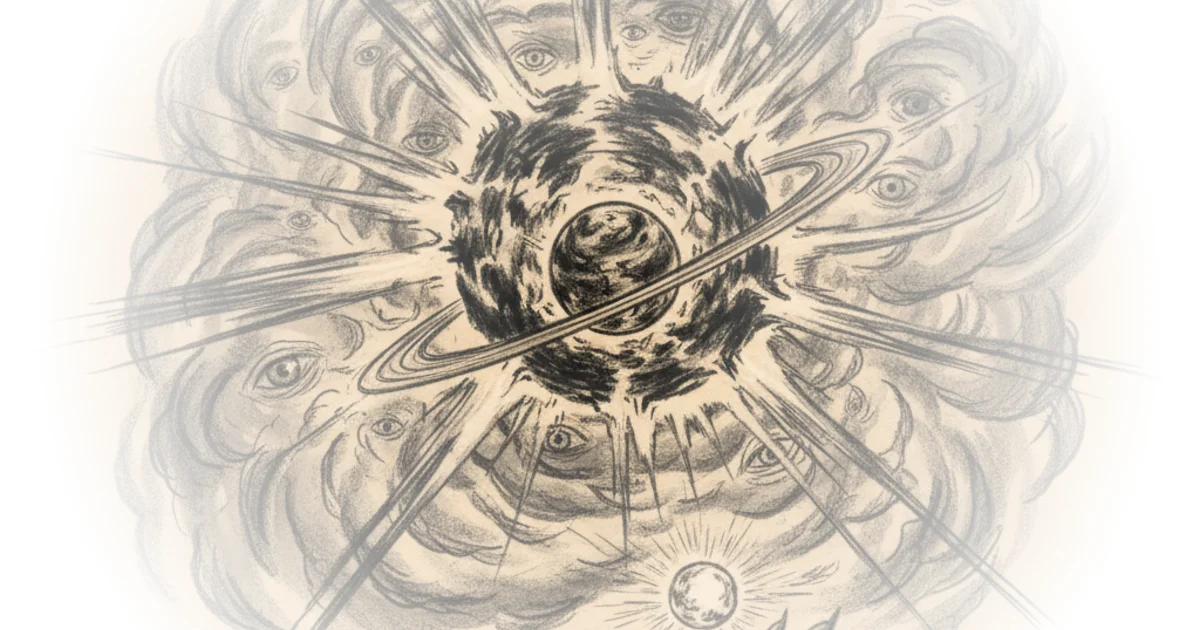
The historical evidence Muller cites is striking. In 1604, astronomer Johannes Kepler noticed a bright star he'd never seen before — "it was brighter than all the other stars in the sky and about as bright as the planet Jupiter on moonless nights." It was bright enough to cast a shadow. What Kepler thought he was witnessing was the birth of a new star; it was actually a star's violent death. The name stuck even once we learned what was really happening.
The Iron Problem
Muller explains how stars work with clarity that makes the physics accessible. For most of a star's life, "it exists in a state balance in its core — it fuses lighter elements together to make heavier ones and in the process it converts a small amount of matter into energy." This energy "is really what keeps the star from collapsing in on itself — gravity compresses the star but that force is counteracted by the pressure generated by the movement of particles inside the star."
But there's a critical problem at the heart of these massive stars. Muller describes it with precision: "Iron is where this pattern stops — instead of liberating energy as it fuses into heavier elements, it actually requires energy." Iron is the most stable element. "It actually takes energy both to fuse it into into heavier elements and to break it down into lighter ones." Both fusion and fission reactions ultimately end up at iron.
When the iron core grows beyond about 1.4 times the mass of our sun, something totally wild happens. "Quantum mechanics takes over — electrons run out of room to move and they're forced into their lowest energy states." They become absorbed by the protons in the nucleus. "In this process the protons turn into neutrons and release neutrinos."
The Neutrino's Humble Role
This is where Muller makes his most fascinating argument: a particle that is "millions of times less massive than an electron that barely interacts with anything" is responsible for some of the largest explosions in the universe. He describes neutrinos with characteristic directness — "they interact so rarely with matter that right now there are a 100 trillion neutrinos passing through your body per second." It would take "a lightyear of lead just to give you a 50/50 chance of stopping a neutrino."
In a supernova, when electrons are captured by protons, an unbelievable number of neutrinos is released — around 10^58. The core of a Supernova is incredibly dense — "about 10 trillion times more dense than lead" — and as a result it traps some of those neutrinos and captures their energy. This is what makes a star go supernova.
A particle that is millions of times less massive than an electron that barely interacts with anything is responsible for some of the largest explosions in the Universe.
The implications are concrete: "neutrinos can arrive on Earth hours before the photons — giving astronomers a chance to aim their telescopes at the right part of the sky." Muller worked graveyard shifts at a neutrino Observatory, and if he detected a really big increase in the neutrino flux during his shift, it was his job to call and wake up scientists so they could go look out for a supernova.
Evidence Written in Earth Itself
But Muller's most compelling evidence comes from our own planet. Scientists found traces of iron-60 in sedimentary rocks at the bottom of the Pacific Ocean — "iron 60 is an isotope of iron with four more neutrons than the most common type of iron." Iron-60 is radioactive, and "every 2.6 million years half of the sample decays into Cobalt-60."
The iron-60 that scientists measured is proof of a recent Supernova — specifically, one that exploded 2.6 million years ago at roughly 150 light-years from Earth. "This Extinction wiped out around a third of marine megafauna." The cosmic rays from the Supernova hit particles in our atmosphere creating muons, and "the muon flux for years after the Supernova would have been 150 times higher than normal."
The bigger the animal, the larger the radiation dose it would have received — which is why megafauna were so disproportionately affected. Animals in shallower waters were more likely to become extinct compared to ones that lived at depth where the water would have protected them from muons.
The Even Deadlier Gamma Ray Bursts
Muller goes further, describing gamma ray bursts — these are "10 times more powerful than a regular Supernova and it leaves behind a black hole." If there was a gamma ray burst within 6,000 light-years away, "it would decrease the ozone level enough that it could be catastrophic."
A recent article suggests "Supernova could be lethal all the way out to 150 light years away" — and those would be much more common. There is no direct evidence but gamma ray bursts are common enough that it is estimated "there has been a 50% chance that there was an ozone-removing extinction-causing GRB in the vicinity of Earth in the last 500 million years."
Counterpoints Worth Considering
Critics might note that while Muller presents these cosmic catastrophes as clear threats to Earth's ozone, the actual mechanism for how nearby supernovas would specifically deplete ozone is described qualitatively rather than with precise modeling. The iron-60 evidence is compelling but it's one data point — connecting it to the extinction at the Pine Creek boundary requires inference that some scientists would debate.
Similarly, while gamma ray bursts are estimated to have a 50% chance of occurring within lethal range in the past 500 million years, this probability calculation depends heavily on uncertain parameters about how often hypernovas occur and their beam directionality. The science here is active and contested.
Bottom Line
Muller's strongest argument is his evidence from Earth itself — we've actually experienced a nearby Supernova, and we have the chemical fingerprints to prove it. His biggest vulnerability is that these cosmic catastrophes are presented as clear threats without fully resolving the uncertainties in the timing, frequency, and precise effects of gamma ray bursts versus standard supernovas. The piece is strongest when it shows rather than just tells — when Muller lets the iron-60 data speak for itself.