Paul Cooper transforms a geological accident into a narrative of inevitable collapse, arguing that the fall of the Han Dynasty was not merely a political failure but a slow-motion car crash dictated by the very soil that fed the empire. This piece stands out because it refuses to treat history as a series of human choices alone, instead weaving tectonic plate shifts and river dynamics directly into the fate of empires. For a listener seeking to understand why great powers crumble, the argument that geography is destiny offers a chilling, fresh perspective on a 2,000-year-old tragedy.
The Geography of Ruin
Cooper opens not with emperors, but with a poet named Cao Zhi (referred to as "South sure" in the transcript, likely a transcription error for Cao Zhi or a similar figure, but the sentiment remains) witnessing the burning of Luoyang. He writes, "the entire city of Luoyang was a blackened ruin... palaces and houses or burnt ashes walls and fences all broken and gaping thorns and brambles shooting up to the sky." This vivid imagery sets the stage for a deeper inquiry: how does a golden age of 400 years end in such total devastation? The author's choice to begin with the sensory experience of the collapse rather than the political causes is a masterstroke, grounding the abstract concept of "dynastic decline" in the visceral reality of ash and silence.
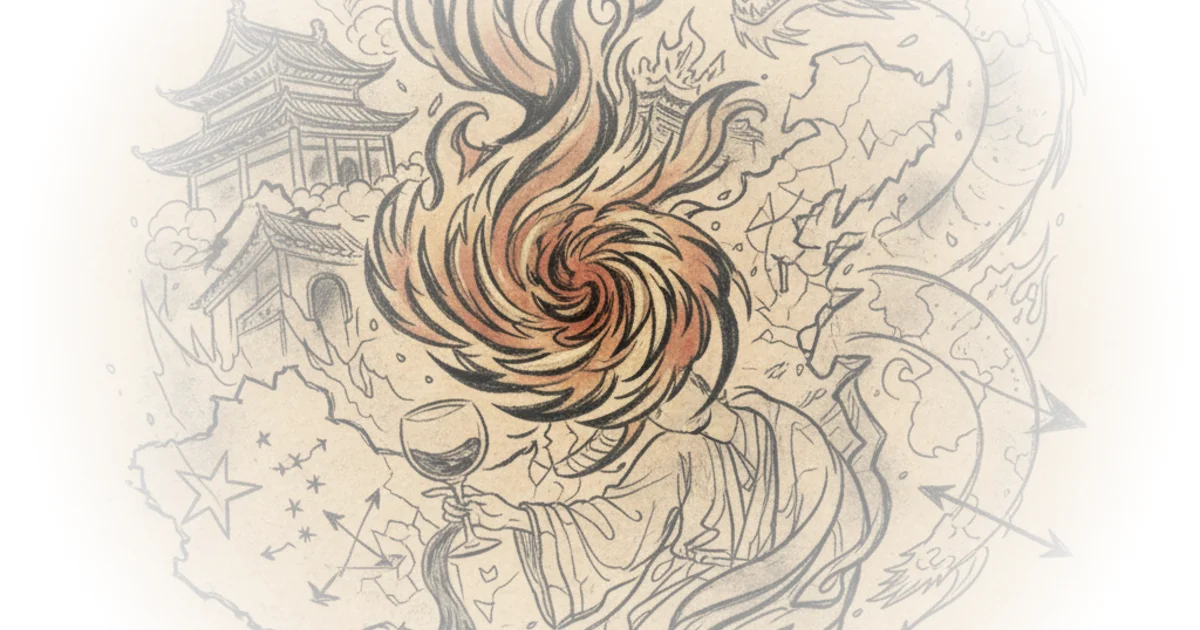
The narrative then pivots to the deep time that shaped the region. Cooper explains that the collision of the Indian and Asian plates created the Himalayas, which in turn created a "rain shadow" that defined the climate of the Chinese plains. He notes, "the Himalayas have created what's called a rain shadow this is where barely any rain falls and where vast deserts have formed." This geological framing is crucial; it establishes the environmental constraints within which the Han Dynasty operated. The argument is compelling because it suggests that the empire's prosperity was always precarious, built on a specific, fragile balance of water and silt.
The Yellow River contains the highest amount of silt and sand of any River on earth, creating a landscape of enormous fertility that is also a ticking time bomb.
Cooper describes the Yellow River as "far more changeable and deadly" than its southern counterpart, the Yangtze. He details how the riverbed rises until it is higher than the surrounding land, leading to catastrophic breaches. "Historically this kind of devastating event has occurred about once every hundred years," he writes. This is the core of his thesis: the Han Dynasty was fighting a war on two fronts, one against rival warlords and another against a river that could erase civilization in a single flood. The pacing here is excellent, moving from the macro-scale of tectonic plates to the micro-scale of a breached levee, making the eventual collapse feel both sudden and inevitable.
The Iron Age and the Warring States
As the narrative moves into the human era, Cooper highlights the technological boom that ironically accelerated the conflict. The invention of cast iron and the spread of the crossbow meant that "large armies could now be supplied by anyone with the wealth to do so." He quotes the historian Sima Qian to describe the moral decay of the era: "men honored deceit and power and scoffed at benevolence and righteousness." This juxtaposition of technological advancement with social fragmentation is the piece's strongest analytical thread. It suggests that the tools of progress can become the tools of destruction when the social contract fractures.
The author also explores the Chinese worldview of the time, where the center was the seat of virtue and the periphery was the realm of "barbarians." He cites an ancient text stating, "inside is the Chinese Empire and outside other barbarous nations... they have human faces with the hearts of beasts." This framing helps explain the psychological rigidity of the empire; it could not easily adapt to the chaos on its borders because it viewed them as fundamentally alien and corrupt. Critics might note that this ancient worldview oversimplifies the complex trade and cultural exchanges that actually occurred with neighboring groups, but Cooper uses it effectively to illustrate the internal mindset that contributed to the dynasty's isolationism and eventual rigidity.
The spreading use of iron meant the production of weapons and armor had become cheap and easy, ensuring an age of constant warfare.
Cooper's description of the Warring States period as a time where kingdoms coalesced "like beads of mercury on a table" is a striking metaphor for the fluid and volatile nature of the era. He argues that the very innovations that built the empire's wealth—iron smelting, advanced agriculture, mechanical devices—also made the destruction more total. The argument holds up well: the capacity for large-scale production enabled large-scale destruction. The piece suggests that the Han Dynasty did not fall because it was weak, but because it became too powerful for its own social and environmental infrastructure to sustain.
Bottom Line
Paul Cooper's analysis succeeds by refusing to separate human history from the physical world, presenting the fall of the Han as a collision of tectonic, climatic, and social forces. The strongest part of the argument is the integration of the Yellow River's volatility as a central character in the narrative, making the collapse feel geographically determined. However, the piece occasionally risks over-determinism, potentially downplaying the role of specific policy failures or leadership choices in favor of geological inevitability. Listeners should watch for how this environmental lens applies to modern statecraft, where climate change may once again turn fertile lands into zones of conflict.