In a landscape saturated with fear-mongering about automation, the author of "10 Steps to Becoming AI Proof" offers a counterintuitive thesis: the path to security isn't resisting technology, but mastering the specific, messy, and deeply human traits that algorithms cannot replicate. While many pundits focus on the speed of AI adoption, this piece argues that the real differentiator lies in dexterity, decisive action, and the cultivation of high-trust relationships.
Mastering the Machine, Not Being Mastered
The author begins by rejecting the notion that ignorance is a shield. Instead, they argue that true safety comes from intimate knowledge of the tool. "You cannot avoid especially if you want to continue working in an area that is going to be using AI getting to know it as well as possible," they state. This is a crucial distinction; the argument posits that AI is best viewed as an assistant for ideation rather than a source of truth, noting that while it can point in directions, it "doesn't do very well is give me the high quality trusted data or facts that I know I can rely on straight away."
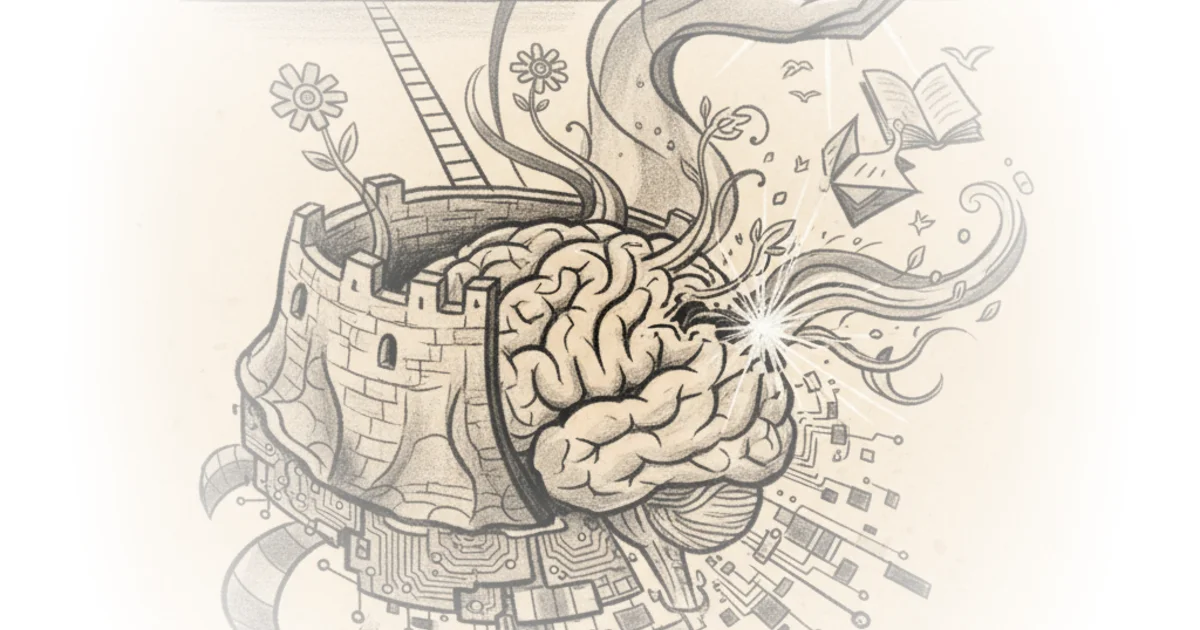
This framing is effective because it shifts the burden of verification back to the human operator, a necessary skill in an era of synthetic content. The author suggests that understanding the limitations of the technology—specifically its tendency to "hallucinate"—is the first line of defense. By treating AI as a tool that risks "man risks becoming the tool of tools," the author reframes the anxiety of replacement into a challenge of mastery.
The Irreplaceable Human Element
Moving beyond technical literacy, the commentary pivots to the biological and social advantages of being human. The author identifies a surprising frontier for human dominance: physical dexterity. "One of the last things that it's going to be able to replicate is dexterity," they observe, pointing out that the human hand remains "one of the most advanced things on the planet." This is a compelling argument that often gets lost in the digital noise, suggesting that industries relying on tactile skills, from care work to crafts, possess a natural moat against automation.
Furthermore, the piece emphasizes the necessity of genuine connection over digital networking. The author urges readers to "touch grass" and engage with real-world networks, arguing that we have too often "outsourced" our professional lives to abstract platforms. "Connect with people, join up with people, go and meet people, take the extra step away from the screen and into real life," they advise. This lands with particular force given the current trend of remote work and digital isolation, suggesting that the future value of a professional lies in their ability to foster trust in person.
Value comes from something that is rare. And if the world is flooded with AI writing and images and music and all the rest of it, that's not rare. That's valueless.
Decisiveness in an Age of Synthesis
Perhaps the most provocative claim in the piece is the assertion that AI's greatest weakness is its inability to make singular, high-stakes decisions. The author notes that AI models are trained to be balanced, often presenting "two sides of the story" because they lack a "theory of mind" required for action. "Remember that if AI tries to be balanced, the world isn't," the author writes. This is a sharp critique of the algorithmic tendency toward neutrality in a world that demands leadership.
To counter this, the author advocates for becoming a "thought leader" who can navigate ambiguity and act quickly. "Be the person that can make the quick decisions in a world of information over abundance where everyone else is swimming in too much information," they argue. This aligns with the broader theme of becoming "hyper human" in a specific niche. By going deep rather than broad, a human expert can know a "small body of knowledge better than an AI can," thereby establishing a level of authority that a generalist algorithm cannot match.
Critics might note that the author's reliance on "high trust" as a differentiator assumes a market that values reliability over the sheer volume of cheap, AI-generated output. In a race to the bottom on price, the premium on trust may not always be sufficient to sustain a livelihood.
The Political Economy of Automation
The final section of the piece elevates the discussion from individual strategy to systemic critique. The author challenges the narrative of inevitability, urging readers to "kick up a fuss" and question who benefits from the technology. "The place where AI is going to make a difference is in large scale industries... is it working for you or is it working for the people with the means?" they ask. This reframing is vital; it moves the conversation from "how do I survive AI" to "how do we shape AI."
The author warns against accepting a future where technology merely accelerates the "rat race" for the sake of corporate profits. "Technology needs to be shaped to our needs, not the other way round," they conclude, calling for a democratic approach to regulation. This is the piece's most ambitious claim, suggesting that individual "AI-proofing" is insufficient without broader structural change to ensure the technology produces "human flourishing" rather than just increased efficiency for capital.
Bottom Line
The strongest element of this argument is its refusal to treat AI as a monolith, instead dissecting where it fails (dexterity, decisive action, trust) and where humans must lean in. Its biggest vulnerability lies in the assumption that the market will reward these human traits sufficiently to offset the economic pressure to adopt cheaper, automated solutions. Readers should watch for how institutional policies evolve to either protect high-trust human labor or accelerate the race to the bottom the author fears.
Technology needs to be shaped to our needs, not the other way round. We need to decide democratically how to use these technologies so that they produce human flourishing, not just speed up the rat race.