TLDR News Global cuts through the noise of breaking headlines to reveal a chilling strategic miscalculation at the heart of the latest escalation in the Middle East. The piece's most arresting claim is not that war happened, but that it was driven by a fundamental game theory error: the administration viewed the crisis as a single, winnable negotiation, while Tehran saw it as an iterative struggle for survival where any concession guarantees future destruction.
The Strategic Mismatch
The commentary begins by dissecting the administration's rationale for the air strikes that killed the Supreme Leader. The author notes that the executive branch justified the attack as a preemptive move against a nuclear program that, paradoxically, the same administration had claimed was "obliterated" just a year prior. As TLDR News Global writes, "Trump basically seems to have assumed that because the US is a more powerful country... Iran would just accept his demands." This framing highlights a dangerous overconfidence in raw military superiority as a substitute for diplomatic leverage.
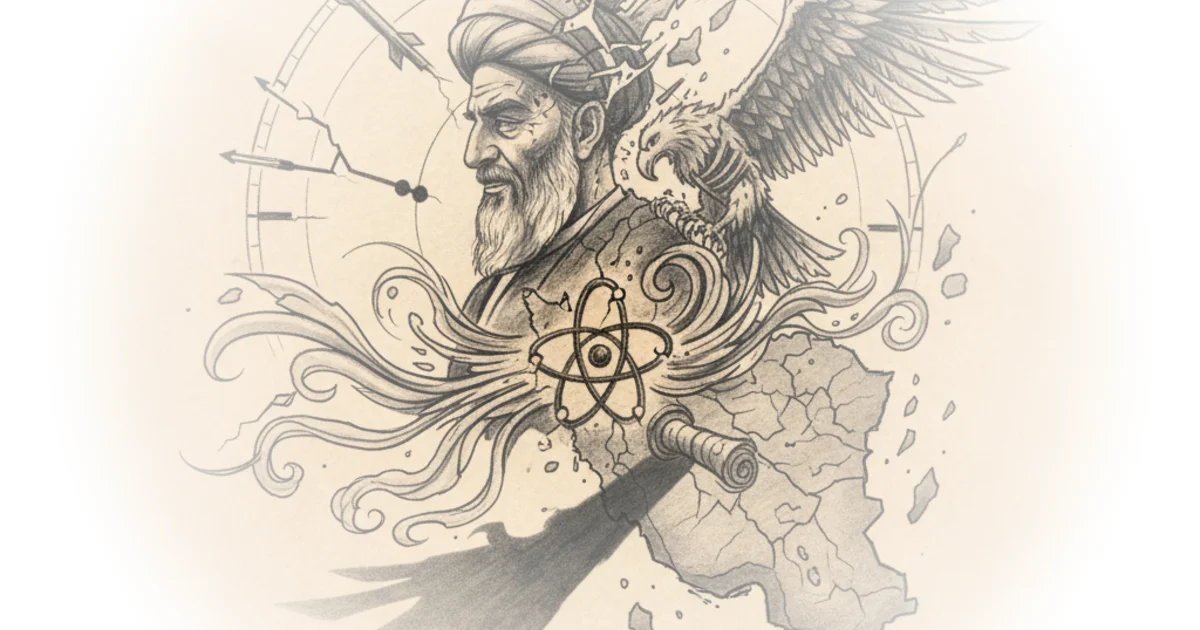
The author points out that the negotiations collapsed over two specific, non-negotiable demands: expanding talks to include ballistic missiles and proxy networks, and a total ban on domestic uranium enrichment. The administration's envoy, Steve Wickoff, reportedly expressed frustration that Iran had not "capitulated" despite the massive US naval buildup. TLDR News Global captures this disconnect perfectly: "Trump was apparently framing negotiations as a single game, in which case it would have been rational for Iran to accept whatever concessions it needed to avoid being attacked."
However, the piece argues that the Iranian regime was operating under a different logic. They believed that conceding now would only invite further demands later, a dynamic reminiscent of the institutional resilience seen in other authoritarian states. The author draws a sharp parallel to the situation in Venezuela, noting that unlike the personalistic dictatorship there, the Iranian regime is deeply institutionalized. "Unlike say Venezuela, the Iranian regime is not a personalistic dictatorship and is more institutionalized than many often assume," the author writes, suggesting that the death of the Supreme Leader does not guarantee a collapse.
Trump was apparently framing negotiations as a single game, in which case it would have been rational for Iran to accept whatever concessions it needed to avoid being attacked.
Critics might note that the author's reliance on game theory risks oversimplifying the chaotic reality of revolutionary movements, where ideology often trumps rational cost-benefit analysis. Yet, the analysis holds weight when explaining why Iran launched missile attacks at non-military targets in Saudi Arabia and the UAE, seemingly to impose costs on the US and its allies even at the risk of alienating neighbors.
The Three Futures
With the Supreme Leader dead and the regime decapitated, the author outlines three distinct trajectories, moving beyond the administration's hopeful narrative of immediate regime change. The first scenario is the administration's preferred outcome: a moderate government rising from the ashes. The second, and perhaps most likely, is a hardline succession. The author warns that "a more hardline leader would probably be even more repressive domestically and double down on Iran's nuclear program, taking Iran down a more North Korea style outcome."
The third possibility is a descent into civil war, a scenario the author treats with grave seriousness. Drawing a comparison to the 2011 Syrian conflict, the text emphasizes the scale of the potential disaster. "Syria had a population of about 20 million people. Iran today has a population of 92 million people and has infinitely scarier weapons sitting around," TLDR News Global writes. This comparison serves as a stark reminder that the stakes here dwarf previous regional conflicts, with the potential to destabilize the entire global economy through oil disruptions.
The commentary also touches on the administration's call for the Iranian people to "take over your government," while simultaneously warning them to "stay sheltered" as bombs drop. This contradiction underscores the administration's reliance on external pressure rather than a clear plan for internal transition. The author notes that the administration's strategy seems to be betting on the Iranian populace to fill the power vacuum, a gamble that ignores the regime's deep security apparatus.
Bottom Line
The strongest element of this analysis is its refusal to accept the administration's narrative of inevitable victory, instead grounding the conflict in the structural realities of Iranian politics and game theory. Its biggest vulnerability is the uncertainty of how a decapitated regime will actually function in the immediate aftermath, a variable that could upend even the most sophisticated strategic models. Readers should watch closely for whether the hardline faction can consolidate power or if the institutional cracks exposed by the strike will lead to the catastrophic fragmentation the author fears.