In a field often dominated by high-tech computational models, Alexandra Balwit reports on a breakthrough that returns to the biological roots of immunity, proving that a llama's natural antibody response can outperform current market leaders. This piece is notable not just for its scientific novelty, but for its direct challenge to the prevailing narrative that synthetic, computer-designed proteins are the only path forward for solving the global antivenom crisis. Balwit argues that traditional immunization techniques, when paired with modern screening, offer a more comprehensive shield against the chaotic complexity of snake venom.
The Biological Advantage
Balwit opens with a vivid contrast between the idyllic, idle llamas of her childhood in Oregon and the critical role these animals now play in saving lives. She writes, "Looking back, it is hard to imagine that these beasts bear any resemblance to the llamas at the center of a recent study on making better antivenom — yet they do." This framing effectively grounds a complex biochemical story in a relatable human narrative, reminding readers that innovation often comes from unexpected places. The core of her argument is that while computational biology has made strides, it cannot yet replicate the breadth of the immune system's natural ability to recognize diverse threats.
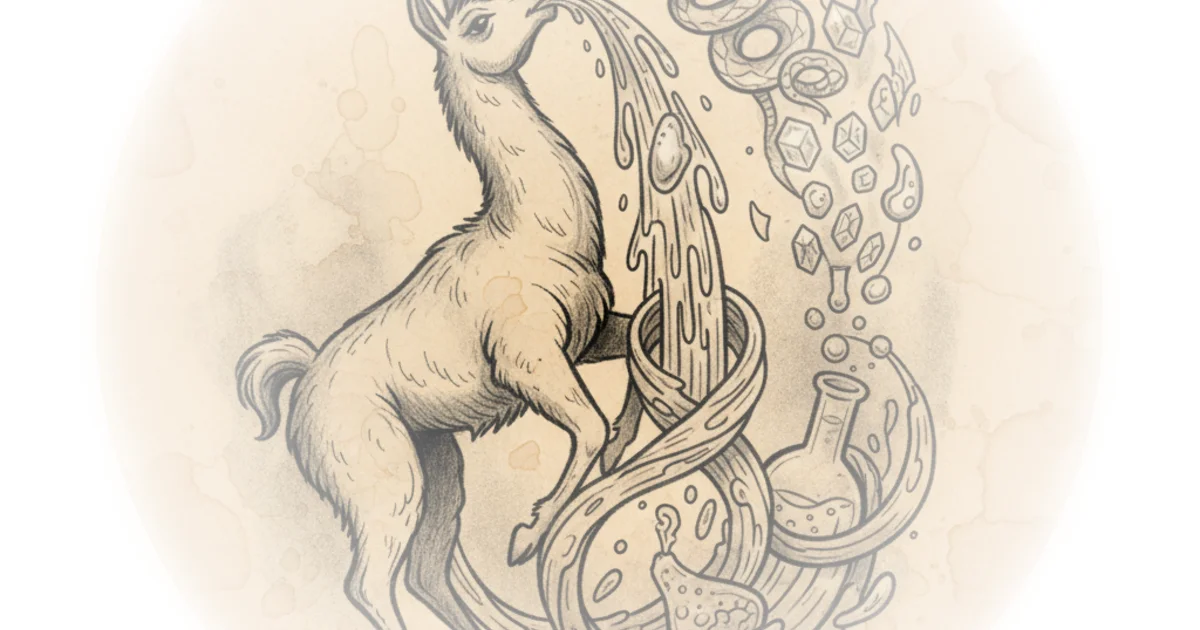
The article details how researchers injected a llama and an alpaca with venoms from 18 of Africa's most deadly snakes. By isolating antibodies and combining eight distinct ones, the resulting cocktail prevented death in mice exposed to 17 of those venoms. Balwit notes that this new formulation "offers greater protection to mice than Inoserp PAN-Africa, a commercial antivenom approved by the WHO." This is a significant claim, as Inoserp is currently the gold standard for the region. The strength of Balwit's coverage lies in her ability to translate these animal trials into a tangible metric of human survival potential, rather than getting lost in the minutiae of protein engineering.
"Snake venom is not just one thing, but rather an umbrella term for a cocktail of proteins," writes Abhishaike Mahajan in a blog post, a sentiment Balwit uses to underscore why single-target solutions often fail.
The Crisis of Complexity
Balwit pivots to the human cost of the current antivenom shortage, citing that in sub-Saharan Africa, elapid bites cause 7,000 deaths and 10,000 amputations annually. She highlights the logistical nightmare of current treatments, quoting Mathias Kirk Bonde: "For over 34 percent of Indian snakebite victims, it takes more than six hours to receive treatment." This statistic is the emotional anchor of the piece; it illustrates that even the best medicine is useless if it cannot reach the patient in time or survive the journey without a cold chain.
The author explains that current polyvalent antivenoms are often less effective and more likely to cause severe immune reactions because they require large doses of foreign animal proteins. Balwit writes, "Because these polyvalent antivenoms contain antibodies against multiple snake venoms, patients must receive a much larger dose of foreign animal proteins than they would with monospecific antivenoms, significantly increasing the risk of adverse immune reactions." This is a crucial distinction that the general public often misses: the cure itself can be dangerous. Her commentary effectively argues that the new llama-derived approach, which uses recombinant technology to produce pure antibodies, could drastically reduce these side effects while increasing efficacy.
Critics might note that the study's reliance on mouse models is a significant limitation, as human physiology can react differently to both the venom and the antivenom. However, Balwit acknowledges this by noting the cocktail has not yet moved to Phase I trials, maintaining a grounded perspective on the timeline for human application.
Beyond the Algorithm
A major portion of the article is dedicated to contrasting this biological approach with the computational methods pioneered by the Baker group. While the Baker group's work on designing proteins to neutralize "three-finger toxins" has been celebrated, Balwit points out a fatal flaw: "It neglects a particularly sinister family of toxins known as the phospholipase A₂ (PLA₂) family." She explains that these enzymes are responsible for "dermonecrosis," the tissue destruction that leads to amputations. This is where the llama's broad immune response shines. By exposing the animals to the full slate of toxins, the resulting antibodies target not just the neurotoxins that kill quickly, but the enzymes that maim.
Balwit draws a historical parallel to the limitations of earlier attempts, such as the use of varespladib, a small-molecule inhibitor. She notes that while varespladib was effective, it had a short half-life, requiring re-dosing every eight hours—a scenario that is "impractical for emergency treatment, especially in low-resource settings." This comparison strengthens the argument for the new cocktail, which aims to provide continuous protection without the need for constant medical supervision. The piece subtly references the broader context of protein engineering, noting that while phage display was used to screen the antibodies, the initial spark was the biological diversity of the camelid immune system, a nod to the enduring value of nature's own design.
"The therapeutic issue here is that the composition of the toxin can vary," Balwit writes, capturing the central challenge that makes a broad-spectrum solution so vital.
The article concludes by detailing the "rescue experiments," where the antivenom was administered five minutes after the venom. Even against the Eastern green mamba, a snake whose venom proved resistant to full neutralization, the cocktail doubled the survival time of the mice. Balwit frames this not as a failure, but as a critical step forward: "The only snake that the cocktail failed to protect against was D. Angusticeps... However, even the mice injected with this cocktail survived twice as long as they would if injected with the venom alone." This nuance is essential; it shows that in a crisis, buying time is often the difference between life and death.
Bottom Line
Alexandra Balwit's piece succeeds by reframing the antivenom crisis not as a problem of insufficient technology, but as a problem of insufficient biological breadth. Her strongest argument is that the complexity of venom requires a solution that is equally complex and adaptable, a quality that the llama's immune system provides more naturally than current computational designs. The piece's biggest vulnerability remains the gap between mouse trials and human application, a hurdle that will determine if this "antivenom cocktail" can ever reach the rural clinics that need it most. Readers should watch for the results of the upcoming Phase I trials, which will test whether this biological promise holds up in the human body.