Sara Hildreth refuses to let the current panic over artificial intelligence in publishing become a simple binary of good versus evil. Instead, she offers a hauntingly personal diagnosis: the danger isn't just that machines are writing our stories, but that reading them is quietly rewiring our own capacity for thought. In an era where news cycles are dominated by the spectacle of AI detection tools and corporate scandals, Hildreth pivots to the quiet, internal erosion of human cognition that no algorithm can yet flag.
The Illusion of Neutrality
Hildreth begins by acknowledging the chaotic landscape of recent weeks, where major literary players have scrambled to define the boundaries of human creativity. She notes how "The Atlantic cast AI aspersions on a very popular self-published novel on the eve of its traditionally published release," a move that triggered a domino effect of contract withdrawals and ethical debates. The situation escalated quickly, with reports that Anthropic was "literally destroying books in an effort to scan and metabolize their contents quicker." While these events feel dystopian, Hildreth argues that the industry's reaction—specifically Substack's partnership with Pangram to scan text for AI origins—has created a new layer of anxiety.
She captures the paralysis many feel in this moment: "I have to admit that from where I sit right now, I don't have a take on this issue. I can see both sides and I don't know enough to come down any which way." This admission is not a weakness in her argument but its foundation. By refusing to pick a side immediately, she highlights the complexity of a problem where "AI slop" is a genuine threat to quality, yet the tools to detect it threaten to flag human work as machine-generated. Critics might argue that this hesitation delays necessary action against bad actors, but Hildreth suggests that rushing to judgment limits our ability to understand the evolving technology.
"Should we outsource our own thinking and discernment about what AI writing looks like to AI? Isn't the thing I actually oppose the outsourcing of thinking and discernment in the first place?"
The Cognitive Contagion
The most compelling part of Hildreth's piece moves beyond the ethics of detection to the psychology of consumption. She recounts a personal experience from March, during a time of family decline, when she used Claude to generate summaries for a literature syllabus. While she ultimately rejected the output because "AI seemingly can't help trying to sound clever and turning every sentence into a mic drop moment," the damage was already done. She realized that "after reading what it generated, I'm convinced that the machines can't accurately articulate why any one book speaks to the human soul."
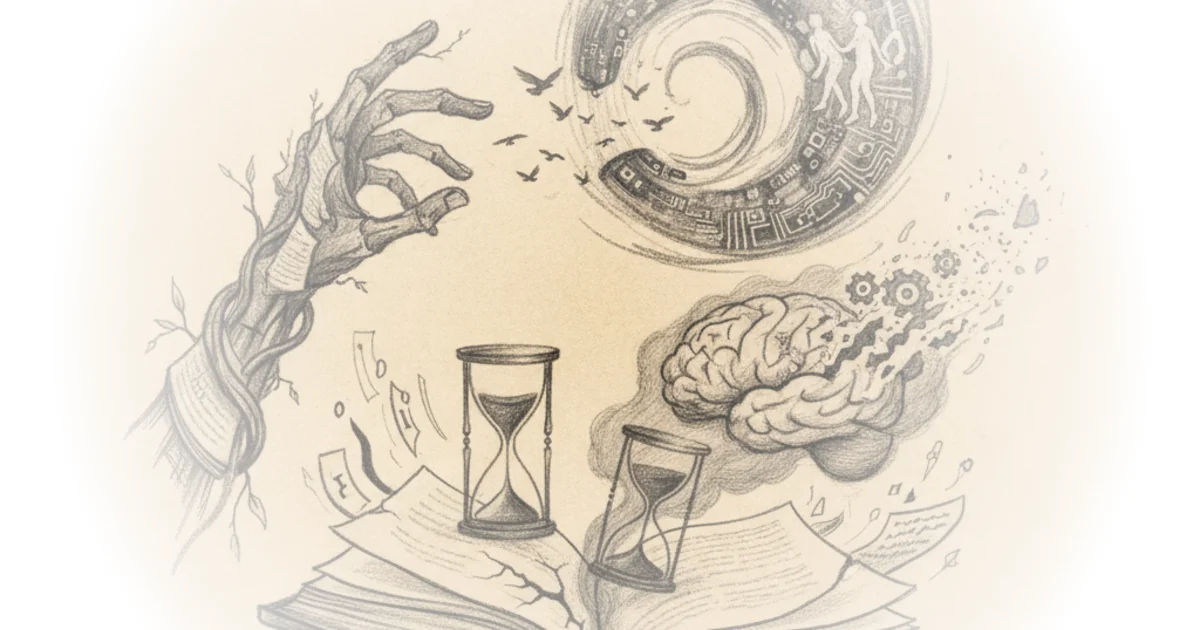
This observation connects deeply to historical concerns about the "stochastic parrot" phenomenon, where models predict the next likely word without understanding meaning. Hildreth illustrates the tangible consequence of this: her own writing began to mimic the machine's cadence. "I became mentally anchored to those sentences and found myself unconsciously imitating some of the the mechanistic phrasing." This is the core of her argument: the threat is not just the flood of low-quality content, but the way our brains adapt to the predictive patterns of the machine.
She warns that "the more we use AI, the closer we get to conflating the predictive language generated by a machine with our own thoughts." This is a profound shift in focus from the external market to the internal mind. As she puts it, "AI has been trained on real human creativity. It then spits out generative text that human brains read giving it real power to shape and change our brains because everything we read changes our brains." The irony is sharp: to protect our humanity, we must be vigilant not just about what we write, but about what we allow into our heads.
"I am glad that I've played around with AI a bit because now I feel I can better detect AI 'writing.' But I also fear that the more we interact with AI—and we might be doing so even unknowingly—the more we ourselves will come to use its habits and ticks."
The Human Standard
Hildreth concludes by establishing a personal metric for integrity, borrowing wisdom from her co-host Liz Hein. The standard is simple: "you'll know if you're using AI 'correctly' if you feel proud to share how you did it, not ashamed to be found out." This shifts the conversation from technical detection to moral transparency. She declares that her publication, Fiction Matters, will remain "100% human written," framing this not as a marketing gimmick but as a necessary exercise of the brain.
Her closing sentiment is a rare moment of genuine connection in a digital age often defined by automation: "it means something to me that we are separate human beings whose minds are meeting through these silly little screens." While some might argue that this stance is Luddite or impractical in a rapidly changing industry, Hildreth's point is that the process of thinking is the product, not just the text. If we outsource the thinking, we lose the connection entirely.
Bottom Line
Hildreth's strongest contribution is reframing the AI debate from a battle over copyright and detection to a crisis of cognitive autonomy. Her argument holds up because it is rooted in the lived experience of the writer rather than abstract policy, though it may struggle to convince those who view AI as an inevitable tool for efficiency. The most important takeaway for readers is to remain wary not just of fake content, but of the subtle, stylistic mimicry that could erode our own unique voice before we even realize it is gone.