This piece delivers a stinging indictment not of a single administration, but of a systemic collapse in the American press's ability to scrutinize war. While the Iraq invasion is remembered as a failure of intelligence, Reason argues that the current conflict with Iran represents a far more dangerous evolution: a war launched without public debate, where the media failed to ask questions before the first shot was fired. For busy readers trying to grasp the stakes of a conflict that has already claimed hundreds of civilian lives, this is a vital diagnosis of how we got here.
The Silence Before the Storm
The article's most provocative claim is that the current war against Iran is being conducted with a level of opacity that dwarfs the run-up to Iraq. Reason reports that "unlike the very public run-up to the Iraq invasion, [this conflict] began with almost no public debate about the conflict's costs, tradeoffs, risks, morality, or even goals." This is a chilling distinction. The Iraq War, for all its catastrophic errors, at least forced a national conversation, however flawed. The current approach suggests a shift from incompetence to something more ominous. The piece argues that "the shift in coverage of war and peace suggests a transition from mere incompetence or corruption to something closer to nihilism."
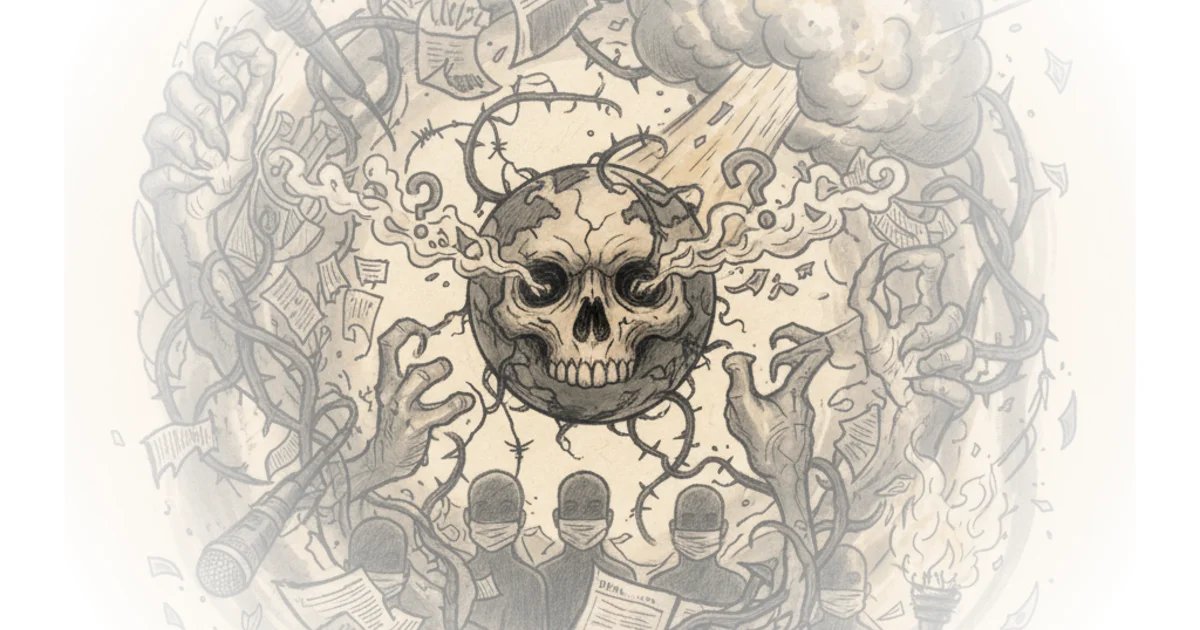
This framing forces the reader to confront a uncomfortable reality: the media watchdog has not just been asleep; it has seemingly abandoned its post. The administration launched strikes based on shifting rationales, ranging from defending protesters to dismantling missile programs, yet the press failed to interrogate these contradictions. As Reason notes, "Trump was not successfully interrogated about his rapidly shifting stated motives." Critics might argue that the speed of modern warfare limits the time for deep-dive journalism, but the article suggests the failure was one of will, not just speed. The media allowed the executive branch to set the narrative entirely, leaving the public in the dark about the true scope of the engagement.
The media, of course, are not a monolith—there are meaningful differences between publications, journalists, and editors, including within the establishment press. But it is hard to escape the conclusion that in the face of past failures things have actually gotten worse.
The Cost of Institutional Blindness
The commentary deepens by examining the structural rot within major news organizations. The piece connects the current silence to a decades-long retreat from foreign correspondence. It points out that "from 1998 through 2011... at least 20 U.S. newspapers and other media outlets completely eliminated their foreign bureaus." This isn't just a budget cut; it's a strategic withdrawal from the world. The result is a reliance on "parachute journalism" and social media commentary, leaving the public vulnerable to official narratives.
This structural decline is illustrated through the "Cipher" incident, a revealing case where the State Department privately threatened Pakistan to oust a democratically elected prime minister. Reason reports that a leaked document showed a senior diplomat warning that "it will be tough going ahead" if the leader remained in power. The subsequent removal of the prime minister and his eventual imprisonment on politicized charges triggered a massive political crisis in Pakistan. Yet, the piece notes that "the issue barely registered for the U.S. public, which remained almost entirely unaware of the upheaval Biden administration officials had caused on the other side of the world."
The failure here is twofold: the government acted with impunity, and the press ignored the fallout. Major outlets like The Washington Post and The New York Times "simply ignored the disclosure," with one correspondent even attacking the reporting rather than investigating the claims. This selective blindness allows the U.S. to act as a global empire without the necessary public oversight. The article suggests that "America is a global empire that needs information about itself in order to function," yet the very institutions meant to provide that information are dismantling their capacity to do so.
The Human Toll of Unchecked Power
The most grave section of the commentary addresses the human cost of this information vacuum. When the media fails to question the necessity of war, the consequences are measured in civilian lives. The piece details devastating strikes that targeted civilian areas, including "the accidental bombing of a girls' elementary school in southern Iran that killed at least 168 children." It also notes a separate attack on a sports facility during a volleyball practice that killed 21 people.
While the article acknowledges that some outlets eventually investigated these tragedies, it insists that "it would have been better to ask hard questions before these terrible events took place—perhaps sparing us this war in the first place." This is the core tragedy: the media's failure to act as a brake on executive power has directly contributed to a humanitarian disaster. The administration's assumption that decapitation strikes would trigger regime collapse proved wrong, and the collateral damage was immense. The piece reminds us that "the phenomenal impact that even small changes in U.S. foreign policy can have on other countries" is often explained by independent journalists, while the establishment press remains silent.
The situation today is much worse: Instead of bad questions being asked by the media or false evidence provided, very few questions were asked before the fighting started, while the administration has attempted only a month later to start providing post hoc justifications for the war.
Bottom Line
The strongest part of this argument is its refusal to treat the current media silence as an anomaly; instead, it frames it as the inevitable result of a decade-long erosion of foreign news bureaus and a public disengagement from global affairs. Its biggest vulnerability is the difficulty of reversing this trend in an era of fragmented attention spans and economic pressure on newsrooms. The reader should watch for whether the few remaining independent voices can sustain the pressure needed to force a genuine public debate before the conflict escalates further.