In a media landscape often dominated by the sensational and the immediate, this piece from The Pillar offers a startling pivot: it juxtaposes the gritty, human reality of Blessed Solanus Casey against a whirlwind of global ecclesiastical crises, from the destruction of Armenian heritage to the surreal legalities of feeding the Eucharist to dogs. The article's most distinctive claim is not found in its reporting on geopolitical tensions, but in its assertion that the spiritual discipline of "thanking God first" is the only viable antidote to the bitterness that plagues both the individual soul and the institutional Church. For the busy reader seeking substance over noise, this is a rare synthesis of hagiography and hard news that demands attention.
The Human Face of Holiness
The Pillar opens by grounding the abstract concept of sainthood in the messy, unglamorous details of a man who "poured all his breakfast foods, including coffee, into the same bowl, and ate them as a penitential morning mash-up." This is not a sanitized icon; it is a portrait of a man who faced profound rejection. The piece notes that Solanus "was a high school seminarian, but was basically pushed out, because he didn't have the Latin and German required for class lectures," a failure that followed him into the Capuchins where he was ordained a "simplex priest, with no faculties to preach or hear confessions."
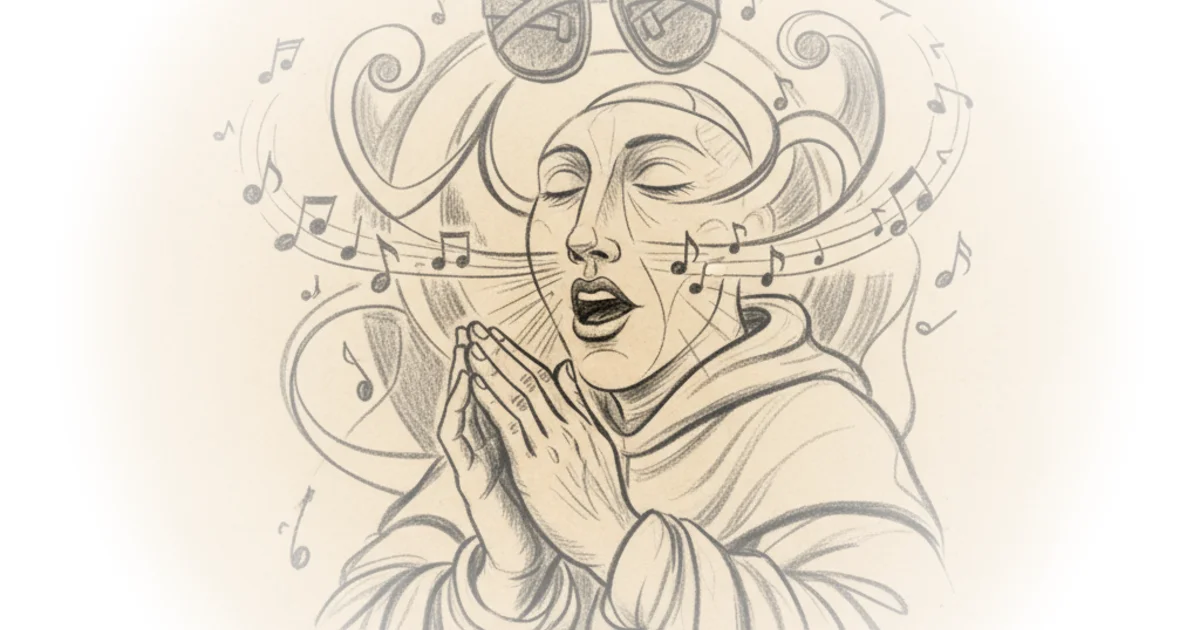
This framing is powerful because it refuses to let the reader off the hook with a simple narrative of triumph. Instead, it highlights the historical weight of his suffering, noting that "two of his siblings died in childhood, of the same diphtheria which left him frail." By weaving in the specific tragedy of diphtheria—a disease that once ravaged communities before vaccines became widespread—the article connects Solanus's personal frailty to a broader human history of vulnerability. The editors argue that Solanus's life proves one can avoid bitterness even when "disappointments, in family life and in the Church" seem insurmountable.
"You could take those things, and let them add up to a life of bitterness. You could harbor resentments or grudges. It'd be easy. Solanus just made other choices, cooperating with grace, and living a fulfilled life in circumstances he didn't predict."
The core of the argument here is the spiritual discipline of "thanking God first." The Pillar reports that Solanus "made an act of the will, to thank God for it even before it arrived." This is presented not as a naive optimism, but as a strategic reorientation of the will. The piece suggests this practice "disposes us to see Providence, when we're tempted to see only our own efforts." While critics might argue that such a disposition can border on toxic positivity in the face of genuine tragedy, the article counters by emphasizing that Solanus's joy was forged in the fire of real loss, not ignorance of it.
Ecclesiastical Turmoil and Geopolitical Friction
Shifting gears, the coverage moves to the volatile intersection of faith and statecraft. The Pillar reports on the release of a Polish Carmelite, Brother Grzegorz Gaweł, who was arrested in Belarus on espionage charges for carrying a "sensitive military document documenting a Belarussian exercise conducted jointly with Russia." The release, part of a prisoner exchange, underscores the precarious position of religious figures in conflict zones. Simultaneously, the article highlights the destruction of an Orthodox cathedral in the disputed Nagorno-Karabakh region, a move Armenian leaders describe as an attempt to "erase the Armenian trace" from the land.
The editors draw a sharp line between this cultural erasure and the Vatican's diplomatic ties with Azerbaijan. The piece notes that a foundation connected to the Azeri government has invested heavily in Rome, helping to "restore St. Paul Outside the Walls basilica and other important works of art and history." This financial entanglement raises difficult questions about the Holy See's neutrality. The article points to Cardinal Claudio Gugerotti, whose tenure as nuncio helped strengthen ties, and asks, "How long can that situation last?" This is a crucial inquiry, as it forces the reader to consider whether diplomatic pragmatism is overshadowing the moral imperative to protect persecuted minorities. A counterargument worth considering is that the Vatican's engagement is a necessary channel for dialogue in regions where silence would mean total abandonment, yet the article rightly leaves the tension unresolved.
"Armenian human rights leaders say the situation is a kind of ethnic cleansing, part of a long history of ethnic persecution by Azerbaijanis."
The Absurdity of Modern Church Life
Perhaps the most jarring section of the piece addresses the surreal nature of contemporary Church disputes. The Pillar details a case in the Swiss Diocese of Chur where three individuals fed the Eucharist to their dogs. The diocese concluded they were not excommunicated because they "did not act with sacrilegious intent." The commentary here is biting: "I find this a bit interesting. The relevant canon prohibits taking the Eucharist for a 'sacrilegious purpose' — and I think taking the Eucharist to feed it to your dog is an objectively sacrilegious purpose."
The piece argues that the bishop's reliance on "intent" rather than the objective nature of the act is a weak legal argument, noting that "'crass or supine' ignorance does not suffice" to escape culpability. This section serves as a microcosm for a broader institutional struggle: the gap between ancient canon law and modern absurdity. The editors also touch on the German bishops' defense of their guidelines for blessing same-sex couples, which they insist "posed no threat to Church unity" despite critical comments from the Vatican. The article captures the friction between local pastoral innovation and central authority, noting that the Pope has already intervened to make the "Apostolic See's views known."
Institutional Failures and the Cost of Disposition
The commentary concludes by examining the structural failures within the Church, contrasting the Brazilian bishops' creation of a national data center with the likely stagnation of similar efforts in the U.S. The Pillar argues that the biggest obstacle to progress is not financial, but "dispositional." This is most evident in the discussion of Catholic schools and their willingness to enroll children with disabilities. Citing a study from the NCEA, the piece observes that some schools are "not interested" in serving children with significant special education needs.
The editors make a compelling case that when administrators view inclusion as a core identity rather than an "extra," "financial and practical obstacles are almost always easily overcome." This argument reframes the issue from one of resources to one of will. It suggests that the Church's witness to the "dignity of the human person" is contingent on tangible action. The piece notes that "enrolling children with disabilities can so positively transform school culture, pedagogy, instruction, etc, that doing so leads to more success, more viability, and more resources." This is a pragmatic, yet deeply theological, insight that challenges the status quo.
"If you want to create a culture of life, you have to do so tangibly. And when you do, the 'Catholic' in 'Catholic education' becomes all the more rich, and all the more real."
The article briefly touches on the assassination attempt on a U.S. political leader, noting the "predictable patterns" of public reaction where some view the leader as a hero and others celebrate the violence. The editors observe that the country is in a "really, really weird and troubling place," a sentiment that resonates with the broader theme of institutional and societal fracture. The piece suggests that the security perimeter around political leaders will eventually return to the "status quo," but the underlying chaos remains.
Bottom Line
The strongest part of this argument is its refusal to separate the spiritual from the structural; it shows how the discipline of gratitude in a single friar's life offers a blueprint for navigating the chaos of modern geopolitics and institutional dysfunction. Its biggest vulnerability lies in its reliance on the assumption that "dispositional" change is sufficient to overcome deep-seated systemic issues, a leap that may underestimate the inertia of bureaucracy. The reader should watch for how the Vatican navigates the tension between its diplomatic investments in Azerbaijan and the escalating ethnic cleansing in Nagorno-Karabakh, as this will likely define the Church's moral standing in the region for years to come.