In an era where the literary landscape feels increasingly automated, this piece from Sub Club offers a vital, human-centric counter-narrative: a curated roadmap for writers seeking genuine compensation and editorial engagement. The article distinguishes itself not merely by listing opportunities, but by rigorously filtering them through the emerging crisis of artificial intelligence policy, turning a standard submission guide into a strategic defense of human authorship.
The AI Firewall
The most urgent argument in the coverage is the rapid hardening of editorial standards against generative tools. Sub Club reports, "many literary magazines have started thinking about forming their official AI-policies. And most of them are quite anti-generated AI submissions." This observation is critical because it signals a shift from vague ethical concerns to concrete gatekeeping. The piece notes that this resistance is expanding beyond full-text generation to include the very tools writers rely on for polish: "many places that do now have a clear anti-AI policy for subs are also adding that they don't want submissions assisted by AI either."
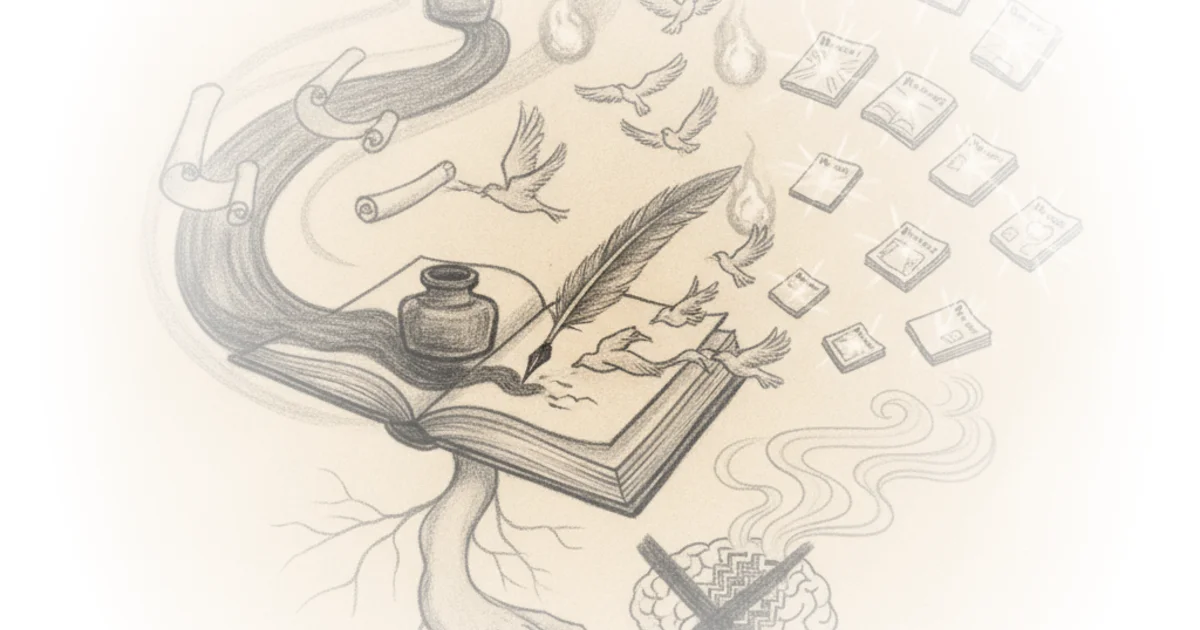
This is a significant evolution in the industry's stance. It suggests that the value proposition of literary magazines is now inextricably linked to the provenance of the human mind behind the text. Sub Club warns writers to be vigilant, noting that some policies are strict enough to "encompass even things like grammar or spellcheck stuff that has gone through an LLM." For a busy professional, this is a crucial distinction; it means the margin for error has vanished. The editors argue that compliance is not just about ethics but about survival in the submission queue: "It'll save everyone a whole lotta headache and heartbreak, I think!"
Critics might argue that such blanket bans on AI assistance could stifle accessibility for writers with disabilities or those for whom English is a second language. However, the piece implies that the risk of being disqualified for using a tool that mimics human thought outweighs the convenience, framing the current moment as a test of authenticity.
"We adapt, retell, and transcend stories from mythology and classic literature, encouraging writers to come together and bring the then to our now."
Curating the Human Voice
Beyond the warnings, the article functions as a high-value filter, separating noise from signal. Sub Club highlights specific venues that prioritize distinct, human perspectives, such as Icarus Writing Collective, which seeks work that brings the past into the present. The editors note that the current theme of "Alchemy" welcomes diverse interpretations, from "queer Frankenstein or a modern Mahabharata." This reference to mythopoeia—the creation of myth—echoes the broader literary tradition of reimagining archetypes, a practice that requires deep cultural intuition rather than algorithmic prediction.
The coverage also spotlights the importance of editorial transparency. For Starlite Pulp Review, the piece celebrates the editor's decision to release a video explaining their vision, stating, "I think more editors should do it — you're all beautiful dammit." This direct, emotional appeal underscores the human element that AI cannot replicate. Similarly, Rawhead is praised for seeking work in a voice that is "authentic and joyous and angry and pure you," a description that inherently excludes the homogenized tone of large language models.
The piece also draws attention to the financial realities of the sector, noting that while some pays are modest, the opportunities are real. The Plentitudes offers $50 for work exploring the human condition, while Copper Nickel provides substantial flat fees for sociohistorical work. The editors emphasize that these outlets are not just publishing content but fostering communities, as seen with Fiction Attic, which offers free subscriptions to literary agents specifically to help emerging writers break into the industry.
"Rawhead is a journal of art & lit that publishes work of consequence. We use a monster's name to honor art's power to resist, reveal, and endure."
The Risk of Homogenization
The commentary implicitly argues that the proliferation of AI-generated content threatens the diversity of the literary ecosystem. By listing magazines that explicitly oppose generative AI, such as Copper Nickel and Fear in Dust, the piece reinforces the idea that human error, idiosyncrasy, and lived experience are the currency of high-quality literature. The editors note that Fear in Dust will not accept AI-assisted writing and limits submissions to one poem, a constraint that forces writers to be deliberate and precise.
A counterargument worth considering is whether these strict policies might inadvertently create a barrier to entry for new writers who rely on digital tools for organization or drafting. Yet, the piece's overall tone suggests that the literary world is currently drawing a hard line in the sand to preserve the integrity of the craft. The inclusion of a "Mole Notes" section, where a fictional mascot provides quirky, personalized advice, further humanizes the submission process, reminding writers that there is a person on the other side of the screen.
Bottom Line
The strongest element of this coverage is its timely pivot from a simple list of opportunities to a strategic guide on navigating the AI era; it treats the reader as a professional who needs to understand the shifting rules of engagement. Its biggest vulnerability lies in the potential exclusion of writers who rely on assistive technologies, a nuance the piece acknowledges but does not fully resolve. Readers should watch for how these anti-AI policies evolve over the next year, as the definition of "human-written" may become the most contested term in publishing.
"Send them: work in a voice — YOUR voice — that's authentic and joyous and angry and pure you."
The Human Cost of Automation
Ultimately, the piece serves as a reminder that behind every submission portal is a human editor looking for a connection that transcends data. By curating 20 magazines that value human authorship, Sub Club provides a lifeline for writers navigating a landscape increasingly cluttered with synthetic content. The editors' insistence on honesty—"please do make sure you are honestly considering every mag's policy and following it"—is not just a rule but a plea for the preservation of the literary community's soul.