This Eleventh Circuit ruling doesn't just strike down a Florida law; it dismantles the state's attempt to turn public universities into ideological echo chambers. Reason cuts through the political noise to expose a legal contradiction: the administration claims absolute control over university speech while simultaneously boasting about the very academic freedom this ban destroys.
The Illusion of Control
The piece opens by dissecting the "Individual Freedom Act," a statute so broad it prohibits professors from teaching that virtues like merit or objectivity are tools of oppression, or that individuals should feel guilt for historical actions committed by others. Reason reports that while the law claims to allow neutral discussion, its core mechanism is a "chill[ing] potential speech before it happens." This pre-emptive restriction is the crux of the legal battle. The court's 2-1 decision hinges on rejecting the state's "government speech" doctrine—the argument that because Florida funds universities, it owns every word spoken within them.
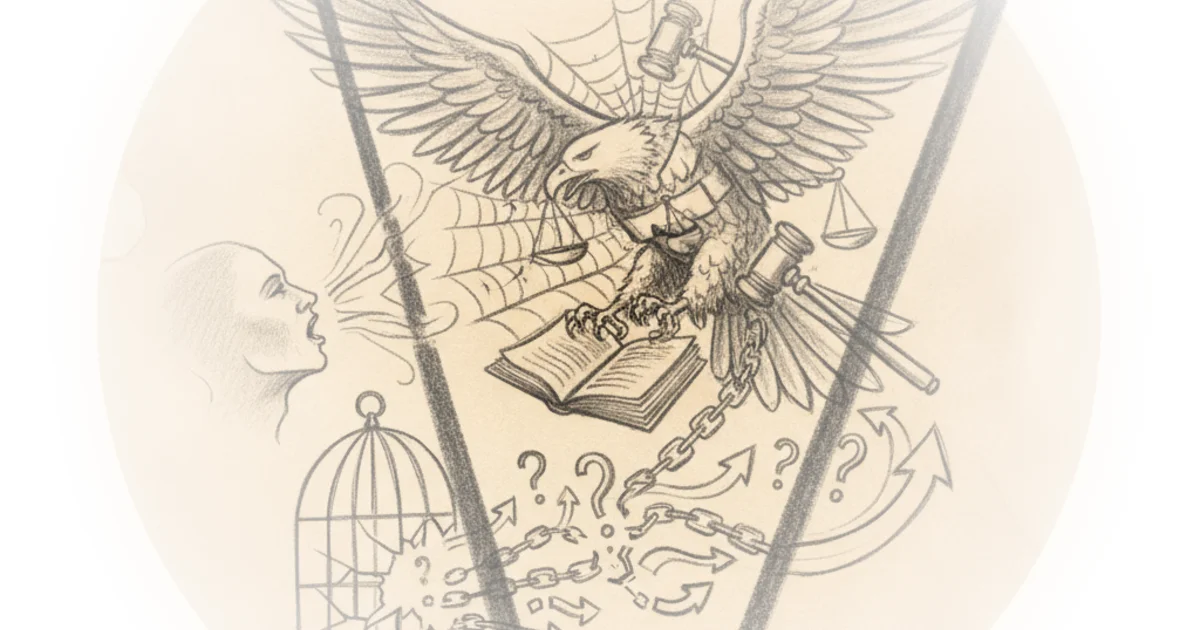
The editors argue this logic collapses under scrutiny. "Does anyone really think that every professor in every class at every public university is putting forward the official line of the State's political branches?" The piece notes that unlike primary and secondary schools, where the state dictates curriculum down to the textbook, Florida law explicitly mandates universities to foster "intellectual freedom and viewpoint diversity." This creates a legal paradox: the state cannot claim its professors are government mouthpieces when its own statutes forbid limiting access to ideas students might find "uncomfortable" or "offensive."
If the government speech doctrine applies here, it would mean the state has total control over every lecture, yet Florida law explicitly forbids such control.
Critics of the ruling might argue that public universities are still state entities and should adhere to the political priorities of their funding source. However, the court's distinction between "editorial control" for pedagogical goals versus ideological censorship is vital. The judges lean heavily on Bishop v. Aronov, a 1991 precedent where a professor was barred from injecting personal religious views into an exercise physiology class. That case allowed restrictions to prevent coercion, but Reason points out the fatal flaw in Florida's approach: "Florida here asserts the opposite interest—coercing university faculty (and by extension the students) into avoiding a certain set of ideas."
The Classroom as a Marketplace
The commentary highlights how the ruling protects the "marketplace of ideas" essential to higher education. By citing Hazelwood School District v. Kuhlmeier, the court acknowledges that educators can exercise editorial control, but only when "reasonably related to legitimate pedagogical concerns." The piece argues that banning specific concepts about race and sex has nothing to do with pedagogy; it is purely political orthodoxy enforcement.
The judges note that the state's interest in this equation is "rather circumscribed." They reject the idea that a blanket ban on eight specific concepts serves any educational mission. Instead, the court emphasizes that "compelling certain beliefs by suppressing individual thought and expression is especially dangerous in the classroom context." This echoes the historical tension between in loco parentis (the state acting as a parent) and the modern understanding of university autonomy. The ruling suggests that when the state tries to mandate what students must not believe, it steps outside its role as an educator and into the realm of thought control.
The administration's argument that funding equals ownership is described by Reason as a "sweeping assertion... unsupported by the cited government speech precedents." The editors remind us that those precedents involved things like license plates or recycling slogans, not the complex, independent discourse of graduate-level seminars. The court found that Florida exercises "relatively little control" over postsecondary curricula compared to K-12 education, making the claim of total ownership legally baseless.
Bottom Line
The strongest part of this argument is its surgical deconstruction of the government speech doctrine in an academic setting, proving that funding does not equal ideological monopoly. Its biggest vulnerability lies in the potential for future legislative pushback, as states may simply reframe these bans as "curriculum standards" to bypass judicial review. Readers should watch how other circuits handle similar statutes, as this ruling sets a high bar for what constitutes legitimate pedagogical control versus political censorship.