This conversation cuts through the noise of standard animal advocacy to reveal a radical strategy: that breaking the law to expose suffering is not a liability, but a necessary catalyst for moral awakening. Peter Singer's interview with Wayne Hsiung offers a rare, unvarnished look at how the most effective social movements often begin by violating the very norms they seek to change, forcing a public confrontation with hidden cruelty.
The Mechanics of Disruption
Singer frames the discussion around the evolution of Direct Action Everywhere (DxE), noting how the group's early tactics in restaurants were less about policy and more about breaking the silence of social conformity. Hsiung admits the viral nature of their early protests was largely accidental, born when co-founder Priya Sohani decided to "just go into the fanciest restaurant in the Bay Area and started yelling at people about eating animals." Singer observes that while this seemed chaotic, it served a specific psychological purpose: overcoming "preference falsification," a concept where individuals hide their true moral beliefs to fit in with a perceived social norm.
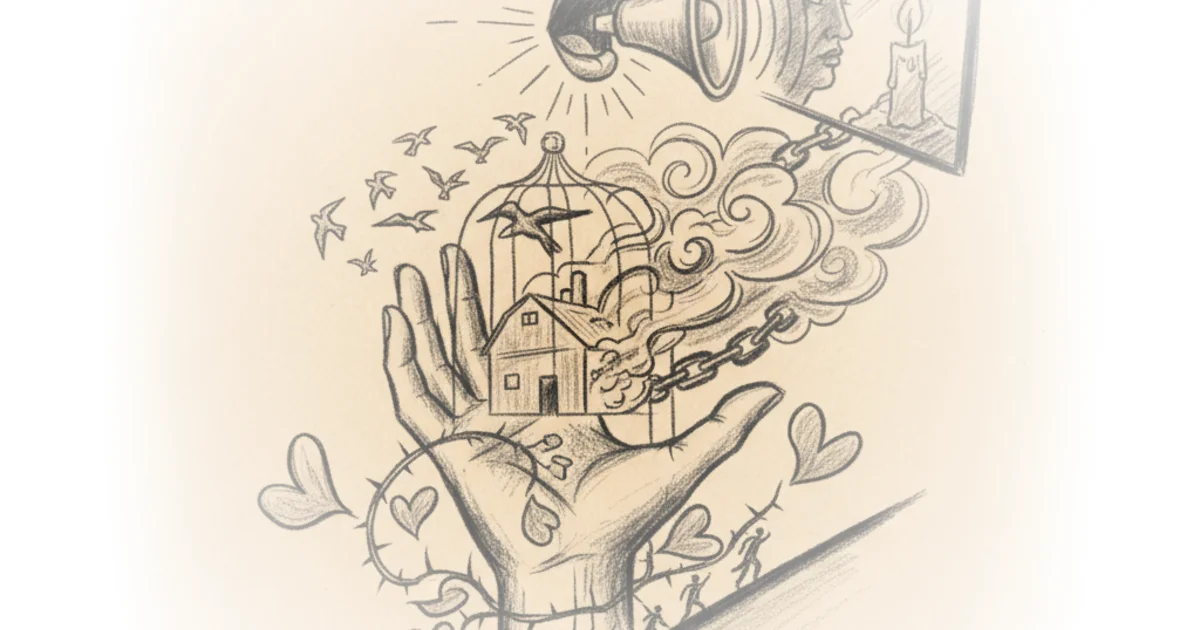
The argument here is compelling because it shifts the metric of success from immediate legislative wins to the psychological liberation of the public. Hsiung explains, "The most powerful thing I think it did was inspire a lot of people to speak out. I think that's really important." This reframing suggests that the primary barrier to animal rights isn't a lack of data, but a lack of permission to care. Critics might note that such confrontational tactics risk alienating the very moderate audience the movement needs to court, potentially hardening opposition rather than softening it. Yet, the evidence of viral spread suggests the gamble paid off in terms of visibility.
From Anonymity to Accountability
The piece pivots to "Open Rescue," a tactic that distinguishes itself from the historical legacy of the Animal Liberation Front. While the ALF, which emerged in the 1970s, often operated covertly to maximize economic damage, Hsiung describes Open Rescue as a shift toward "social, moral, and cultural disruption" where activists stand behind their actions. Singer highlights the strategic brilliance of this move: "Instead of sneaking around, activists went in openly, found suffering animals, gave them aid, and told their stories. And they stood behind their actions publicly, because when you're anonymous, people don't find your message as credible."
This transparency is the core of the argument. By accepting the risk of arrest, the activists transform from vandals into witnesses. Hsiung recounts his own journey from a trembling participant in peaceful protests to someone willing to face incarceration, noting that "Courage, like a muscle, can be built through exertion over time." The editorial weight here is significant; it challenges the reader to consider whether moral consistency requires personal risk. The narrative suggests that the emotional toll of isolation in jail was a heavier burden than the physical conditions, yet the moral clarity gained was worth the price.
"When I finally got The New York Times to publish an op-ed about animal rescue, it wasn't because of an argument. It was because of the emotion. The story had power."
The Power of a Single Image
The most striking section of the interview details a trial in rural Utah, a region where the local economy and political culture were deeply entrenched in the meat industry. Singer notes the odds were stacked against Hsiung, with 90% of the county voting for the former president in recent elections and the local economy dependent on Smithfield. Despite the prosecution successfully arguing that video evidence of the cruelty was too prejudicial to show, the defense managed to introduce footage of a single rescued piglet.
The outcome defied all legal expectations. Hsiung describes the moment a juror realized, "I just saw that little piglet, and I realised I liked her alive more than I liked her dead." This anecdote serves as a powerful counter-narrative to the idea that deep-seated cultural norms are immutable. It demonstrates that even in the most conservative environments, direct exposure to suffering can bypass political rhetoric. The argument implies that the law, while rigid, is ultimately interpreted by humans who retain a capacity for empathy that policy cannot fully suppress.
Global Stakes and Personal Risk
The conversation concludes with a harrowing account of Hsiung's infiltration of the Yulin Dog Meat Festival in China, where he faced potential espionage charges carrying the death penalty. Singer uses this to underscore the global scale of the issue and the personal stakes involved. Hsiung explains that despite the danger, the mission was to capture footage of the slaughter of thousands of dogs, many of them stolen pets. "Luckily, even in China, dog meat is controversial. The government didn't want a diplomatic incident. They released me after two days," he recounts.
This section broadens the scope from domestic activism to international human rights and animal welfare intersections. It reinforces the central thesis that the drive to expose suffering transcends borders and legal systems. However, one might argue that focusing on extreme cases like Yulin risks overshadowing the more mundane, yet equally devastating, realities of industrial farming in the West. The drama of the rescue can sometimes eclipse the systemic nature of the problem.
Bottom Line
Singer's coverage of Hsiung is a masterclass in reframing civil disobedience not as a legal failure, but as a moral necessity. The strongest element of the argument is the demonstration that emotional resonance, triggered by direct witness, can dismantle even the most entrenched cultural defenses. The biggest vulnerability remains the scalability of this model; it relies on individuals willing to risk their freedom, a resource that is finite. Readers should watch for how this strategy of "Open Rescue" evolves as legal systems adapt to counter these specific tactics, and whether the movement can maintain its momentum without relying solely on high-stakes personal sacrifice.