Noah Smith delivers a piercing critique of the current trade regime, arguing that the Supreme Court's recent ruling against unilateral tariffs was less about legal technicalities and more about stopping a slide toward executive dictatorship. The piece's most startling claim is that the administration's obsession with tariffs isn't driven by economic logic—which has clearly failed—but by a desire for unbridled personal power and a mechanism for corruption. For busy readers tracking the economy, this reframes the tariff debate from a trade war to a constitutional crisis.
The Legal Tightrope
Smith begins by dissecting the Supreme Court's 6-3 decision, which struck down the use of the International Emergency Economic Powers Act (IEEPA) for tariff imposition. He notes that Chief Justice John Roberts warned that affirming such power would "represent a transformative expansion of the President's authority over tariff policy." This is a crucial pivot point. The Court recognized that the Constitution grants Congress, not the executive branch, the sole power to levy taxes. Yet, as Smith points out, the administration is not retreating. Instead, they are scrambling to utilize older statutes, including Section 122, to impose a 15% tariff on all imports for 150 days, a move that could be endlessly renewed.
The author highlights the legal maneuvering with a sharp observation: "Trump can presumably just renew it for another 5 months when it ends, until he gets sued again and it goes back to the Supreme Court." This cyclical litigation strategy suggests the administration views the courts not as a check on power, but as a hurdle to be jumped over repeatedly. Critics might argue that the executive branch has historically used these emergency powers during genuine crises, but Smith's analysis suggests the current application lacks any such emergency, turning the IEEPA into a tool for routine economic policy.
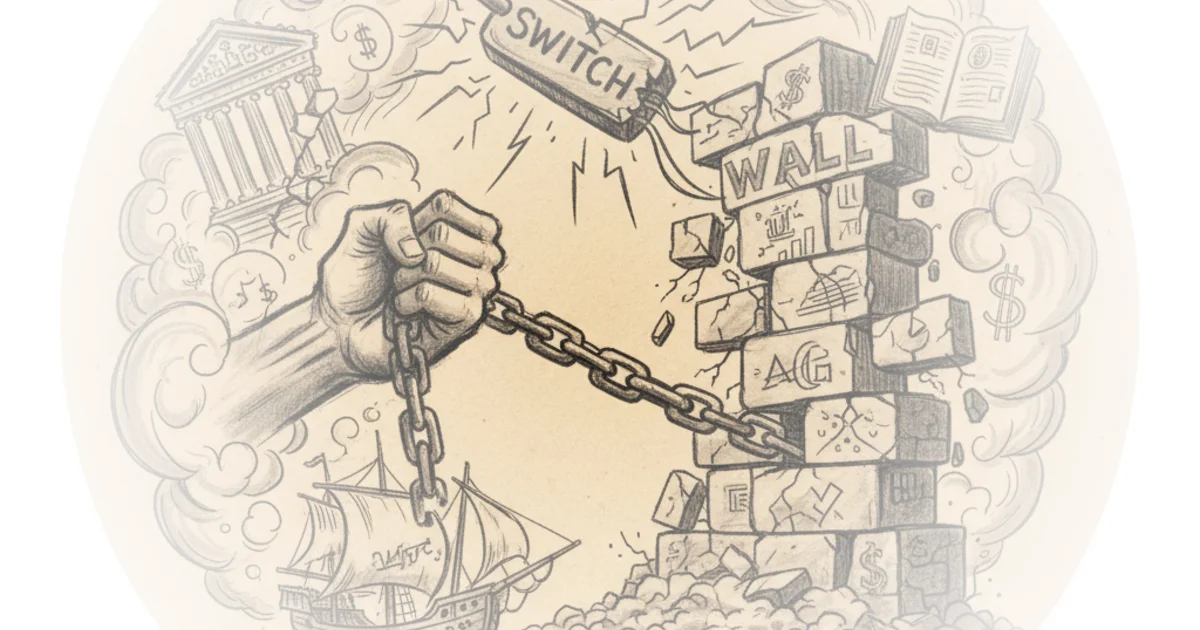
The tariffs had their origin in 1990s-era worries about trade deficits, but they ended up as a way to make the Presidency more like a dictatorship.
The Economic Reality Check
Moving beyond the legalities, Smith dismantles the economic justifications for these levies. The administration claimed tariffs would reduce the trade deficit and spark a manufacturing renaissance. The data tells a different story. Smith cites the Wall Street Journal to show that "the manufacturing boom President Trump promised would usher in a golden age for America is going in reverse," with factory activity shrinking for 26 straight months. The logic is sound: tariffs are taxes on intermediate goods, making inputs like steel more expensive for domestic manufacturers, thereby hurting the very industries they were meant to protect.
He reinforces this with data from the Kiel Institute, noting that "American importers and consumers bear nearly the entire cost" of the tariffs, with foreign exporters absorbing only about 4% of the burden. This near-complete pass-through means the policy acts as a regressive tax on American households. While the administration celebrates the absence of a total economic collapse, Smith argues this is a low bar. "If you back off of most of your tariffs and the economy fails to crash, you don't get to celebrate," he writes, emphasizing that the policy has fixed nothing while causing significant inconvenience and higher prices.
The Power Play
Perhaps the most compelling part of Smith's argument is his exploration of why the administration clings to this failing policy. He dismisses simple economic ignorance, suggesting instead that the tariffs serve a deeper political function. The administration's rage at the Supreme Court ruling, which he describes as the President flying "into a rage" and accusing Justices of being "lapdogs," reveals the true stakes. Smith posits that the specific IEEPA tariffs were prized because they allowed the President to act as a "haphazard economic central planner," granting exemptions to allies and punishing enemies.
He argues that the policy is a vehicle for leverage and potential corruption, where companies must "line up to curry favor with Trump and his family" to secure exemptions. This interpretation reframes the tariff war as a power grab. "In other words, I think that although the tariffs had their origin in 1990s-era worries about trade deficits, they ended up as a way to make the Presidency more like a dictatorship," Smith concludes. This aligns with historical warnings about the concentration of power; just as the Smoot-Hawley Tariff Act of 1930 once led to global trade collapse, the current push for unilateral authority threatens to bypass the legislative branch entirely.
Critics of this view might argue that the President simply needs flexible tools to negotiate in a complex global economy, but Smith's evidence of the policy's self-defeating nature undermines the idea that this is about national interest rather than personal control.
Bottom Line
Smith's strongest contribution is exposing the disconnect between the administration's stated economic goals and the actual pursuit of unchecked executive authority. The piece's biggest vulnerability is its reliance on the assumption that the administration's actions are purely motivated by power rather than a genuine, albeit flawed, ideological belief in protectionism. However, the evidence of manufacturing decline and consumer pain makes the case that the policy is unsustainable. Readers should watch for how the administration attempts to bypass the Supreme Court ruling using Section 122, as this will be the next flashpoint in the struggle over who controls the nation's trade policy.