Phillips P. O'Brien delivers a jarring counter-narrative to the prevailing gloom, arguing that Ukraine has not merely survived but is actively dismantling Russian naval power in the Black Sea. The piece is notable for its specific focus on the operational collapse of the Russian fleet, moving beyond abstract geopolitical maneuvering to concrete evidence of a "terminal, downward spiral." For the busy observer tracking the war's trajectory, O'Brien provides a critical lens: the war at sea is no longer a stalemate but a decisive Ukrainian victory that directly targets the Kremlin's economic lifeline.
The Collapse of the Black Sea Fleet
O'Brien opens with a striking assessment of recent events, noting that while ground forces grind through empty fields, "Ukraine is winning the war at sea." He anchors this claim in the December 15 attack on an improved Kilo-class submarine in Novorossiysk. This is not a minor skirmish; as O'Brien writes, "The Russians can no longer protect their most valuable assets in their most secure port, against a naval force that has no manned vessels." The author draws a sharp historical parallel, reminding readers that the Russian navy was once based in the formidable Sevastopol, a port that allowed them to strangle Ukrainian trade. By forcing a retreat to the isolated Novorossiysk, Ukraine effectively broke the siege of Odesa, a strategic pivot that mirrors the desperate defensive shifts seen during the Siege of Sevastopol in 1941–1942, though with the roles reversed.
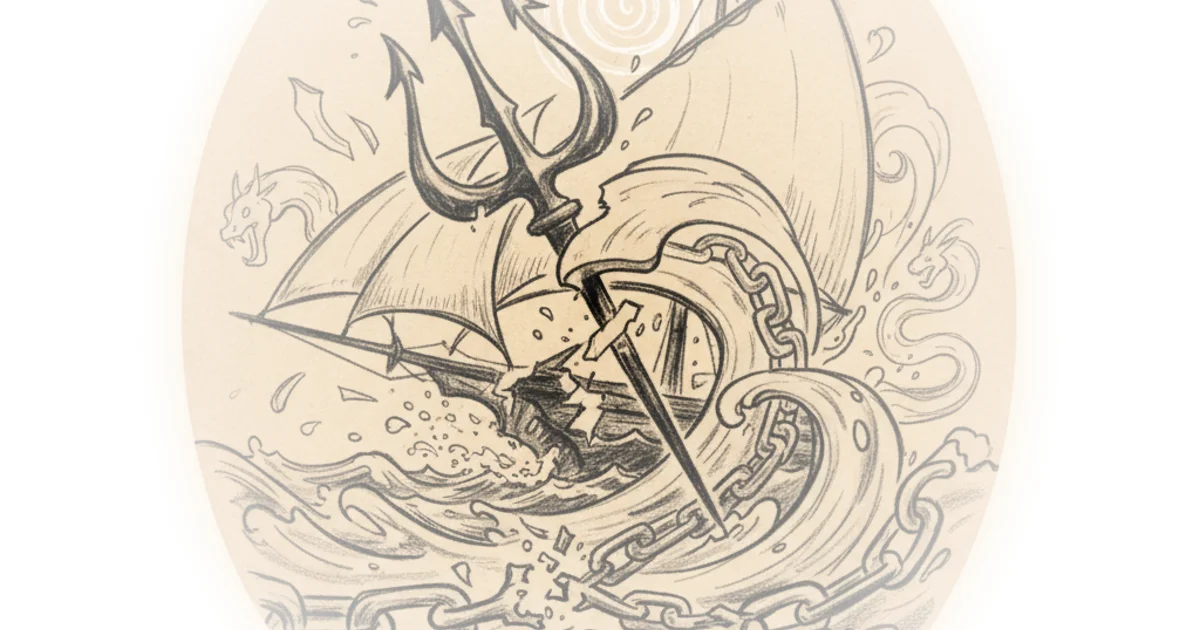
The significance of the submarine attack lies in the vulnerability it exposes. O'Brien points out that these vessels are capable of launching Kalibr missiles to bombard cities, yet "Ukrainians were able to get an unmanned, Sea Baby naval drone through all the defenses of Novorossiysk... and explode the device close enough to the submarine to do real damage." This success suggests either a catastrophic failure in Russian perimeter security or a sophisticated Ukrainian capability to bypass it. The intelligence assessment that the sub is "no longer seaworthy" serves as a grim indicator of the fleet's degradation.
The damage done to the Kilo seems serious. It is another sign that the Black Sea Fleet is on a terminal, downward spiral.
Critics might argue that losing one submarine, while symbolic, does not immediately alter the balance of power if Russia can simply replace it or shift tactics. However, O'Brien's argument gains weight when he connects this to the broader campaign against the "shadow fleet." He details the December 19 attack on the tanker Qendil in the Mediterranean, 2,000 kilometers from Ukrainian ports. This demonstrates a terrifying reach: "The Ukrainians clearly have the ability to deploy these drones a long way from home using remote launching vessels or something similar."
This expansion of the battlefield is crucial. By striking tankers in the Mediterranean and potentially the Baltic, Ukraine is attacking the very mechanism Russia uses to fund its war machine. O'Brien writes, "Russia's Achilles heel remains its economy, which is far from being that of a great power and which has blown through its reserves and is living close to hand to mouth." The logic is sound: if Russia cannot ship oil, it cannot pay for the war. The human cost of this economic strangulation is indirect but profound, as the war's duration and intensity are directly tied to the Kremlin's ability to generate revenue.
The European Dilemma: Assets vs. Loans
The commentary shifts to the political arena, where the European Union recently decided against seizing frozen Russian assets to fund Ukraine, opting instead for a guaranteed loan structure. O'Brien frames this as a moment of "glass half empty or half full," acknowledging the deep division among allies. He notes that "Trump/Putin (note that they have an identical position on this) want to protect the Russian assets seized by European states so that they can later be returned to Russia."
The author highlights the immense pressure brought to bear on European leaders, particularly from the Belgian Prime Minister, who cited threats and credibility concerns. O'Brien observes, "Putin went bananas when this seemed likely, threatening terrible retaliation if Europe acted." The decision to blink, resulting in a 90 billion euro loan rather than asset seizure, is analyzed with a mix of pragmatism and frustration. While optimists see the loan as a "marker on the road to Europe taking over from the USA," O'Brien remains skeptical. He argues that the loan is insufficient for a two-year war effort, effectively making it a "one year deal" that leaves Ukraine vulnerable to future financial coercion.
If it never happens, btw, Ukraine will end up receiving unbearable pressure to take a terrible deal.
This section reveals the fragility of the Western alliance. O'Brien points out that even staunch allies like France and Italy hedged their positions, suggesting that "support for Ukraine... is far from universal." The refusal to seize assets, driven by fear of Russian retaliation and internal political friction, signals a hesitation that the Kremlin can exploit. While the loan provides immediate relief, it fails to deliver the strategic shock that seizing the 200 billion euros in assets would have provided.
The Quiet Unwinding of Sanctions
Perhaps the most controversial segment of the piece addresses the actions of the US administration. O'Brien alleges a "quiet" rollback of sanctions that contradicts the public rhetoric of a hardline stance. He writes, "The Trump administration actually broke cover... removed a range of sanctions on companies doing important trade with Russia." The evidence cited includes a sudden removal of sanctions on foreign companies and a marked increase in US exports to Central Asian states like Uzbekistan and Kyrgyzstan, as well as Turkey.
The author connects these trade figures to a broader strategy of undermining sanctions. "Instead of obsessing on the deliberately weak sanctions placed on Russian oil, we should consider the fact that Trump is actually helping undermine US sanctions on Russia," O'Brien asserts. He notes that US exports to Uzbekistan jumped nearly 50% in a short period, a surge that coincides with the administration's tenure. This suggests a "con" where public posturing masks a policy of facilitating trade that benefits the Russian military-industrial complex.
As part of that, I always thought the that the US government under his watch would actually find ways to help the Russian war effort.
Critics might note that increased trade with Central Asia could be driven by legitimate commercial interests unrelated to Russia, or that the data is preliminary and subject to revision. However, O'Brien's framing forces a re-evaluation of the administration's true priorities. If the executive branch is indeed relaxing sanctions on defense-linked equipment, the impact on the battlefield could be significant, potentially offsetting the gains Ukraine is making at sea. The juxtaposition of Ukraine's naval victories against the potential erosion of Western sanctions creates a tense, uncertain picture of the war's future.
Russia makes its money shipping oil (except for the pipeline to China). If Russia loses the ability to do that through a combined air-sea attack by Ukraine, Russia will struggle to continue the war.
Bottom Line
O'Brien's strongest argument lies in the detailed evidence of Ukraine's asymmetric naval dominance, which effectively neutralizes Russia's Black Sea Fleet and threatens its economic survival. However, the piece's greatest vulnerability is the reliance on unverified trade data to substantiate claims of a systematic US policy reversal, which, while plausible, requires more concrete documentation. Readers should watch for whether the European loan proves sufficient to sustain the war effort or if the hesitation to seize assets invites further Russian aggression.