In an era where every new battery announcement feels like a race to the moon, Brian Potter cuts through the hype to reveal a fundamental truth: the biggest barrier to better energy isn't the chemistry, it's the scaffolding. While the market chases solid-state promises with billions in venture capital, Potter argues that the real story lies in the physics of why our current batteries are so heavy and fragile. This isn't just a tech update; it's a masterclass in why the laws of thermodynamics are the ultimate gatekeepers of the green transition.
The Physics of the Fall
Potter begins by demystifying the very nature of energy storage, stripping away the jargon to reveal the mechanics of electron movement. He writes, "Chemical reactions work in a somewhat similar way [to gravity]. But instead of gravity, the potential energy comes from electromagnetism: the positively charged nuclei tugging on the negatively charged electrons." This analogy is a stroke of genius for a busy reader, instantly converting abstract quantum mechanics into a tangible image of a ball rolling down a hill. He explains that in a battery, lithium ions and electrons "fall downhill" from a high-energy state at the anode to a lower one at the cathode, generating current as they go.
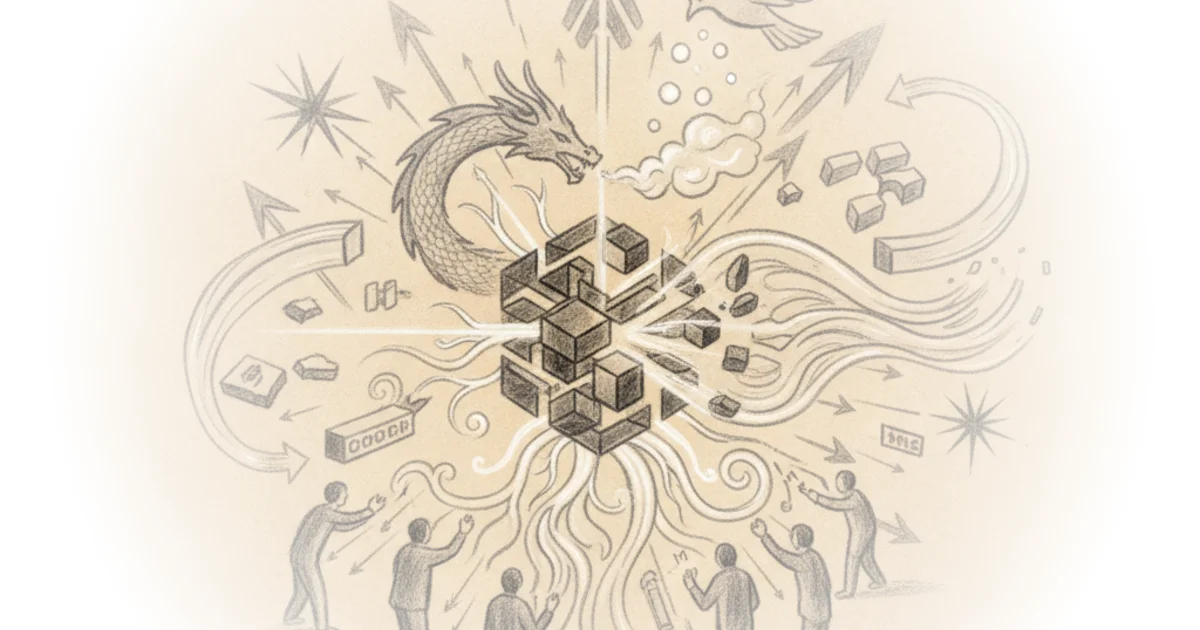
The author's framing of lithium as the ideal candidate is compelling because it highlights a specific physical advantage. "Lithium is a favored choice for a battery because an electron leaving lithium has farther to fall than an electron leaving any other metal when coupled with the appropriate reactant," Potter notes. Yet, he immediately pivots to the central paradox that makes this piece essential reading: if lithium is so potent, why are batteries so much less energy-dense than gasoline? The answer lies in the oxidizer. Unlike a gasoline engine that pulls oxygen from the air, a battery must carry its own electron destination. "Lithium-ion batteries, on the other hand, aren't so fortunate. They need to carry their electron destination with them, in the form of the cathode," Potter writes. This necessity forces the inclusion of massive amounts of non-reactive material just to hold the reaction together.
The Burden of Scaffolding
The most striking insight Potter offers is the concept of "material scaffolding." He quantifies the inefficiency with brutal clarity: "As of 2019, every gram of reacting lithium in a battery required about 70 grams of supporting material." This staggering ratio explains why electric vehicles remain heavy and why range anxiety persists. The battery isn't just storing energy; it's carrying the weight of the structure required to extract it safely. Potter draws a sharp contrast with combustion, noting that if a car had to carry its own oxidizer, it would need "about 3.5 kilograms of oxygen for every 1 kilogram of gasoline." The battery's architecture is a compromise between safety, reusability, and weight.
The benefit of all this material scaffolding, of course, is that you can use the same chemicals for the reaction over and over again.
This trade-off is the heart of the engineering challenge. The scaffolding allows for the intercalation process—where lithium ions nestle between graphite sheets—enabling thousands of charge cycles. Without it, the reaction would be a one-time explosion. Potter points out that while a theoretical "lithium-based internal combustion engine" could discard the scaffolding, it would be "terribly" inefficient and "outrageously expensive to run." The current design is a victory of reusability over raw density, a fact that often gets lost in the rush to tout new technologies.
The Solid-State Promise and Peril
The article's pivot to solid-state batteries is where the narrative shifts from explaining the status quo to analyzing the future. The primary driver for this shift is the elimination of dendrites. Potter describes these as "tree-shaped structures of metallic lithium" that form when ions fail to nestle properly and instead grow on the anode surface. If a dendrite pierces the separator, it creates a short circuit, leading to thermal runaway. "If a dendrite pierces the separator between the anode and the cathode, it creates a direct path between the two, letting that runaway reaction that batteries are designed to prevent take place," he warns.
The proposed solution is replacing the liquid electrolyte with a solid one. "If, however, the liquid electrolyte were replaced with some sort of solid material, these dendrites might stop being a problem," Potter suggests. This shift would theoretically allow manufacturers to ditch the graphite anode entirely in favor of pure lithium metal, drastically cutting the weight of the scaffolding. The potential upside is massive: lighter, safer, and more energy-dense batteries. The industry agrees; Chinese giant CATL alone had over 1,000 researchers dedicated to this by 2024, and US and European startups have raised over $4 billion.
However, Potter tempers the excitement with a dose of reality. He notes that the chairman of CATL ranks the technology as only "4 out of 9 on the technological readiness scale," indicating that commercial viability is far from guaranteed. Critics might note that the history of battery innovation is littered with solid-state promises that failed to scale due to manufacturing complexities or unexpected failure modes. Potter acknowledges this by referencing Moli Energy, a company from the 1980s that attempted lithium-metal anodes but collapsed after dendrite-related fires forced a massive recall. The physics of dendrite formation in solid materials remains a stubborn hurdle.
The expectation that they could be "[p]otentially safer, more energy dense, and perhaps eventually cheaper than today's batteries" is pushing manufacturers around the world to try and make them happen.
This global scramble underscores the stakes. As Potter observes, the drive for solid-state batteries isn't just about incremental improvement; it's about fundamentally changing the energy density equation that has constrained electric mobility for decades. Yet, the path forward is not a straight line. The transition from liquid to solid electrolytes involves overcoming significant materials science challenges, from ensuring ions can still move freely through a solid lattice to preventing new types of mechanical failure.
Bottom Line
Potter's analysis succeeds by grounding the solid-state hype in the unyielding laws of physics, reminding us that every gram of energy carries a price in material weight. The strongest part of his argument is the clear explanation of why current batteries are so heavy—the necessity of carrying the oxidizer and the scaffolding to prevent runaway reactions. His biggest vulnerability, however, is the inherent optimism of the solid-state timeline; while the physics is sound, the engineering reality of scaling these technologies without repeating the failures of the 1980s remains uncertain. Readers should watch not just for the next big announcement, but for the specific milestones in dendrite suppression and manufacturing scalability that will determine if this is a revolution or a rerun.