London Centric's Michael Macleod exposes a quiet revolution in the capital's food economy that no one is talking about: the rise of "host kitchens," where your favorite branded burger is likely being cooked in the back of a local kebab shop. This isn't just a story about delivery apps; it is a forensic look at how the economics of survival are forcing independent restaurants to become invisible factories for the very brands that helped squeeze them out of the high street.
The Illusion of Choice
Macleod begins by dismantling the illusion of variety on our screens. He describes a Greek restaurant in Beckenham preparing Gourmet Burger Kitchen (GBK) orders and a kebab house in Canary Wharf cooking for the trendy "Coqfighter." The evidence is stark: "Deliveroo and Uber Eats drivers come and go at a steady pace, picking up GBK 'handcrafted burgers' in 'artisan buns' that have never been near a GBK employee." This revelation reframes the entire delivery ecosystem. What appears to be a diverse marketplace is, in reality, a centralized distribution network masking its origins.
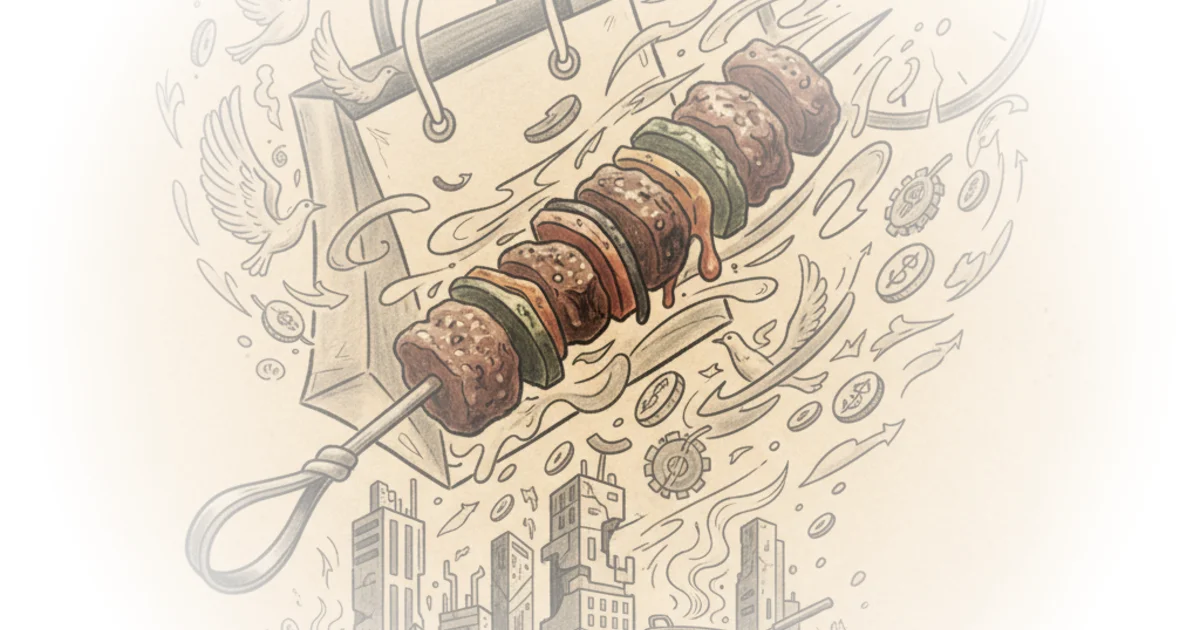
The author argues that this shift is driven by necessity rather than innovation. As cash-strapped establishments face rising energy bills and staffing crises, they are turning to "host kitchens" to survive. Macleod notes that while "dark kitchens"—dedicated warehouses for delivery—failed due to high overheads and neighbor complaints, the "host kitchen" model leverages existing infrastructure. The logic is seductive: "If it arrives hot and it's all the same, using the same ingredients, people don't actually mind where it comes from," says Chris Lam, a marketing manager for Growth Kitchen, the company orchestrating these deals. This pragmatism highlights a brutal truth about the modern consumer: brand recognition has superseded culinary authenticity.
"On one hand, it's a lifeline. But on the other hand, it's a harbinger of doom."
The Human Cost of Efficiency
However, Macleod does not shy away from the friction this model creates. The article details how this arrangement can be psychologically damaging for restaurant owners who must cook for a competitor while their own dining room sits empty. Food writer Andy Lynes points out that it is a "bit of a hit on people's egos" to prepare someone else's food when your own business is struggling. The operational reality is messy; a former general manager of an American barbecue brand told Macleod, "You don't know who's handling your food," noting that poor execution by a host kitchen can tank a brand's algorithmic ranking.
The author also highlights the cultural dissonance for dine-in patrons. The constant stream of delivery drivers entering a restaurant to pick up orders from a brand the establishment doesn't own disrupts the atmosphere. As Lynes observes, these restaurants are "cutting off their own legs" because they "want people to come out, but they're enabling people to stay at home." This paradox suggests that the very mechanism saving these businesses financially might be eroding the social fabric that made them viable in the first place.
Critics might argue that this model is simply a rational market response to the collapse of the traditional dining model, and that consumers are getting what they pay for: a consistent product at a lower price point. Yet, the article implies a deeper loss of local character, where unique neighborhood flavors are replaced by standardized, algorithm-friendly menus.
The Homogenization of Taste
The piece concludes with a sobering look at the future of London's food scene. Utku, a kebab shop owner in Canary Wharf, observes that the market is shifting toward a "homogeneous version of food delivery." He notes that having a unique recipe matters less than having a logo customers recognize. "People are eating earlier, they're going out less, they're going out less, they're eating in restaurants less," he says, pointing out that the number of delivery options has exploded while the number of "real" restaurants has not.
Macleod describes the emergence of "zombie restaurant brands"—familiar names that no longer have physical locations but persist digitally through these host kitchens. GBK, having closed many of its own sites, now relies entirely on this network to maintain its presence. The result is a system where money flows to recognizable brands that can afford marketing, while the actual labor and risk are borne by the local host. As Macleod puts it, "Most people never check where their food comes from," a sentence that serves as both an observation of consumer apathy and a critique of the opacity of the gig economy.
"Most people never check where their food comes from."
Bottom Line
Macleod's reporting is a vital correction to the narrative that food delivery is simply a matter of convenience; it reveals a structural shift where the independence of local businesses is being traded for the survival of the brand. The strongest part of the argument is the exposure of the "host kitchen" as a necessary evil that masks the decline of the physical restaurant, but the piece leaves the reader wondering if this efficiency comes at the cost of the city's culinary soul. The biggest vulnerability remains the lack of transparency: until regulators or platforms mandate clear labeling, the consumer is unknowingly participating in a system that prioritizes algorithmic consistency over local authenticity.