Matt Stoller reframes a high-stakes courtroom drama not as a celebrity feud, but as a pivotal test of whether a century-old sports monopoly can be dismantled by the very teams it exploits. The piece's most startling revelation is not the lawsuit itself, but the admission by NASCAR's own legal team that effectively concedes the sport's monopolistic status, turning a defense strategy into a self-inflicted wound.
The Anatomy of a Monopoly
Stoller immediately strips away the glamour of stock car racing to reveal the coercive mechanics underneath. He writes, "The France family and NASCAR are monopolistic bullies. And bullies will continue to impose their will to hurt others until their targets stand up and refuse to be victims." This framing is effective because it shifts the narrative from a business dispute to a moral imperative, positioning the plaintiffs not as greedy owners, but as victims of systemic extraction.
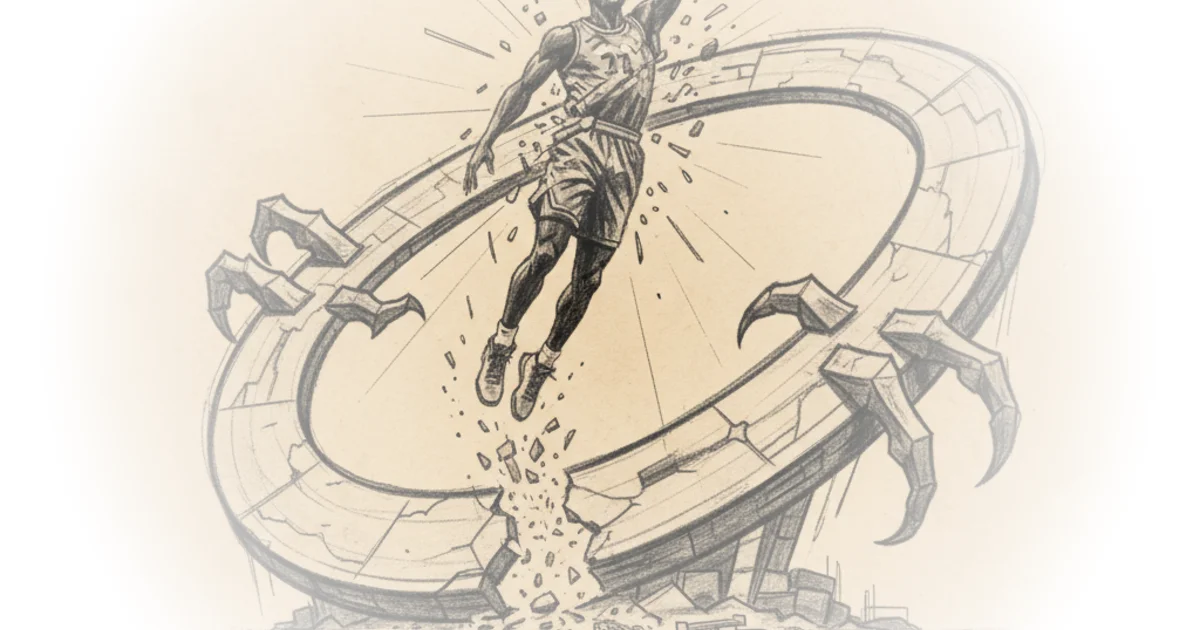
The author details how the sport's leadership maintains control through a stranglehold on infrastructure and supply chains. Stoller notes that teams are "required to shell out millions to purchase car parts dictated by NASCAR, but they do not retain ownership of these parts and are forbidden from using the cars containing these parts in any other racing event." This creates a classic lock-in effect where capital investment becomes a trap rather than an asset. The commentary here is sharp: it highlights how the monopoly doesn't just set rules; it owns the physical reality of the competition.
"Teams are now required to shell out millions to purchase car parts dictated by NASCAR, but they do not retain ownership of these parts and are forbidden from using the cars containing these parts in any other racing event."
Stoller draws a parallel to the Sherman Antitrust Act's historical application, referencing the O'Bannon v. NCAA case where lawyer Jeffrey Kessler successfully broke the college sports cartel. By bringing Kessler into the NASCAR suit, the plaintiffs are signaling that they intend to apply the same rigorous antitrust logic to the racing world. However, critics might note that sports leagues often receive unique judicial deference regarding their internal governance, a hurdle that could complicate this specific legal strategy despite the strong factual record.
The Human Cost of Dictatorship
The piece excels when it moves from legal theory to the visceral reality of the drivers and owners. Stoller cites internal communications that reveal a culture of contempt, quoting a text from NASCAR Commissioner Steve Phelps to a media officer regarding a legendary owner: "Childress needs to be taken out back and flogged. He's a stupid redneck who owes his entire fortune to NASCAR." This evidence is devastating because it exposes the arrogance that often accompanies unchecked market power.
The author argues that this bad behavior is a direct result of the lack of competition. "The bad behavior is downstream from the market power exhibited by NASCAR," Stoller writes, explaining that the monopoly allows the organization to underpay teams while capturing the bulk of the revenue. The result is a sport where even successful teams are "almost always on the verge of bankruptcy." This analysis connects the dots between corporate greed and the instability of the very ecosystem the corporation claims to protect.
Historical context is woven in seamlessly, reminding readers that this is not new behavior. Stoller points out that in the 1960s, founder Bill France Sr. banned union members, stating, "I'll use a pistol to enforce" the rule. "I have a pistol and know how to use it." By invoking this history, Stoller suggests that the current legal battle is merely the latest chapter in a long war between the France family's authoritarian control and the industry's need for fair play.
The Strategic Blunder
Perhaps the most compelling part of Stoller's coverage is the analysis of NASCAR's legal misstep. The author explains that NASCAR's lawyers, in an attempt to counter-sue the teams for forming a cartel, inadvertently admitted to the judge that NASCAR itself holds a monopoly. Stoller writes, "NASCAR made a strategic decision in asserting its Counterclaim and must now live with the consequences." The judge subsequently ruled that NASCAR is indeed a monopolist in the premier stock car racing market.
This section highlights the irony of the situation: in trying to paint the teams as the aggressors, NASCAR validated the core of the plaintiffs' argument. The commentary here is particularly astute, noting that while the outcome is still uncertain, the reputational damage is already done. The sport's decline in popularity is presented not as a market correction, but as a consequence of this extractive management style. Stoller observes that while NASCAR once dominated the top 20 sporting events by attendance, "Last year the Dayton 500 had an average audience of 6.7 million," a stark drop from the 15-19 million average seen in the early 2000s.
"If the terms were fair, (so many teams) wouldn't have gone out of business. Only one side is going out of business."
Bottom Line
Stoller's strongest argument is the demonstration that monopolies eventually consume their own ecosystem, turning potential partners into desperate adversaries. The piece's greatest vulnerability lies in the uncertainty of the final remedy; even if the plaintiffs win, the court may be hesitant to order a breakup of a complex sports league. However, the sheer volume of evidence regarding coercion and market control presented here makes a compelling case that the era of the France family's unchecked authority may finally be ending.