Adam Tooze dissects a dangerous intellectual trap: the idea that Europe has suddenly woken up to a chaotic world where only ruthless improvisation matters. By framing the European Union's current crisis as a "Machiavellian moment," the piece argues that the continent is abandoning its rule-based identity for a survivalist realism, but Tooze suggests this shift might be less about wisdom and more about panic.
The Illusion of Sudden Awakening
Tooze begins by tracing how historian Luuk van Middelaar urges Europeans to stop viewing history as a predictable march toward peace and start seeing it as a "random play of fortune." Van Middelaar warns that the post-Cold War era was merely a "vacation from power," a delusion shattered only when Russia invaded Ukraine in 2022. Tooze notes that van Middelaar believes the EU must now abandon its "rigid politics of rules" for a "politics of events." This framing is compelling because it captures the genuine anxiety gripping Brussels, yet it risks romanticizing chaos as a necessary teacher.
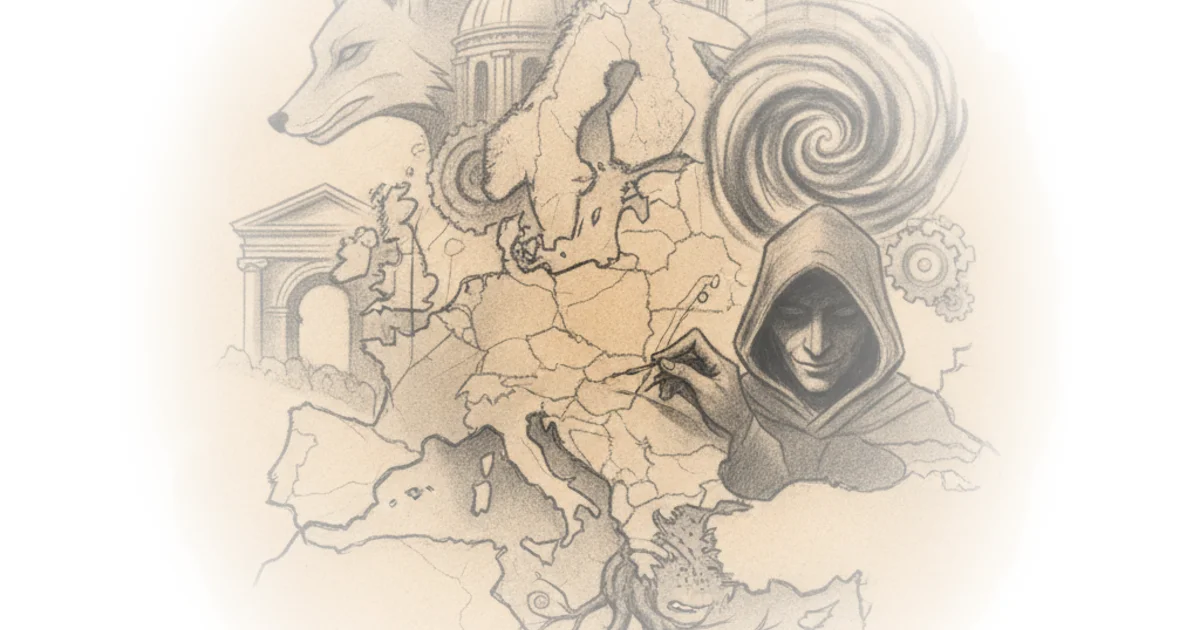
The author highlights how van Middelaar draws on J.G.A. Pocock's 1975 work The Machiavellian Moment to argue that modern politics requires accepting "temporal finitude." Van Middelaar writes, "Those who know themselves to be mortal must regard and arm themselves as chance entities in the river of time: an existential experience." Tooze points out that this perspective treats history not as a process with underlying causes, but as a stream of "irrational events" that demand swift, unburdened decision-making. This is where the argument begins to fray; by labeling complex geopolitical shifts as purely irrational, it dismisses the structural forces—like economic inequality or imperial overreach—that made these crises foreseeable.
History's unpredictability is the new normal rather than a confusing exception. In a world frayed by chaos and crisis, the call is not for lawyerly wrangling but for swift decision making.
The Russian Foil and the Trap of Improvisation
The commentary then pivots to how van Middelaar uses Russia as a mirror to shame European hesitation. Van Middelaar characterizes Moscow's approach as a mastery of "opportunistic events-politics," where leaders like Vladimir Putin do not need long-term plans because they view history as a series of contingencies. Tooze quotes van Middelaar describing the Russian style: "The Russians are masters at opportunistic events-politics and they have a system to match." This comparison is stark, suggesting that European democracies are paralyzed by their need for moral consistency while autocracies thrive on flexibility.
However, Tooze ly identifies a critical flaw in this logic. He notes that van Middelaar conflates George F. Kennan's 1952 observation of Russian strategic awareness with his own theory of blind chance. While Kennan described the Kremlin as acutely aware of complex historical patterns, van Middelaar reframes this as an ability to navigate "blind chance." Tooze argues that this is a dangerous simplification: "We are back, whatever Kennan actually said, in the world of contingent, unpredictable and 'irrational' events." The danger here is that by accepting chaos as the only reality, European leaders might abandon their own values in a futile attempt to mimic an adversary who operates on entirely different principles.
Critics might note that framing Russian statecraft as purely opportunistic ignores its deep ideological roots and long-term strategic goals, potentially leading Europe to underestimate the threat rather than outmaneuver it with superior strategy.
Rejecting the "Trauma" of History
Tooze's most potent critique arrives when he challenges the notion that recent crises were truly unpredictable shocks. He argues that the 2008 financial collapse, the Ukraine conflict, and the refugee crisis were "predictable and overdetermined," not random acts of fate. "If they were irrational it was only in the sense that they were shot through with multiple conflicting logics," Tooze writes. The author suggests that viewing these events as a sudden rupture is actually a sign of "disorientation, disillusionment and despair" rather than realism.
The piece warns against turning Europe's past complacency into an existential drama. Van Middelaar describes EU ideologues as "medieval prophets" who were shocked to face financial doom-loops, but Tooze contends that this trauma should not dictate future policy. He asks a piercing question: if we refuse the dramatic scenario of irrational chaos, "in what world does it make sense to describe the Eurozone crisis... as essentially contingent, unpredictable and irrational?" The answer, for Tooze, is that such descriptions serve more to soothe political anxiety than to guide effective governance.
A phase of depoliticization, a purported end to history, has in turn given rise to a singularly convulsive and ahistorical account of the 'return' of both history and politics.
Bottom Line
Tooze effectively dismantles the seductive narrative that Europe must abandon its democratic principles to survive a chaotic world, exposing "Machiavellian moment" rhetoric as a symptom of panic rather than a strategy for strength. The argument's greatest vulnerability lies in potentially underestimating how much genuine unpredictability exists in global power dynamics, yet its core insight remains vital: true security comes from understanding the structural roots of conflict, not just improvising through them.