Kahlil Greene does not merely report on the burning houses in Belfast; he dismantles the very logic of the rioters by revealing their own colonial origins. In a city where "foreigners" are being hunted, Greene exposes that the mob is composed of descendants of settlers who arrived four centuries ago as outsiders themselves. This piece forces a confrontation with a historical irony that mainstream coverage often misses: the people screaming for purity are the products of a plantation.
The Illusion of Belonging
Greene anchors his analysis in the immediate horror of the current violence, noting how quickly a local crime escalated into a city-wide purge. He writes, "For four nights, masked crowds have moved through Belfast house by house, kicking in doors and setting homes on fire because they believe immigrants live inside." The human cost is stark; he details how firefighters had to carry a two-month-old baby to safety through smoke while families fled with nothing. This visceral opening serves as the necessary counterweight to the abstract political rhetoric that follows.
The author argues that the violence was not organic but orchestrated, fueled by digital coordination and external amplification. He points out that graphic footage of a stabbing was boosted by far-right activists and billionaire accounts, turning a local tragedy into a global flashpoint for hate. "AI-generated lists of businesses and home addresses were circulated on Facebook and Telegram," Greene notes, highlighting how technology has weaponized prejudice with terrifying efficiency. This framing is crucial because it shifts the blame from spontaneous community anger to a calculated strategy by neo-Nazi networks like the Active Club movement.
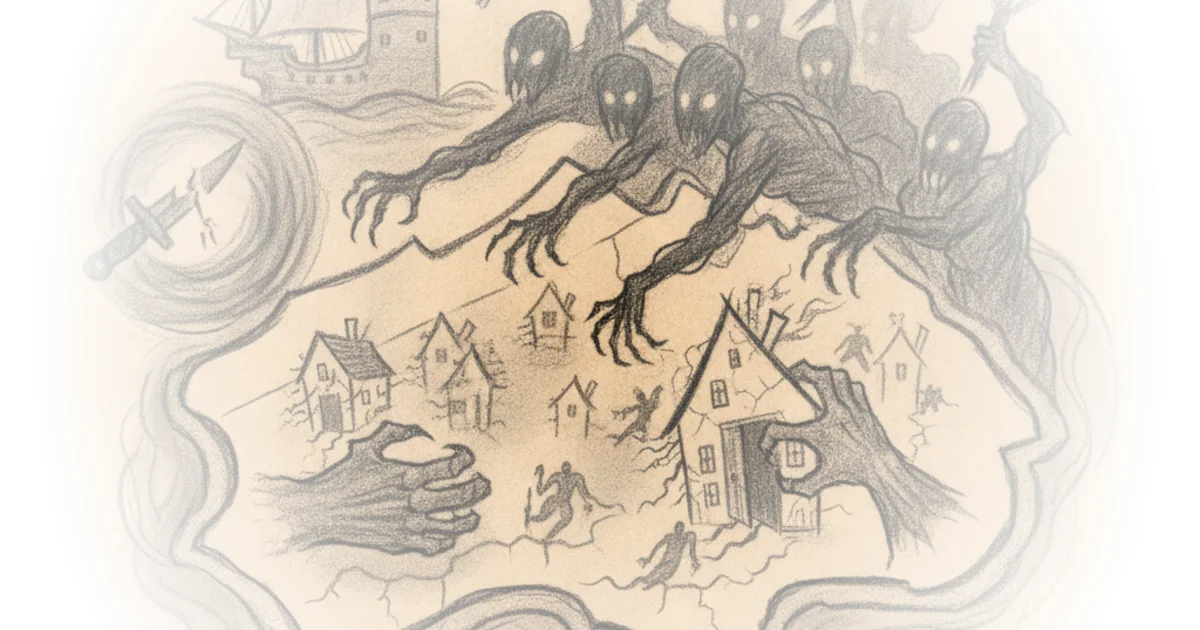
The slogan 'foreigners out' takes on a different meaning when it is coming from the descendants of settlers who first arrived on that land by ship.
A History Written in Blood
To understand why this violence feels so familiar, Greene traces the lineage of the rioters back to the 17th-century Plantation of Ulster. He explains that the Protestant unionist community leading these attacks descends from English and Scottish settlers brought in to hold land for the British crown. The irony is palpable: a group built on colonization is now attacking newcomers. Greene connects this current unrest to the sectarian violence of the Troubles, noting how loyalist gangs once drove Catholic families from their homes before turning their sights on immigrants living near the "peace lines."
He draws a chilling parallel to historical precedents without getting bogged down in dates. He reminds us that in 1964, officials claimed Northern Ireland had no racism problem—a misconception so deep that racial discrimination laws were exempted from the region until 1998. This institutional blindness allowed hate to fester under the radar of the Catholic-Protestant conflict. Greene writes, "The only thing that has changed is who the country is trying to push out." This line cuts through the noise, suggesting a cyclical pattern of exclusion rather than a new phenomenon.
Critics might argue that focusing solely on historical settler colonialism oversimplifies the genuine economic grievances regarding housing shortages and underinvestment that fuel local frustration. Greene acknowledges this, stating that the men torching buses have "real frustrations," but he insists that pointing that anger at immigrants is a deliberate diversion from policy failures.
The Globalization of Hate
The piece expands its scope to show how local unrest is now tethered to a global far-right ecosystem. Greene observes that while the rioters are working-class locals, the rhetoric guiding them comes from powerful figures abroad promoting "remigration." He notes that this is not an isolated incident but part of a trend where real crimes are used as excuses to attack innocent people based on race or religion. The cancellation of the Mean Girls musical run and the fear of performers like Vivian Panka illustrate how deeply this violence has penetrated daily life.
Pointing working-class anger at immigrants keeps it away from the policy failures and underinvestment that actually caused the housing shortage, and that is what makes this violence useful to the powerful figures fomenting it.
This observation serves as a critical intervention. It suggests that the chaos in Belfast is not just a local law-and-order issue but a symptom of a broader strategy to deflect from governance failures by manufacturing an external enemy. The author's choice to link the Active Club movement's training of youths to avoid camera identification with the broader global network underscores the sophistication of this threat.
Bottom Line
Greene's most powerful contribution is reframing the "foreigner" narrative through the lens of the rioters' own settler history, exposing the hypocrisy at the heart of their violence. While his focus on global coordination is compelling, the piece would be strengthened by a deeper dive into how local community leaders are actively resisting this mobilization. Ultimately, the article serves as a stark warning: when history is ignored, the same patterns of exclusion simply find new targets.