In a conversation that could easily devolve into sci-fi speculation, Alex O'Connor and Hank Green pivot from the standard "where are the aliens?" question to a more unsettling possibility: that Earth's specific conditions for complex life are not just rare, but potentially unique. O'Connor, the host of Cosmic Skeptic, leverages Green's scientific background to dissect the Fermi Paradox not through the lens of alien technology, but through the brutal constraints of planetary stability and evolutionary time. This is not a discussion about little green men; it is a rigorous audit of why we might be the universe's only conscious observers.
The Rare Earth Hypothesis Revisited
O'Connor steers the dialogue away from the usual suspects—Dyson spheres and radio waves—toward the fundamental prerequisites for intelligence. He highlights a critical nuance often missed in popular discourse: the difficulty of detecting Earth-like planets does not mean they are rare, but the specific combination of water and land may be the true bottleneck. "I think that water and land is actually maybe vital for something like humans happening," O'Connor notes, paraphrasing Green's assertion that technological chemistry is significantly harder to execute in an aquatic environment. This reframing shifts the debate from "are there other civilizations?" to "are there other places where chemistry can even build a civilization?"
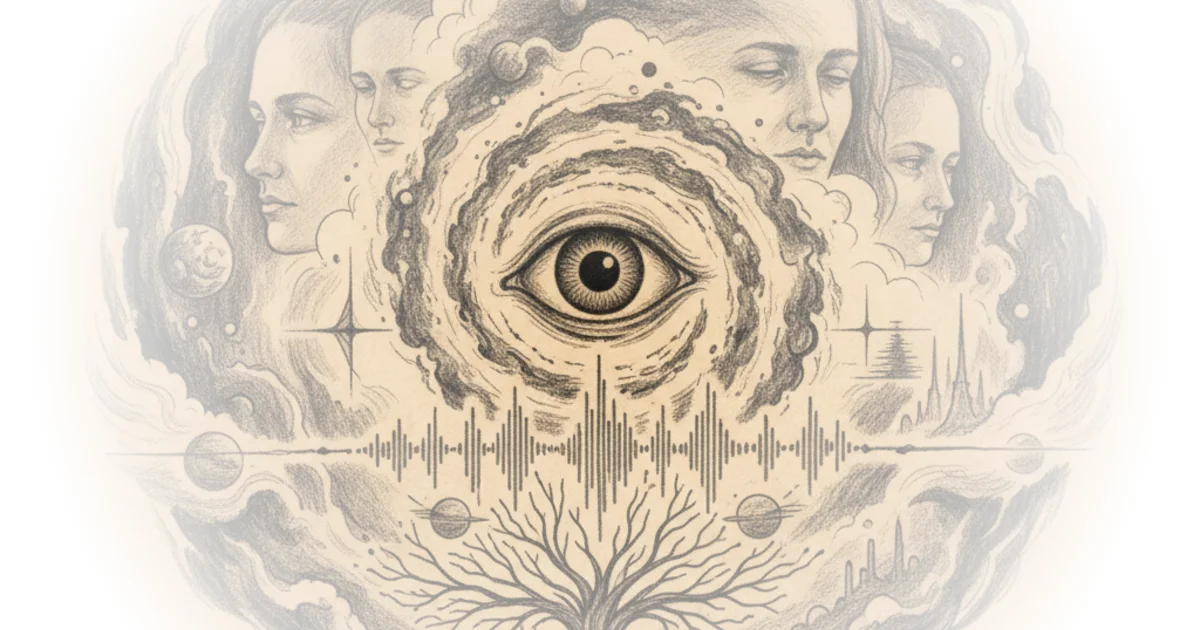
The argument gains traction when Green points out the evolutionary trajectory of intelligence. "All the smartest animals in the ocean came from the land," Green observes, noting that even cetaceans and cephalopods represent different, perhaps less industrious, branches of cognition. O'Connor uses this to underscore the "Rare Earth" hypothesis, suggesting that the transition from water to land was a non-negotiable step for the development of transistors and skyscrapers. Critics might note that this view assumes human-style technology is the only metric for intelligence, potentially overlooking alien forms of cognition that don't require combustion or metallurgy. However, the pair's focus on the physical constraints of chemistry provides a grounded counterweight to the more optimistic estimates of alien abundance.
"If you think about what if the earth was a third of the size of the universe because we are a third of the time of the universe... that makes me feel like I'm actually part of something very important."
The Weight of Deep Time
The conversation takes a philosophical turn as O'Connor and Green grapple with the sheer duration of life on Earth. Green emphasizes that life has existed for roughly 4 billion years, which is "around a third of the life of the universe." This statistic is not just a number; it is a testament to an unbroken chain of self-replication that has survived mass extinctions and solar fluctuations. O'Connor captures the awe of this perspective, suggesting that the stability of our solar system is a "weird" and perhaps unusual anomaly. "The sun is much more stable than the average sunlike star," Green explains, linking this stability to the long, uninterrupted timeline required for complex life to emerge.
This emphasis on time serves as a powerful antidote to nihilism. Instead of viewing humanity as a fleeting accident, the authors frame our existence as a significant portion of cosmic history. Green's observation that we are "slap bang in the middle" of the universe's spatial scale—from the Planck length to the observable universe—adds a layer of cosmic symmetry to the argument. While some might argue that statistical probability suggests we are just one of many, the authors' insistence on the specific, fragile conditions required for our existence challenges the assumption that life is inevitable. The stability of the sun and the continuity of life are presented not as guaranteed, but as lucky breaks that may not be replicated elsewhere.
The Defining Human Quality
As the discussion closes, the focus returns to what makes humanity distinct. Green points to the sheer scale of human achievement, from building skyscrapers to creating transistors "as wide as your fingernail grows in 3 seconds." This tangible measure of progress serves as a benchmark for the "defining human quality" that O'Connor seeks. The implication is clear: if no other civilization has achieved this level of technological complexity, it may be because the conditions for it are exceptionally rare. O'Connor's commentary here is subtle but effective, using Green's enthusiasm for the "fun" of guessing to highlight the profound mystery of our solitude.
The dialogue avoids the trap of anthropocentrism by acknowledging that evolution is not "targeted" or "going in a direction." Yet, the result—a species capable of contemplating its own place in the cosmos—remains a singular event in the known universe. O'Connor and Green leave the listener with a sense of wonder rather than despair, suggesting that our rarity might be the very thing that makes our existence meaningful.
Bottom Line
O'Connor's coverage is strongest when it grounds the Fermi Paradox in the hard constraints of planetary physics and evolutionary biology, moving beyond speculative alien encounters to the reality of Earth's unique stability. The argument's biggest vulnerability lies in its reliance on human-centric definitions of intelligence and technology, which may blind us to other forms of cosmic life. Readers should watch for future developments in exoplanet detection that could either confirm the "Rare Earth" hypothesis or shatter it with the discovery of a second genesis.