In a digital landscape where legal advice is often reduced to memes and hot takes, Devin Stone cuts through the noise by dissecting a bizarre Florida dispute that exposes the dangerous gap between internet bravado and actual contract law. Stone doesn't just analyze whether a bartender owes a customer a cut of a lottery win; he uses the case to illustrate why free legal counsel from strangers is a gamble no one should take, especially when the stakes involve life-changing sums of money.
The Illusion of a Bargain
Stone opens by dismantling the romanticized notion of persistence in the workplace, noting that the customer's behavior—repeatedly asking a bartender out and mistaking professional courtesy for interest—sets a troubling tone before the legal issue even arises. He writes, "persistence in the face of no isn't romantic in this day and age it's creepy," a sharp pivot that reframes the customer not as a wronged party, but as someone who failed to respect professional boundaries. This framing is crucial because it subtly shifts the reader's sympathy before diving into the dry mechanics of contract law.
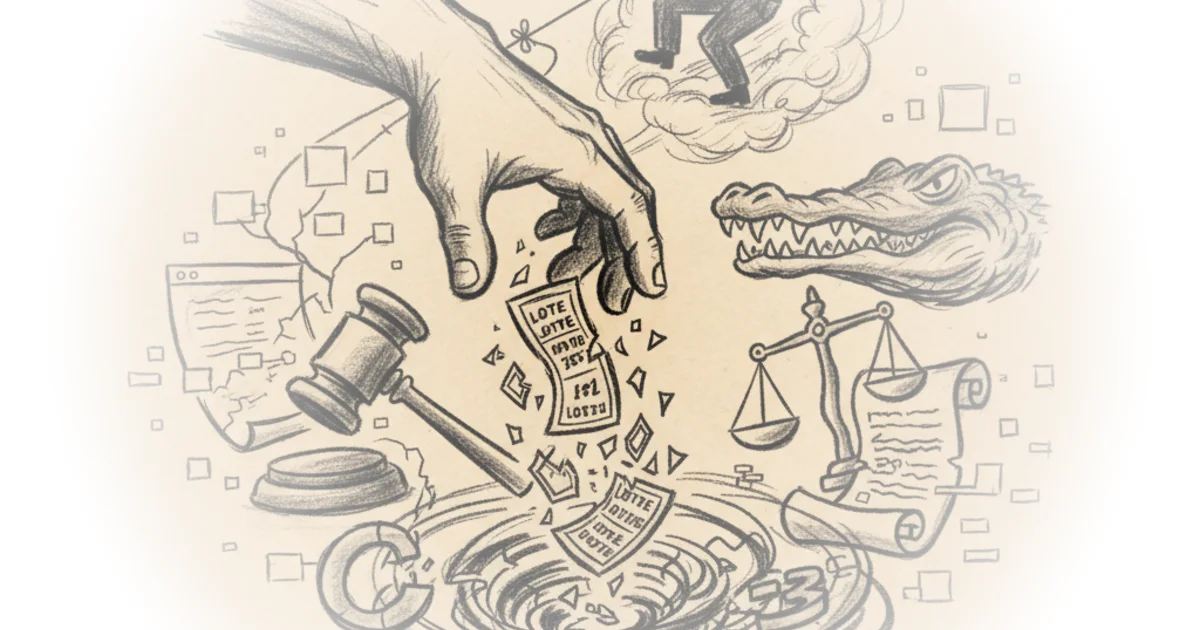
The core of the legal analysis rests on the definition of a contract. Stone explains that while many assume agreements must be written, the law recognizes oral contracts, yet they still require three specific elements: offer, acceptance, and consideration. He argues that a tip, by its nature, lacks the necessary "consideration" to form a binding deal. As Stone puts it, "a gift promise is not an invitation to bargain because the promissor is offering something without demanding anything in return." This distinction is the piece's intellectual anchor, effectively separating a generous gesture from a negotiated transaction.
To bolster this, Stone draws a direct parallel to a real-world precedent involving an Alabama waitress named Tonda Dickerson, who won $10 million on a ticket tipped by a regular patron. The patron sued, claiming fraud because she didn't buy him a truck as he allegedly expected. Stone highlights the court's reasoning: "the tipped ticket was an unconditional gift and found no evidence of fraud." This historical comparison is powerful because it demonstrates that the law consistently treats tips as gifts, regardless of the winner's subsequent windfall. Critics might note that if there were any verbal discussion about sharing winnings, the outcome could differ, but Stone rightly points out that the Reddit user provided no evidence of such a conversation.
A gift promise doesn't create an enforceable contract, and that is essentially the conclusion of a lawsuit against a waitress who won $10 million on a tipped ticket.
The Real Danger: Civil Procedure and Default Judgments
While the substantive contract law is clear, Stone pivots to a more practical warning: the danger of ignoring a lawsuit, even a meritless one. He observes that in America, "you can sue anyone at any time over just about anything," and the cost of defense is often the real penalty. He explains the concept of a default judgment, where a defendant loses simply for failing to show up. Stone notes, "even if the case is complete nonsense you still have to defend yourself from the lawsuit otherwise you could lose automatically by default."
This section serves as a vital reality check for anyone tempted to ignore a threat letter. Stone emphasizes that the burden of proof lies with the plaintiff, but the burden of response lies with the defendant. He writes, "typically you have no legal obligation to respond to pre-litigation demand letters threatening a lawsuit," but once a formal summons arrives, silence is fatal. This nuance is often missed in casual legal discussions, where people assume that if they are right, the court will just dismiss the case on its own. Stone clarifies that the legal system requires active participation.
The commentary also touches on the employer's role, specifically the manager who handed the bartender's email to the customer. Stone suggests this was a "total move" but likely legal, noting that Florida's privacy laws are high-bar, requiring disclosure to be "offensive or go beyond all possible bounds of decency." This adds a layer of institutional critique, showing how workplace dynamics can exacerbate personal harassment without necessarily breaking the law.
The Cost of Meritless Litigation
Stone concludes by addressing the broader ecosystem of lottery disputes, citing cases where workplace pools led to years of litigation and millions in legal fees. He references a 2012 Illinois case where 12 co-workers won $118 million and were sued by 11 others, a mess that took three years and six law firms to settle. "Winning the lottery can turn into a messy battle that ruins friendships tears apart families and explodes into costly lawsuits," he writes. This serves as a cautionary tale that the legal system is often a trap for the unprepared, regardless of who holds the moral high ground.
He contrasts the Reddit user's situation with the advice found in the comments section, which he dismisses as the work of "unfrozen caveman lawyers." Stone argues that while the internet offers a wealth of opinions, it lacks the accountability of a retained attorney who can navigate tax laws and defend against frivolous claims. He writes, "this redditor could hire a lottery lawyer yes that's right there actually is a thing called lottery law," highlighting a specialized niche that the general public is often unaware of.
A counterargument worth considering is that the sheer volume of these disputes suggests a systemic issue where people feel entitled to others' windfalls, perhaps fueled by a culture of instant gratification. Stone touches on this by noting how the customer felt entitled to a 50% split despite no prior agreement, but he focuses more on the legal mechanics than the sociological drivers.
Bottom Line
Devin Stone's analysis succeeds because it separates the emotional drama of the situation from the rigid, unyielding logic of contract law, proving that a tip is a gift, not a bet. The piece's greatest strength is its warning that being legally right offers no protection against the procedural nightmare of a lawsuit, a lesson that applies far beyond lottery tickets. Readers should watch for how courts continue to handle the intersection of workplace harassment and property disputes, as the manager's involvement here hints at a broader liability landscape for employers.