In a landscape often dominated by political theater, Katelyn Jetelina cuts through the noise to deliver a stark, data-driven warning: the convergence of viral mutation and policy disruption is setting the stage for a potentially brutal flu season. This piece stands out not merely for its prediction of illness, but for its forensic examination of how administrative chaos—from government shutdowns to corporate denialism—directly erodes public health defenses. For the busy professional, this is a critical alert on why the coming months demand vigilance beyond the usual seasonal advice.
The Viral Curveball
Jetelina frames the current respiratory threat with precision, noting that while domestic numbers are currently low, the global trajectory is alarming. "The U.K., Japan, and Canada are already seeing steep increases," she writes, pointing to a specific biological culprit. The core of her argument rests on the nature of the influenza A (H3N2) strain, which has undergone a significant "drift"—a smaller, incremental change that, in this instance, was substantial enough to matter. She explains that the virus "shifted from a J subclade to a K subclade" right before the U.S. vaccine formula was locked in February. This timing is the crux of the danger. "It's simply bad luck that H3N2 evolved so much in the months after the vaccine formula was set," Jetelina observes, highlighting a scenario where our primary defense is partially mismatched against the circulating threat.
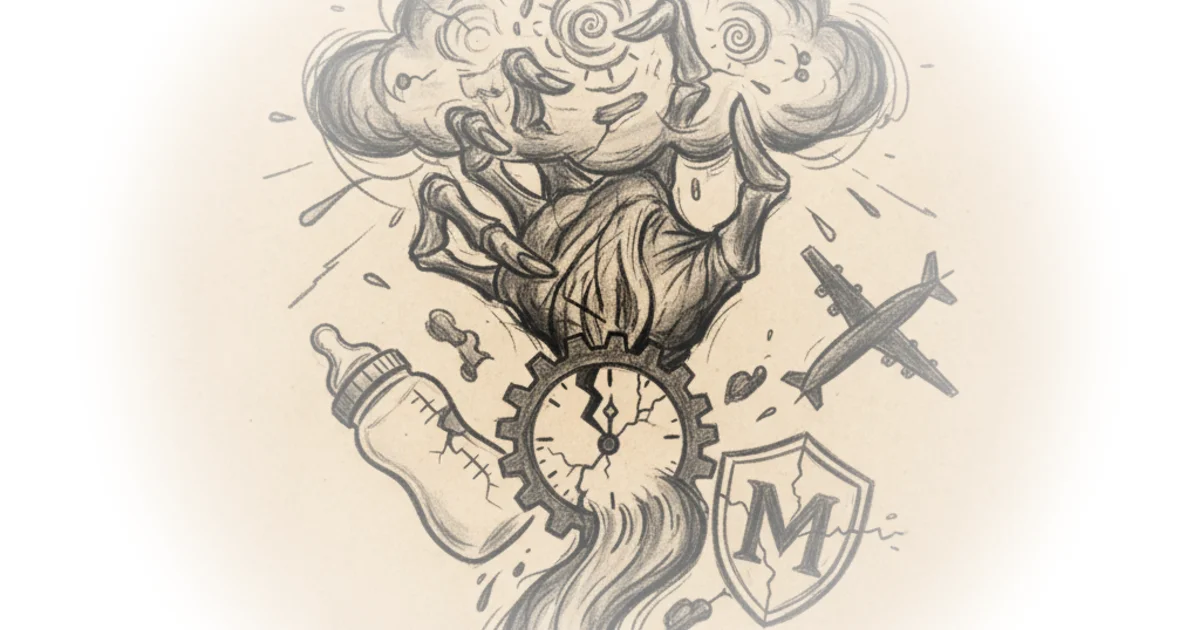
This framing is effective because it moves beyond panic to explain the mechanism of failure. The argument holds up against historical context; as seen in the recent measles resurgence discussions, viral behavior is rarely static. Just as the measles virus exploits gaps in immunity to become endemic, this flu strain exploits the lag between vaccine production and viral evolution. Jetelina correctly identifies that while this is not a pandemic-level "shift," the combination of mutation and timing means the virus will be "better at slipping past both vaccines and prior immunity."
"Mutations are normal for the flu. In fact, the flu is infamous for quick, unpredictable curveballs."
Critics might argue that focusing on a single subclade overstates the risk, given that flu vaccines often provide cross-protection against related strains. However, Jetelina counters this by citing U.K. data showing that vaccination still reduces hospitalization by 70-75% in children, even in a mismatched year. The takeaway is not that the vaccine is useless, but that it is no longer a silver bullet; it is a shield that must be complemented by early antiviral treatment and personal vigilance.
The Cost of Administrative Disarray
The commentary takes a sharp turn from biology to bureaucracy, linking the health outlook to the recent government shutdown. Jetelina does not shy away from the human cost of policy interruptions, noting that while the shutdown is over, the damage to the safety net is lingering. She illustrates this with a poignant case study of a 14-year-old patient whose health gains were reversed when SNAP benefits were cut, forcing a family to rely on food pantries offering "mostly candy and processed foods." "People's trust in the safety net is ruptured, with potential long-term effects to health," she argues, connecting the dots between nutritional access and chronic disease management.
This section is particularly powerful because it refuses to treat the shutdown as a temporary political inconvenience. Instead, Jetelina presents it as a structural failure that actively harms vulnerable populations. The argument is bolstered by the contrast between the immediate restoration of funding and the slow, difficult process of rebuilding health outcomes. A counterargument worth considering is that food banks often step up during crises, but Jetelina dismantles this by noting that pantries cannot fully replace the "choice, consistency, and nutritional quality that SNAP provides."
The same theme of eroded trust permeates the discussion on the infant botulism outbreak linked to ByHeart formula. Jetelina critiques the company's initial response as a "textbook example of what not to do," where insisting the recall was merely "out of an abundance of caution" only deepened public concern. The evidence was undeniable: 54% of the cases in the outbreak cluster had consumed the product, and animal testing confirmed the lethality of the bacteria found in the formula. "When the facts are pointing in one direction, denying them only deepens public concern and hurts the trust of a brand," she writes, delivering a scathing verdict on corporate crisis management that transcends the specific product.
The Data Blackout
Perhaps the most unsettling aspect of Jetelina's analysis is the gap in national data regarding COVID-19 vaccination. She notes that "normally, we'd have clear national data by now," but the CDC website remains stagnant, a silence she attributes to the shutdown but fears could be something more sinister. "Without them, we can't accurately anticipate what's coming: hospital strain, missed work, and the broader burden of a potential wave," she warns. The situation is exacerbated by state-level data, such as in New York, where uptake is 30% lower than the previous year.
This lack of transparency is a critical vulnerability in the nation's defense. Jetelina connects this to the broader context of declining immunization rates, drawing a parallel to the measles situation in Canada, where the loss of elimination status followed a year of sustained transmission. "Losing this status means that measles is now considered 'endemic,'" she explains, a fate the U.S. faces a review on in January. The argument here is that without real-time data, the public health apparatus is flying blind, unable to distinguish between a temporary lull and the prelude to a surge.
"Public health has often viewed politics as the third rail: Don't touch it lest you get burned. The problem with this is that it ignores the fact that the third rail provides power to the train."
Jetelina's call for epidemiologists to enter the political arena is a bold conclusion to her analysis. She argues that the "third rail" of politics is not a hazard to be avoided but a source of energy necessary to drive change. This reframing challenges the traditional apolitical stance of scientists, suggesting that evidence-based decision-making requires political agency. While some may argue that scientists should remain neutral observers, Jetelina's point is that neutrality in the face of data gaps and policy failures is effectively complicity.
Bottom Line
Katelyn Jetelina's analysis is a masterclass in connecting biological reality with policy failure, arguing that the coming flu season will be defined as much by administrative incompetence as by viral mutation. The piece's greatest strength is its refusal to treat public health as an isolated science, instead weaving a narrative where corporate denial, legislative gridlock, and data blackouts directly dictate health outcomes. The biggest vulnerability remains the uncertainty of the data itself; until the CDC resumes full reporting, the true scale of the threat will remain obscured, leaving the public to navigate a storm with a broken compass.