This piece from Natural Selections cuts through the noise of pandemic-era polarization by anchoring a national debate in a single, devastating family courtroom drama. It argues that the erosion of parental rights wasn't just a byproduct of emergency policy, but a systemic failure where local political climates in places like Olympia, Washington, actively punished dissent. The report brings a rare, granular look at how shared medical custody can collapse when one parent weaponizes ideology against the other, turning a child's body into a battleground for competing narratives.
The Collapse of Shared Custody
The narrative begins not with vaccines, but with a history of instability that set the stage for a later crisis. Natural Selections reports, "Ideology is preferred to facts. Standing up for evidence-based common sense can feel like an act of quiet rebellion, especially when you're a father fighting for your daughter's right to informed consent." This framing is crucial; it establishes that the conflict is not merely about a specific medical intervention, but about the fundamental right to question official consensus without being branded a conspirator. The piece details a chaotic night in November 2016 where the mother, Beth, drove drunk and assaulted the father's partner after the child fled to him in distress. The father notes that despite a felony charge, "Beth's felony charge was quickly downgraded with help from a progressive pro-bono attorney," a detail that suggests the local legal ecosystem was predisposed to leniency toward the mother's actions.
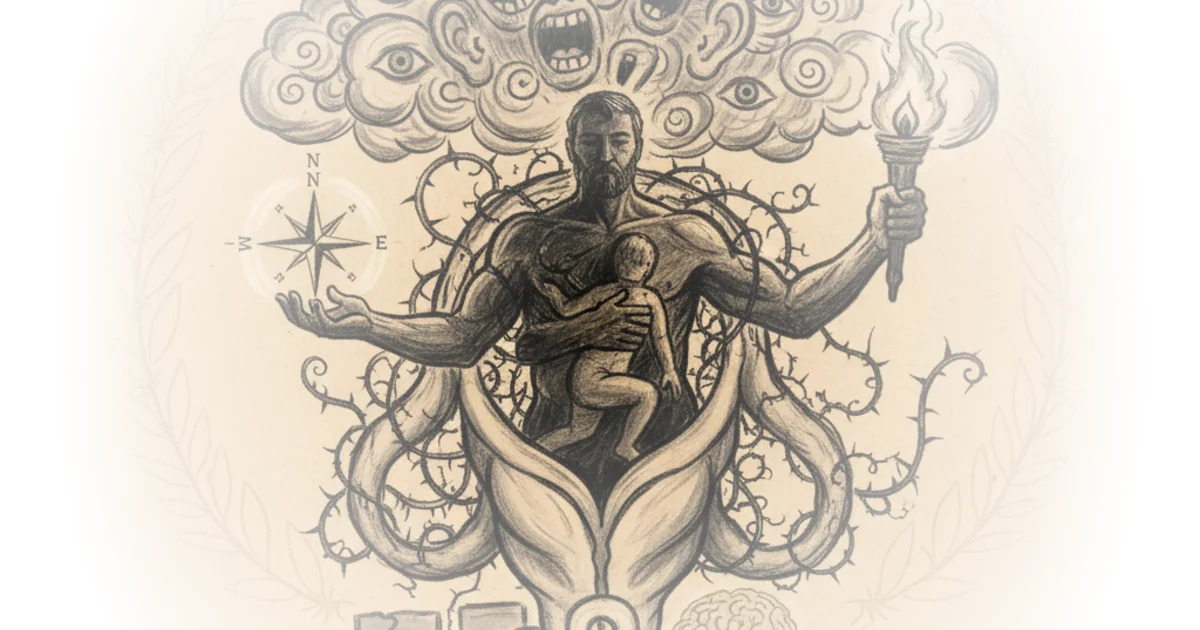
Critics might argue that focusing on the mother's past legal troubles distracts from the core medical issue, yet the article uses this history to explain why the father felt his credibility was already fragile. The piece argues that the court system, rather than protecting the child, "kept us trapped in a worsening cycle" by denying relocation requests and enforcing a shared medical decision-making plan that was impossible to uphold. The father describes a pattern where the mother would "rewrite past events" and "plant guilt," creating an environment where the child, Sam, felt compelled to choose sides.
"The violation happened right before a high-school dance. Beth took Sam to a pop-up vaccination site in a shuttered mall storefront. My daughter was given the shot without my knowledge or consent."
The Deception and the Double Betrayal
The core of the article's emotional weight lies in the specific mechanics of the medical violation. It wasn't just that the mother proceeded without the father's agreement; it was the active deception regarding the type of vaccine administered. Natural Selections reports that the mother told the daughter she received the Johnson & Johnson shot, a viral vector vaccine, when the paperwork revealed it was actually the Pfizer mRNA vaccine. The father describes the moment of discovery: "It wasn't J&J. It was Pfizer—the mRNA shot. My heart sank. The lie hit harder than the violation itself." This distinction is significant because the father had spent months researching the differences, and the lie meant the daughter was left with a false understanding of what had been introduced into her body.
The piece highlights the isolation of the father in this moment. He attempted to challenge the facility, presenting the court order, but the staff's reaction was one of subtle discomfort rather than legal enforcement. "One woman's eyes lingered on the court order a beat too long... Then I read the paperwork," the article notes. The father explains that pursuing legal action was deemed futile because "questioning the vaccine narrative could brand me the 'conspiracy dad' forever." This admission underscores the article's broader thesis: that in certain jurisdictions, the political cost of challenging the prevailing health narrative outweighs the legal mechanisms designed to protect parental rights.
The Long Shadow of Silence
The aftermath of the event is described not as a resolved legal victory, but as a lingering psychological wound. The father recounts the years of anxiety, wondering if the medical intervention altered his daughter's health trajectory, noting that "Sam caught every passing cold—something she'd never done before." The article's most poignant moment comes when the father finally reveals the truth to his now-adult daughter. He asks her, "Do you think it's good to know what was actually put into your body?" The daughter's concession that she did want the truth, despite years of being told her father was a conspiracy theorist, serves as the piece's moral anchor.
The editors note that the daughter is now studying psychology, aiming to "help people untangle their thoughts, manage pain, and rebuild resilience." This outcome suggests a resilience born from navigating extreme family division, yet the father's worry remains: "Some betrayals never fade. They echo in every cough, and every lingering question." The article posits that the true cost of the policy environment was not just the immediate medical decision, but the long-term erosion of trust between parent and child, and between the citizen and the institutions meant to protect them.
"I fought for her autonomy then, and I'm still fighting for it now, even when the conversation is hard."
Bottom Line
Natural Selections delivers a harrowing account of how polarized political climates can dismantle the legal protections of shared custody, turning medical decisions into acts of rebellion. While the piece leans heavily on the father's perspective and does not fully explore the mother's rationale beyond her stated ideology, its strength lies in the specific, documented details of the deception and the chilling admission that legal recourse was abandoned due to fear of social stigma. The story serves as a stark warning that when institutions prioritize consensus over individual rights, the collateral damage is measured in broken families and lost trust.