Greg Olear cuts through the noise of a resurgent political theater to expose a dangerous pattern: the systematic weaponization of the Justice Department to rewrite history. While the headlines focus on new subpoenas, the author argues these are not genuine investigations but a calculated attempt to erase the documented reality of foreign interference in American democracy. For the busy listener, this piece is essential not for its recounting of old news, but for its sharp dissection of how institutional power is being redirected to protect a specific narrative against overwhelming evidence.
The Mechanics of the Counter-Narrative
Olear begins by identifying the immediate catalyst: a flurry of subpoenas issued by Jason A. Reding Quiñones, the U.S. attorney for the Southern District of Florida. The author notes that these legal actions target key figures from the 2016 Russia inquiry, including former intelligence directors and FBI agents. "Last week, Mr. Reding Quiñones... issued more than two dozen subpoenas, including to officials who took part in the inquiry into ties between Russia and Mr. Trump's 2016 presidential campaign," Olear writes, highlighting the sudden escalation. This move is framed not as a pursuit of justice, but as a fulfillment of a long-promised "grand conspiracy" theory pushed by far-right influencers.
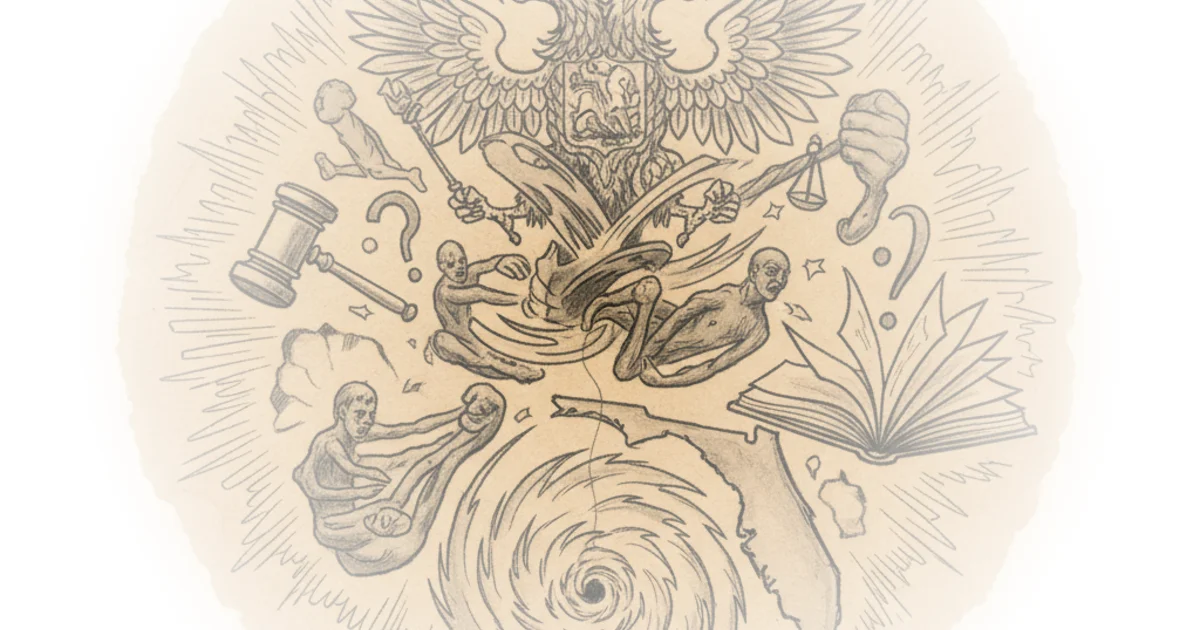
The commentary effectively reframes these legal maneuvers as a political strategy rather than a judicial one. Olear points out that this effort seeks to discredit the individuals behind the original investigations, labeling them part of a "Deep State" cabal. "Even now, his allies in Washington, on TV news, and in sensationalized content produced by MAGA influencers... refer to the investigation as 'the Russia hoax,'" the author observes. This framing is critical because it shifts the focus from the facts of the 2016 election to the character of the investigators, a classic deflection tactic. Critics might argue that every investigation deserves a fresh look, but Olear counters that the groundwork for these new inquiries has already been laid by previous reviews that found no evidence of wrongdoing.
Sparkling white wine may not technically be Champagne, but collusion is still collusion.
The Weight of Historical Evidence
The core of Olear's argument rests on the sheer volume of existing documentation that the new "Grand Conspiracy" theory attempts to ignore. The author meticulously details the findings of the Mueller Report and the bipartisan Senate Intelligence Committee report, specifically Volume 5. "In August of 2020, Volume 5 of the bipartisan Report of the Select Committee on Intelligence United States Senate on Russian Active Measures Campaigns and Interference in the 2016 U.S. Election went into even greater detail," Olear writes, reminding readers that the conclusion was clear: the Russian government engaged in an aggressive effort to influence the election.
Olear zeroes in on the specific actions of Paul Manafort, the former campaign chair, to dismantle the claim that no coordination occurred. "The Committee's bipartisan Report found that Paul Manafort, while he was Chairman of the Trump Campaign, was secretly communicating with a Russian intelligence officer with whom he discussed Campaign strategy and repeatedly shared internal Campaign polling data," he states. This is not a matter of interpretation; it is a matter of record. The author emphasizes that Manafort's deputy even destroyed evidence of these communications, a detail that underscores the intent to hide rather than the innocence of the campaign.
The piece also catalogs the extensive contacts between the Trump circle and Russian operatives, from George Papadopoulos to Jared Kushner. Olear notes that Kushner met with Sergei Kislyak, the Russian ambassador, and proposed a "backchannel" through the Russian embassy. "These things all happened. There's plenty of reporting about them," Olear asserts, dismissing the notion that these events are in dispute. The argument is strengthened by the inclusion of specific dates and names, grounding the abstract concept of "collusion" in concrete, documented interactions. However, the author's tone occasionally veers into the hyperbolic, which may alienate readers seeking a purely neutral tone, even if the underlying facts remain robust.
The Cost of Rewriting Reality
Ultimately, Olear argues that the new investigation is a waste of resources designed to achieve a political end. "Given that the January 2017 intelligence community assessment is in concert with the Mueller Report and Volume 5... this new investigation... will almost certainly do nothing but waste taxpayer resources," the author concludes. The piece suggests that the administration's actions are driven by a desire to validate a narrative of victimhood rather than to uncover truth. "But whatever King Donald wants, King Donald gets," Olear writes, capturing the sense of unchecked executive power that defines this new phase of political conflict.
The author's critique extends to the individuals leading this charge, labeling them "MAGA loyalists" who are willing to ignore Occam's razor. "It is unfortunate but not surprising that this claque of MAGA loyalists has found a prosecutor willing to make a complete ass of himself by signing off on a flurry of subpoenas," Olear writes. This sharp language serves to underscore the gravity of the situation: the integrity of the Justice Department is being compromised to serve a political agenda. The piece serves as a stark reminder that the battle over the 2016 election is not over; it has simply moved to a new courtroom.
Bottom Line
Olear's most compelling contribution is the rigorous connection between the new subpoenas and the established, bipartisan findings of the past decade, effectively neutralizing the "Grand Conspiracy" as a legal strategy. The argument's primary vulnerability lies in its overtly partisan tone, which, while effective for the target audience, may limit its persuasive power among skeptics. Readers should watch for the outcome of these subpoenas, not as a potential revelation of new crimes, but as a test of whether the executive branch can successfully shield its allies from the consequences of past actions.