Bari Weiss delivers a sharp, contrarian defense of early-2000s pop culture, arguing that the current wave of moralistic documentaries doesn't actually protect victims but rather feeds a new, self-righteous form of voyeurism. She challenges the modern impulse to retroactively condemn the past, suggesting that this "Reckoning Industrial Complex" offers viewers a convenient way to feel superior while consuming the same spectacle they claim to despise.
The Reckoning Industrial Complex
Weiss opens by critiquing the new Netflix docuseries Reality Check: Inside America's Next Top Model, which she sees as the latest entry in a formulaic genre. She writes, "The formula goes something like this: Take a pop-culture product from roughly two decades ago, point out how unsavory it was in retrospect—even if this was obvious and remarked upon at the time—then make the viewer feel somehow complicit, and then offer some fairly tepid insight from behind the scenes." This framing is effective because it exposes the performative nature of modern outrage, suggesting that the goal isn't justice but a specific kind of emotional gratification for the audience.
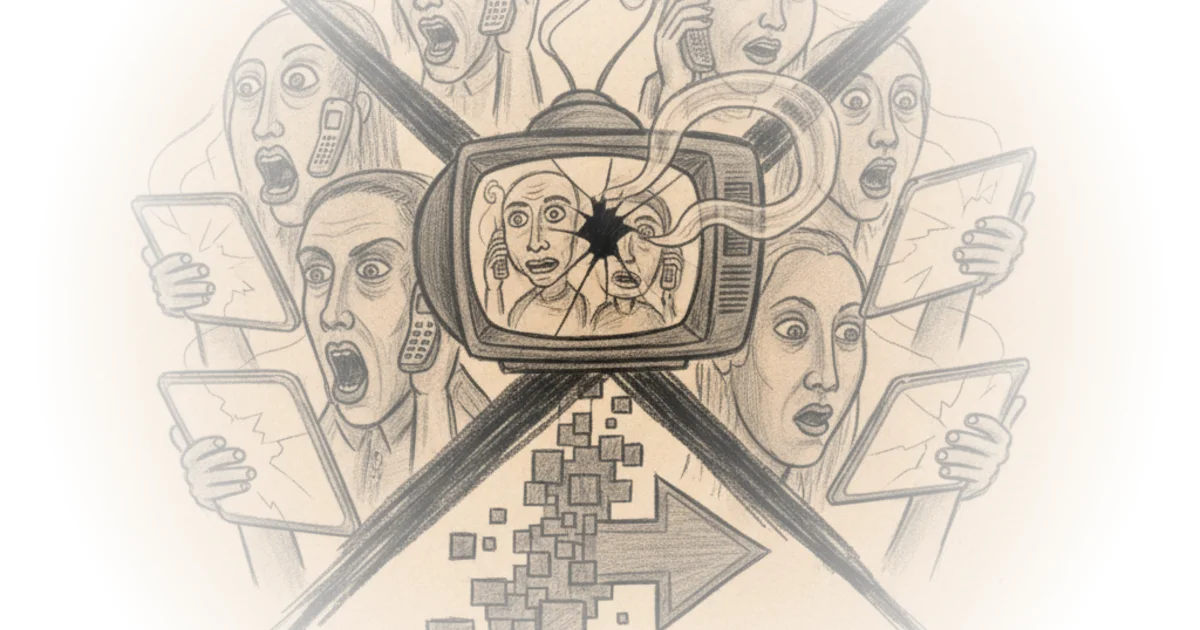
She acknowledges the genuine horrors depicted in the series, particularly the treatment of contestant Shandi Sullivan, who was allegedly sexually assaulted while unconscious on camera. Weiss notes that the documentary highlights how producers "portrayed the incident as infidelity" and filmed her sobbing to her boyfriend. While these details are undeniably disturbing, Weiss argues that the documentary's heavy-handed moralizing ultimately serves to sanitize the viewer's own past consumption. She posits that "watching Reality Check is how you atone for it," transforming the act of watching into a ritual of absolution rather than a genuine engagement with the harm done.
Watching ANTM was a guilty pleasure, and watching Reality Check is how you atone for it. Only you aren't gawking this time. You're bearing witness. Right?
Critics might argue that Weiss downplays the importance of accountability, suggesting that acknowledging past abuses is necessary to prevent future ones. However, her point stands that the current cultural moment often prioritizes the feeling of righteousness over substantive change or deep historical understanding.
The Spectacle of ClavWorld
Weiss then pivots to a contemporary example of this phenomenon: the rise of Clavicular, a 20-year-old streamer known for the subculture of "looksmaxxing." She describes him as "a 20-year-old guy from New Jersey whose real name is Braden Peters," who has gained fame for extreme practices like "bonesmashing" and using meth to alter his appearance. Weiss observes that Clavicular represents a "Zoomer Truman Show" where the gamification of life has gone to bizarre extremes.
She details how Clavicular's life has become a public spectacle, noting that "Clavicular mania has swept the nation. The gawking masses cannot get enough." Weiss finds a strange fascination in the clash between his "ClavWorld" perspective and reality, where even standing next to another man becomes a competition of male beauty. She writes, "To watch the Clavicular show is to experience life through the eyes of a genuinely strange young man, an outsider artist dutifully documenting his unusual perspective on the world." This section serves as a bridge between the past and present, showing that the hunger for spectacle hasn't vanished; it has merely evolved.
The author suggests that while Clavicular's behavior is troubling, the public's inability to look away is the real story. She notes, "Is that perspective basically just an elaborate form of body dysmorphia? Who's to say. Is it good that this is popular? Probably not. Will there be a Reality Check -esque documentary about him in a decade? Almost certainly." This prediction underscores her central thesis: the cycle of spectacle and moral panic is self-perpetuating.
The Bottom Line
Weiss's argument is most compelling when she identifies the hypocrisy in our current cultural consumption, where we claim to reject the past while eagerly consuming new forms of the same spectacle. Her strongest move is linking the "Reckoning Industrial Complex" to the modern obsession with figures like Clavicular, showing that the desire to watch others suffer or behave strangely remains unchanged.
However, the piece risks oversimplifying the genuine harm caused by the shows she defends, potentially dismissing valid concerns about the treatment of contestants in the name of cultural nostalgia. The biggest vulnerability in her argument is the assumption that the audience's intent is purely performative, ignoring the possibility that some viewers are genuinely seeking to understand the mechanics of abuse.
The past is a foreign country, one where a size six was fat and Tyra Banks could force aspiring supermodels to dress up like homeless people, drug addicts, and different races.
Ultimately, Weiss offers a necessary, if uncomfortable, reminder that our current moral high ground may be built on the same shaky foundations as the culture we claim to have outgrown. The strongest part of her argument is the insight that "bearing witness" has become a form of entertainment, and the biggest lesson for the reader is to question why we feel the need to atone for the past rather than simply learning from it.