Kevin Alexander doesn't just mourn the loss of quirky neighborhoods; he diagnoses the economic machinery that sandblasted them into oblivion, arguing that the same private equity logic devouring local culture is now suffocating the internet. In a piece that feels less like a nostalgia trip and more like an autopsy of the modern attention economy, Alexander connects the dots between gentrified Portland streets and the homogenization of digital media, suggesting that "culture becomes a spreadsheet entry" is the defining tragedy of our time.
The Algorithm of Sameness
Alexander begins by painting a vivid picture of a Portland neighborhood before the influx of venture capital, a place where "the environment was so engaging, the vibe so electric, that it created its own kind of dopamine rush." He contrasts this organic chaos with the sterile uniformity that followed, noting that "as the values rise, the edges get sanded off. The homogeneity creeps in." This framing is potent because it moves beyond simple complaints about change to identify the specific financial incentives driving it. The author draws a parallel to the digital realm, observing that "Private equity treats publications not as ecosystems with character, but as assets and obstacles."
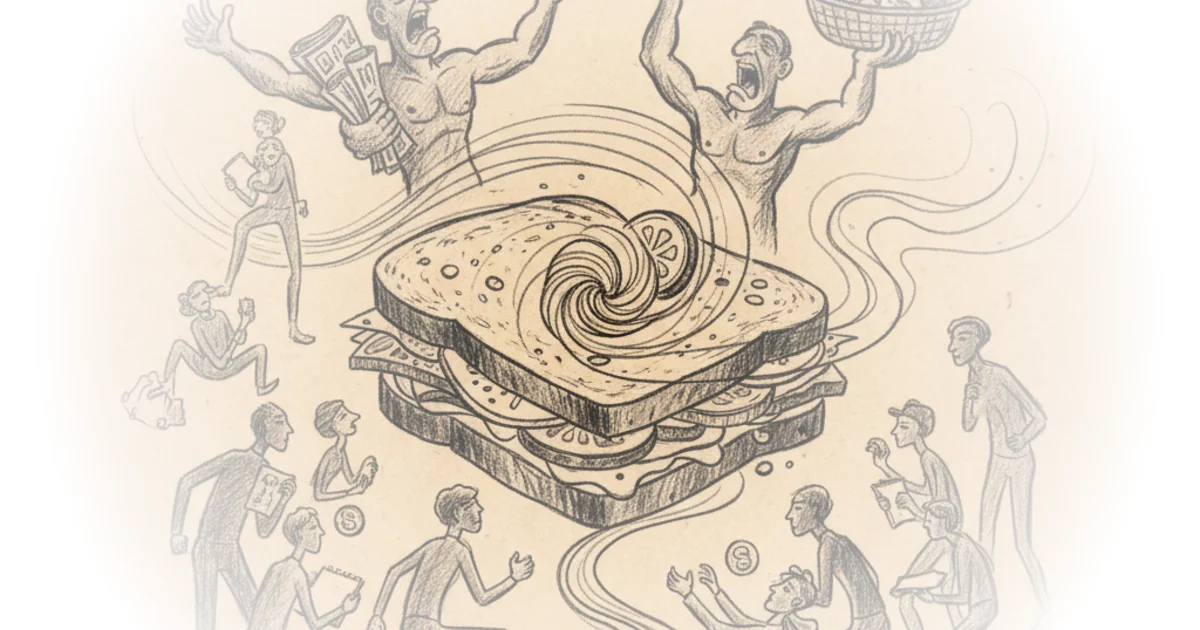
The argument gains weight when Alexander details the mechanics of these acquisitions. He writes, "They bought them to wring cash out of them and leave the carcass of 1s and 0s (and writing careers) out to rot in the sun." This is a sharp critique of the business model that prioritizes extraction over stewardship. By citing the fate of outlets like Deadspin and Vice News, Alexander illustrates how "the best decision for the firm is the one that directly undermines the company it controls." Critics might note that not all consolidation leads to immediate decay, and some legacy brands have survived corporate buyouts by adapting, but Alexander's point stands that the incentive structure is fundamentally hostile to the idiosyncratic voices that made these platforms unique in the first place.
Culture becomes a spreadsheet entry. What was once idiosyncratic becomes interchangeable.
The Death of the Weird
The commentary shifts to the tangible results of this financialization: the erosion of discovery. Alexander observes that during year-end music lists, "it's been dispiriting to see a lot of sites simply cycling the same 50 titles around." He argues that this isn't an accident but a necessity of the ad-revenue model, where "a site doesn't make money on cool points or by surfacing the best band from Spokane you've never heard of." Instead, they rely on "big names" to drive CPM rates. This analysis cuts through the noise of algorithmic feeds, reminding readers that "being cool doesn't grant immunity to a blog or website; in fact, it may have the opposite effect."
Here, Alexander touches on a deeper historical current. Just as private equity transformed the music industry by prioritizing safe, radio-friendly hits over experimental sounds, the same forces are flattening the web. The author notes that "the real geniuses rely on management fees, deal fees, dividend recapitalizations, real estate deals, and the like," a system that requires divorcing incentives from the actual product. This creates a paradox where "it's more fruitful to drive them out of business" than to nurture a unique voice. While one could argue that the sheer volume of content available today offers more choice than ever, Alexander counters that the visibility of that choice has been engineered away, leaving users in a "Potemkin village covering the hole where the neighborhood's soul once was."
The Human Filter
Despite the bleak diagnosis, Alexander finds hope in the return to human curation. He champions the resurgence of zines and independent blogs, asserting that "the ones that are thriving? The ones that refuse to lose their voice or tone it down." He contrasts this with the beige output of artificial intelligence, noting that "if you want a beige overview of a record, Gemini's got you covered... You want to hear a review from a real person who actually listened to it? A summary isn't going to cut it." This distinction is crucial in an era where generative AI is flooding the zone with low-effort content. The author's call to action is simple but profound: "Friends are filters. People are guides."
The piece concludes by urging readers to actively seek out these authentic spaces, acknowledging that "finding those spots takes a little work." This reframes the struggle of discovery not as a flaw in the system, but as a feature of genuine engagement. It echoes the sentiment found in deep dives on Elliott Smith, where the raw, unpolished nature of the art was its greatest strength, and stands in stark contrast to the sanitized, corporate-driven narratives dominating the mainstream. Alexander's final observation on the current administration's focus on infrastructure projects like airport renovations serves as a subtle reminder that while the government may be obsessed with making things "great again," the real work of cultural preservation happens on the ground, in the small, unglamorous corners of the internet and the city.
Bottom Line
Alexander's most compelling argument is that the homogenization of media is not a cultural accident but a direct result of financial engineering that treats content as a disposable asset. His biggest vulnerability is the assumption that the average user has the time or energy to bypass the algorithmic default, yet his call to embrace the "work" of discovery remains the only viable path forward for preserving a diverse cultural landscape. Watch for the next wave of AI-generated content to accelerate this trend, making the human filter more valuable—and more necessary—than ever.