This piece by Laura Rozen for Diplomatic delivers a rare, unvarnished look into the mechanics of high-stakes diplomacy, revealing how a private envoy may have been quietly laundering Kremlin demands into a U.S. peace framework. The evidence isn't speculation or anonymous sourcing; it is the actual transcript of phone calls where the lines between American mediation and Russian advocacy appear dangerously blurred. For a reader concerned with the human cost of the war in Ukraine, these leaks suggest that the stakes of a failed negotiation are being raised by internal confusion within the executive branch.
The Architecture of Influence
Rozen's reporting centers on a startling revelation: leaked transcripts suggest Steve Witkoff, a special envoy, was actively coaching Russian officials on how to flatter the U.S. administration to gain leverage. The core of the argument is that Witkoff was not merely a messenger but a participant in shaping a narrative that favored Moscow. As Laura Rozen writes, "Witkoff comes off in the call like he favors the Russian side, and is maneuvering to help the Kremlin gain favor with Trump and in the Trump administration's efforts to advance a Russian/Ukraine peace deal."
This framing is effective because it moves beyond the usual diplomatic platitudes to expose the raw transactional nature of these backchannels. The transcript details Witkoff advising a top Kremlin aide on exactly how to praise the U.S. president to smooth the path for a deal. He suggests, "I would make the call and just reiterate that you congratulate the president on his achievement, that you supported it... That you respect he is a man of peace." This specific advice highlights a strategy of personal flattery over substantive policy alignment, a tactic that risks undermining the credibility of the U.S. position.
Witkoff proposes to the top Kremlin foreign policy advisor how he would advise Putin to butter up Trump, by praising him as a man of peace for the just announced Israel-Gaza peace deal.
The coverage further details a coordinated effort to insert Russian maximalist demands into a U.S. draft plan. In a second call, Russian economic advisor Kirill Dmitriev discusses forwarding a proposal that is "as close as possible" to the Kremlin's wishes, with the explicit understanding that it would be presented informally. Rozen notes that Dmitriev seemed to imply by "informal" that it was not an official Russian position the Kremlin would necessarily accept, yet the goal was to have the U.S. side adapt it into their own plan. This suggests a deliberate strategy to bypass formal diplomatic scrutiny, potentially leaving the U.S. administration to defend terms it did not fully vet.
Critics might note that in complex negotiations, envoys often test the waters with informal proposals to gauge reaction before committing to a formal stance. However, the tone of these calls, as presented by Rozen, suggests a level of alignment that goes beyond standard testing and ventures into advocacy for the opposing side.
Institutional Fractures and Human Costs
The article pivots to the fallout, revealing a stark disconnect between the envoy's activities and the broader U.S. diplomatic strategy. While Secretary of State Marco Rubio worked to recalibrate the negotiations in Geneva, the leaked calls suggest Witkoff was operating with a different set of priorities. Rozen highlights the confusion this creates, quoting former National Security Council official Charles Kupchan: "There hasn't been a coherent team inside the Trump administration... You just don't have a team in Washington that is singing from the same sheet of music."
This lack of cohesion is not merely an administrative inconvenience; it has direct implications for the war's trajectory and the lives of those caught in the crossfire. The coverage underscores that when the U.S. pushes through a "heavily Kremlin-tilted 28-point U.S. proposal," it risks alienating allies and undermining the very peace it seeks to build. Former diplomat Daniel Fried is quoted noting that the negotiations are now in "far better shape" after Rubio's intervention, implying that the initial draft was dangerously off-base.
The human dimension is often obscured by the chessboard of geopolitics, but the stakes are clear. If the U.S. adopts a plan that ignores the security realities of Ukraine, the war could continue, prolonging the suffering of civilians. As Rozen points out, the Republican response has been swift, with Congressman Don Bacon stating, "It is clear that Witkoff fully favors the Russians... He cannot be trusted to lead these negotiations."
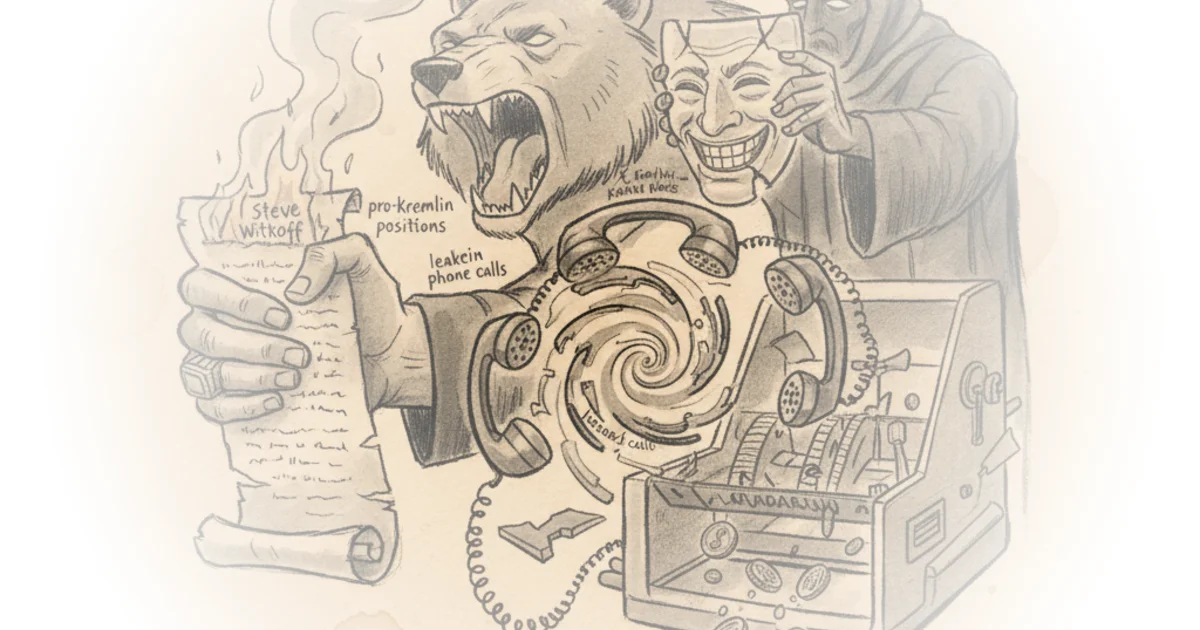
The explosive leaks raise significant questions about Witkoff's overly Kremlin-friendly positions.
Despite the mounting criticism, the White House has maintained its support for Witkoff, dismissing the leaks as "standard negotiation." The administration's defense, as reported by Rozen, relies on the idea that a dealmaker must "sell" difficult positions to both sides. Yet, this defense glosses over the specific nature of the advice Witkoff gave: not just selling a deal, but actively helping the Kremlin craft its approach to flatter the U.S. president. This distinction matters. It suggests a role that is less about mediation and more about facilitation of Russian interests.
Bottom Line
Laura Rozen's reporting provides a critical, evidence-based check on the narrative of a smooth path to peace, exposing a shadow channel that threatens to derail the very negotiations it claims to support. The strongest part of the argument is the reliance on primary source transcripts that leave little room for ambiguity regarding the envoy's alignment. The biggest vulnerability for the administration is the growing perception of strategic incoherence, which could embolden adversaries and demoralize allies. Readers should watch closely to see if the White House can realign its team before the next round of talks, or if these internal fractures will dictate the terms of a peace deal that may not hold.