The Weight of an Ordinary Life
Six years after Dr. Li Wenliang died in Wuhan, this piece returns to the hospital where his classmates waited through the night, where a nurse crouched on the floor and sobbed, where three hours of chest compressions failed to bring back a man who had warned the world. What makes this reporting notable is its refusal to mythologize. Zichen Wang presents Li not as a hero carved in stone, but as a man who loved fried chicken, reposted giveaway posts on Weibo, and wondered whether chickens suffer when laying eggs.
The Warning That Was Punished
The timeline remains damning. On December 30, 2019, Li posted in his university class group chat: "华南水果海鲜市场确诊了 7 例 SARS,在我们医院后湖院区急诊科隔离。Seven confirmed SARS cases at Huanan Seafood Wholesale Market; isolated in the ER at our hospital's Houhu campus." Half an hour later, he added that coronavirus infection had been confirmed. His classmates believed him. As Zichen Wang writes, "And precisely because of Li Wenliang's warning, they began protecting themselves from that point on—stockpiling N95 masks and wearing protective suits at work."
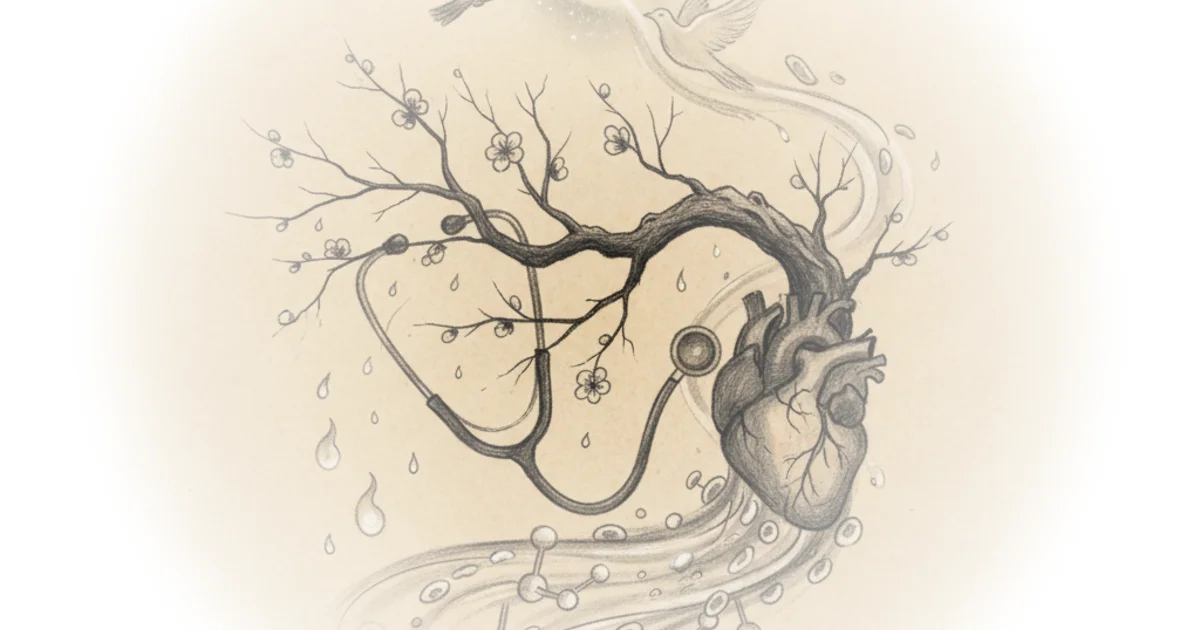
That batch of masks protected doctors when supplies later vanished. One classmate said simply: "So he really saved a lot of people."
Yet on January 3, Wuhan police reprimanded Li for spreading rumors. The piece captures the institutional cruelty: he was punished on one side and infected on the other, while his parents also fell sick. Wu Yan, a young doctor who hadn't known Li before the reprimand, told the reporters: "All I know is, he told the truth—he said what many people didn't dare to say. But he received a punishment that didn't match it at all, and suffered enormous trauma, physically and mentally."
The Hospital That Could Not Save Him
The Central Hospital of Wuhan becomes both setting and symbol. Li was transferred to the Houhu campus because it had ECMO—extracorporeal membrane oxygenation—while the Nanjing Road campus had sent its equipment to Jinyintan Hospital. The transfer itself was dangerous. Wu Yan explained: "He wasn't suitable for transfer; the risk was high. He was transferred over in the evening, and not long after he arrived he went into respiratory failure and was intubated, but we couldn't bring him back."
Three hours of chest compressions. At least three hours on ECMO. The hospital motto on the wall declared: "The hospital takes saving lives and healing the wounded as its sacred duty." But the equipment had been reassigned. The timing was fatal.
"Even though I know he's probably already gone, I still hope the rumors online are true—that ECMO can create a miracle."
The Ordinary Man Behind the White Coat
Wang's reporting excavates Li's Weibo archive to reconstruct a life: a man who ran 1,000 meters in a storm wearing slippers to buy oranges, who loved wasabi and sashimi, who described a Dicos "pistol drumstick" as "a huge leg connected to the hip, just looking at it was deeply satisfying." He complained about work—"This is killing me"—yet couldn't bear to remove his white coat. "Patients torment me a thousand times, yet I treat patients like my first love."
This vividness matters. It resists the flattening of Li into a symbol. He was someone who pranked hotel housekeeping by folding blankets into human shapes, who felt "hurt" when strangers called him "uncle," who loved autumn mornings when sunlight filters through green leaves. As Zichen Wang puts it, "This ophthalmologist seemed to have a little boy living in his heart, joking and raging on social media, with 'damn it,' 'what the hell,' and 'holy crap' constantly on his lips."
One Voice Among Many
On February 1, while infected and under reprimand, Li gave an interview to Caixin. He said: "A healthy society shouldn't have only one voice." That sentence now sits on a bench in New York's Central Park. It is the piece's moral center.
Critics might note that the reporting relies heavily on secondhand accounts and online screenshots—Li himself could not be interviewed at length because he was dying. The narrative reconstructs his final days through classmates, hospital staff, and social media archives. There is no direct testimony from Li about what he felt when police reprimanded him, or what he thought while on ECMO.
Yet the absence itself becomes evidence. When Li's nucleic acid test returned positive, he wrote: "Dust settles; finally diagnosed," adding a dog emoji. When asked what he would do after recovery, he replied: "When I'm better, I'll go to the front line. The outbreak is still spreading—I don't want to be a deserter."
Bottom Line
This piece succeeds not by elevating Li Wenliang into martyrdom, but by showing how ordinary courage becomes extraordinary when institutions punish truth-telling. The verdict: a society that silences its doctors must later mourn them—and the mourning itself becomes a form of accountability that the living cannot escape.