Johnny Chang's latest analysis cuts through the hype of artificial intelligence in education to reveal a critical inflection point: the shift from static digital content to dynamic, adaptive learning systems. While many reports focus on the novelty of chatbots, Chang anchors the narrative in South Korea's imminent rollout of AI-powered textbooks, a move that transforms the very architecture of knowledge delivery. This is not merely about convenience; it is about a fundamental restructuring of how curricula are built, verified, and consumed in real-time.
The Architecture of Personalized Learning
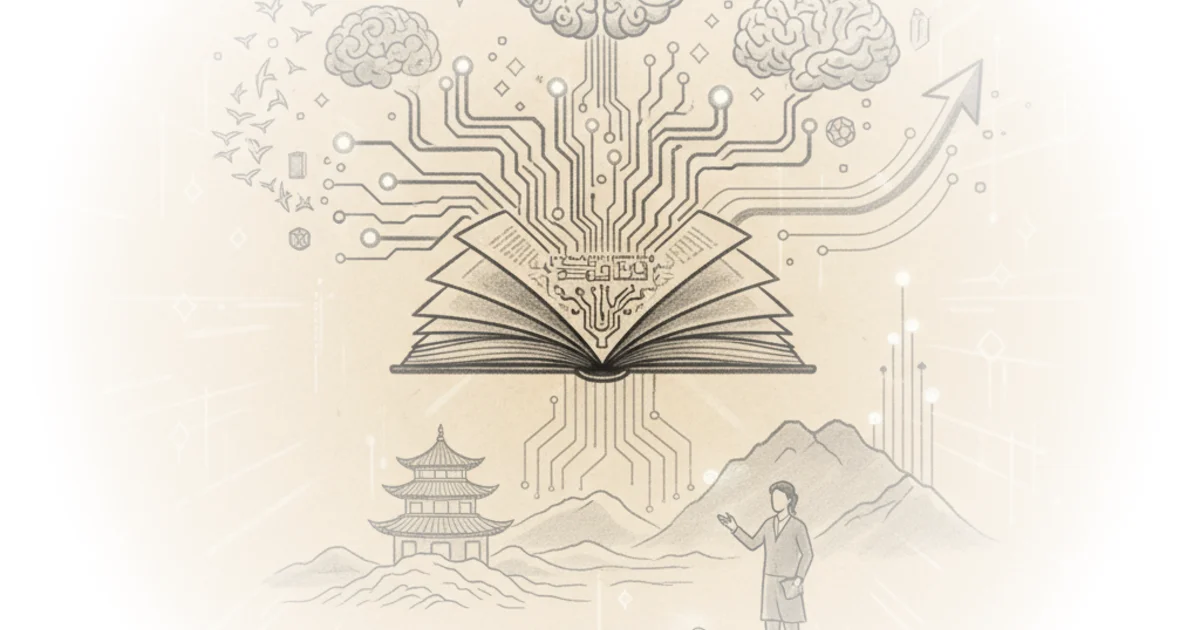
Chang writes, "By next semester, their Ministry of Education plans to roll out AI-powered digital textbooks... designed to tailor learning to each student's pace and understanding." This is a bold claim that moves beyond the vague promises of "personalized learning" that have circulated for decades. The core of the argument is that these systems do not just deliver content; they actively diagnose gaps and adjust the flow of information. Chang notes that teachers will gain access to "data-driven insights to help create more customized learning experiences," suggesting a future where the educator's role shifts from lecturer to interpreter of complex student data.
However, this rapid deployment raises immediate concerns about the human cost of such efficiency. Chang acknowledges the friction, noting that "some teachers worry that too much digital use could harm students' literacy and creativity and could exacerbate the inequality gap between socioeconomic groups." This is a crucial counterpoint that prevents the piece from becoming a pure techno-optimist manifesto. The risk is not just that students might read less, but that the algorithmic curation of knowledge could inadvertently reinforce existing biases or leave behind those without access to the necessary hardware.
"AI is transforming the way we create, consume, and engage with textbooks, offering new opportunities to expand how we learn and interact with information."
Knowledge Engineering: The Hidden Engine
Perhaps the most distinctive contribution of Chang's piece is the introduction of "knowledge engineering" as a mechanism for quality control. He explains that this process "maps the relationships between concepts and logical definitions, ensuring consistency across a textbook." Chang describes these digital tools as acting like "concept-checkers," similar to spell-checkers but designed for the logic and content of a textbook, catching errors that human authors might miss.
This reframing is powerful. It moves the conversation from "AI writing essays" to "AI verifying the structural integrity of knowledge." If a textbook claims that A leads to B, and B leads to C, but the logic fails at the intersection, the AI catches it before a student ever sees it. This suggests a future where educational materials are dynamically corrected, potentially solving the issue of outdated or contradictory information in standard texts. Yet, critics might argue that relying on algorithms to define "logical definitions" risks codifying a specific, perhaps narrow, worldview as objective truth, stripping away the nuance that human debate often provides.
The Policy Gap and the Need for Rigor
The commentary shifts to the practical challenges of implementation, highlighting a stark reality: while the technology is advancing, the policy framework is lagging. Chang interviews Chris Agnew, Director of the Generative AI in Education Hub at Stanford University, who notes that "most of the research that's out there is currently survey-based." Agnew argues that while surveys provide "useful snapshots," they are "just the beginning" of understanding the true impact of these tools.
Chang highlights the "Tutor Co-Pilot" study as a rare exception, a rigorous analysis showing "learning gains in math and important insights into the operational and cost implications." This distinction is vital. It suggests that the education sector is currently flying blind, making decisions based on anecdote rather than evidence. As Chang puts it, "One of the goals of this initiative is to provide knowledge to practitioners, helping them make more informed decisions about how to leverage generative AI."
The urgency is compounded by the lack of preparedness among educators. Chang cites an EdWeek survey revealing that while professional development has increased, "58% of teachers" have yet to receive any training on this critical topic. This creates a dangerous disparity where the administration's push for innovation outpaces the workforce's capacity to implement it safely. Without clear policies, the risk of misuse or misunderstanding grows exponentially.
The Illusion of Authority
Finally, Chang addresses the cognitive trap of AI: the tendency for students to accept false information because it is presented with authority. He references the phenomenon of "hallucination," where AI provides misinformation that "mimics the tone and authority of human speech." The piece warns that this is particularly dangerous because "it can be difficult for young people to recognize false information."
Chang points to a troubling irony: while educators suggest using Wikipedia to fact-check AI, "a research paper from scholars at Princeton University highlights a growing concern: the increasing presence of AI-generated content in Wikipedia." This creates a feedback loop where the tools we use to verify truth are themselves being polluted by the very technology we are trying to manage. The conclusion is clear: "It will be even more important to emphasize AI literacy and train students to be able to accurately assess AI outputs."
"We're at a Disadvantage," and Other Teacher Sentiments on AI (EdWeek)
Bottom Line
Chang's piece succeeds by grounding the abstract promise of AI in the concrete realities of curriculum design, teacher readiness, and data integrity. The strongest element is the focus on "knowledge engineering," which offers a tangible mechanism for improving educational quality beyond simple automation. However, the argument's biggest vulnerability lies in the assumption that the current pace of technological adoption can be matched by the development of robust ethical frameworks and teacher training. As the administration and private sector push for rapid integration, the human element—specifically the need for critical thinking and the risk of deepening inequality—remains the most fragile variable in this equation.