Johnny Chang captures a pivotal moment in education where the panic over artificial intelligence is finally giving way to a necessary, if uncomfortable, reckoning. While many outlets focus on the binary of cheating versus innovation, Chang's curation reveals a deeper structural crisis: our assessment models are obsolete, and the silence from tech leaders like Microsoft's CEO suggests the debate has become too volatile for public comment. This piece matters because it moves beyond the fear of the tool to the reality of the classroom, where students are already paying to be taught by humans, only to find their professors relying on the very algorithms they paid to avoid.
The Classroom Paradox
Chang highlights a striking reversal in the power dynamic between educators and learners. The author writes, "But, oh, how the tables have turned. Now students are complaining on sites like Rate My Professors about their instructors' overreliance on A.I. and scrutinizing course materials for words ChatGPT tends to overuse, like 'crucial' and 'delve.'" This observation is critical; it strips away the moral panic and exposes a transactional reality. Students are making a financial argument, noting they are "paying, often quite a lot, to be taught by humans, not an algorithm that they, too, could consult for free." Chang's inclusion of this perspective is vital because it reframes the issue from one of academic dishonesty to one of value delivery. If the human element is removed from the teaching process, the premium price of higher education loses its justification.
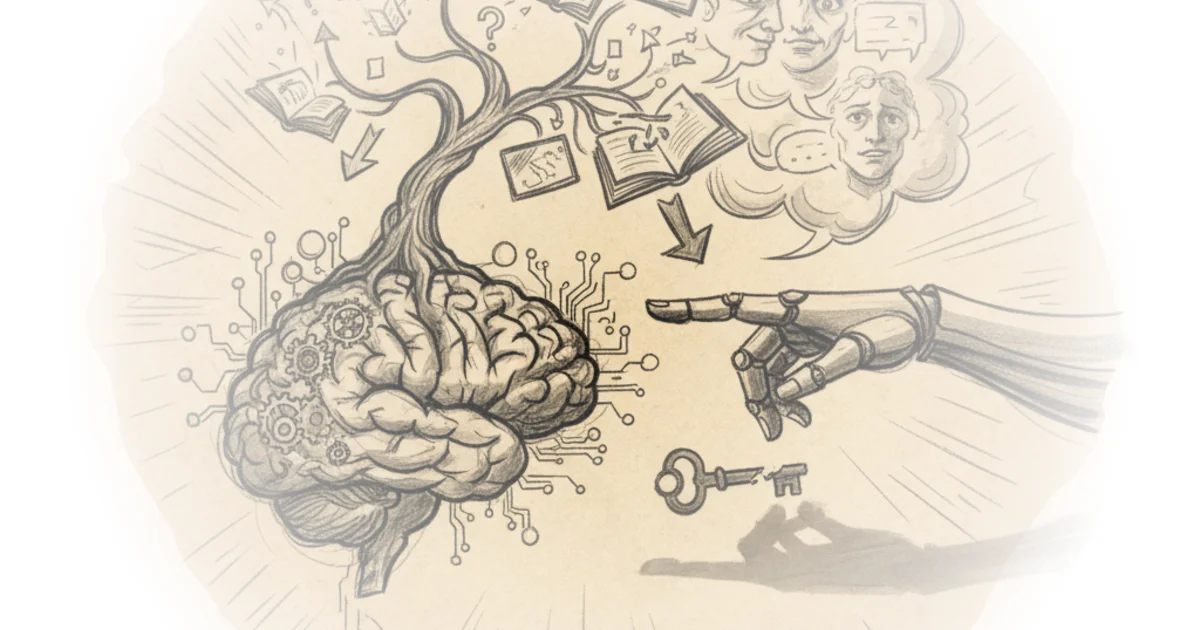
The author also points out the futility of trying to ban the technology outright. As Chang puts it, "You can't send a student home with an essay assignment anymore." This is the core of the argument: the traditional essay is dead, and clinging to it is a strategic error. The coverage suggests that the solution isn't stricter policing but a fundamental redesign of what we ask students to do. Chang notes that experts like Katie Drummond argue for "AI friendly assignments" that incorporate the tool into the curriculum rather than fighting a losing battle against it. This framing is effective because it acknowledges the inevitability of the technology while demanding higher standards of engagement.
"Generative AI is improving faster than the software used to detect it. It can be personalised to the users' voice which means even a really good teacher will struggle to detect it."
This quote from Sir Anthony Seldon, cited by Chang, underscores the absurdity of the current arms race. The technology is evolving at a pace that makes detection software a moving target. Chang's selection of this evidence forces the reader to confront the reality that "AI-proofing" assignments is a fool's errand. The focus must shift from catching cheaters to designing assessments where cheating is irrelevant.
From Crisis to Curriculum
Chang does not shy away from the legitimate fears regarding cognitive development. The author writes, "If A.I. is carelessly incorporated all the way down to pre-K, it will be a horrible mistake. It could inhibit children's critical thinking and literacy skills." This warning, attributed to Jessica Grose, provides necessary balance to the techno-optimism often found in ed-tech circles. Chang's inclusion of this perspective is crucial; it reminds us that efficiency should never come at the cost of foundational skill acquisition. The argument here is that the timing and method of integration are just as important as the integration itself.
However, Chang pivots quickly to the potential for AI to enhance, rather than replace, human cognition. The author highlights a shift in perspective from Jan Burzlaff, who notes, "A year ago, I saw artificial intelligence as a shortcut to avoid deep thinking. Now, I use it to teach thinking itself." This transformation in the educator's mindset is the most hopeful thread in Chang's coverage. It suggests that the tool is neutral; the outcome depends entirely on the pedagogical framework surrounding it. Chang argues that academics must model "the dual expertise challenge," combining domain knowledge with critical AI literacy. This means showing students how to analyze outputs, identify biases, and use the tool to augment, not replace, their own expertise.
A counterargument worth considering is whether schools have the resources to implement such a sophisticated dual-expertise model. Chang notes that while the European Commission and OECD have released an AI literacy framework, many districts lack the staff training to execute it. The gap between high-level frameworks and classroom reality remains a significant hurdle. Yet, Chang points to Miami-Dade County as a beacon of what is possible, where over 100,000 students are being trained to use AI responsibly. The district's decision to reverse its ban and deploy Google's Gemini with strict guardrails demonstrates that the "all-or-nothing" approach is failing.
The Assessment Imperative
The most actionable part of Chang's piece focuses on the need for structural changes in assessment. The author cites research by Corbin, Dawson, and Liu, arguing that "talk is cheap" when it comes to rules about AI use. Chang writes, "Relying on discursive changes undermines educational integrity and assessment validity because compliance becomes optional and difficult to verify." This is a sharp critique of the current policy landscape, where universities issue guidelines that are easily ignored. The author's argument is that we must redesign the mechanics of assessment itself, shifting focus from the final product to the process.
Chang suggests that educators should consider "authenticated checkpoints" and interconnected assessments where capabilities are demonstrated across a module. This approach makes it difficult to outsource the entire learning process to a bot. Furthermore, the piece highlights emerging technologies like Intelligent Virtual Reality (IVR), where AI characters can act as role-play partners or learning companions. Chang notes that these tools can offer "scalable teaching tools" that allow students to ask multiple questions and discuss sensitive topics in a safe environment. This moves the conversation from "how do we stop AI" to "how do we use AI to create learning experiences that were previously impossible."
"The skills that I think are going to be most important are how motivated and engaged kids are to be able to learn new things. That is maybe one of the most important skills in a time of uncertainty."
Chang closes the section on perspectives with this insight from Rebecca Winthrop, which serves as a guiding principle for the future. The argument is that in a world where information is instantly accessible, the ability to learn, unlearn, and relearn is the only durable skill. Chang's curation effectively argues that the goal of education is no longer the transmission of facts, but the cultivation of adaptability.
Bottom Line
Johnny Chang's piece succeeds by refusing to treat AI as a monolithic threat, instead presenting it as a catalyst that forces a necessary evolution in how we define learning and assessment. The strongest part of the argument is the shift from policing students to redesigning the classroom, a move that acknowledges the futility of banning technology while demanding higher standards of human engagement. However, the coverage's biggest vulnerability lies in the assumption that all institutions have the capacity to pivot; without significant investment in teacher training and infrastructure, the gap between elite districts like Miami-Dade and under-resourced schools could widen dramatically. The reader should watch for how the proposed "structural changes" to assessment are actually implemented in the next academic year, as this will determine whether AI becomes a tool for equity or a driver of inequality.