Devin Stone transforms a stream of internet memes into a surprisingly rigorous audit of the legal profession's internal culture, financial pressures, and procedural realities. While the format is comedic, the underlying analysis exposes the stark disconnect between Hollywood's dramatized courtroom battles and the mundane, high-stress grind of actual legal practice. For the busy professional, Stone offers a rare window into why the system functions the way it does, stripping away the glamour to reveal the mechanics of partnership tracks, settlement negotiations, and the sheer exhaustion of the bar exam.
The Architecture of Legal Exhaustion
Stone begins by dismantling the romanticized view of law school and the bar exam, framing the transition from student to practitioner as a period of extreme financial and psychological strain. He notes that "the third year [of law school] probably is not necessary at all," yet graduates must immediately face the bar exam often without the resources to study properly. This observation highlights a systemic flaw where the educational pipeline is designed to create debt before the candidate can earn a living. Stone argues that the bar exam "really does sap up every ounce of of your will to live," a sentiment that underscores the arbitrary nature of the gatekeeping mechanism. Critics might note that the bar exam serves a necessary function in ensuring minimum competency, but Stone's point remains valid: the process is often more about endurance than aptitude.
"Law school graduates enjoying their lives with the grim reaper bar exam knocking on their door... it really does sap up every ounce of your will to live."
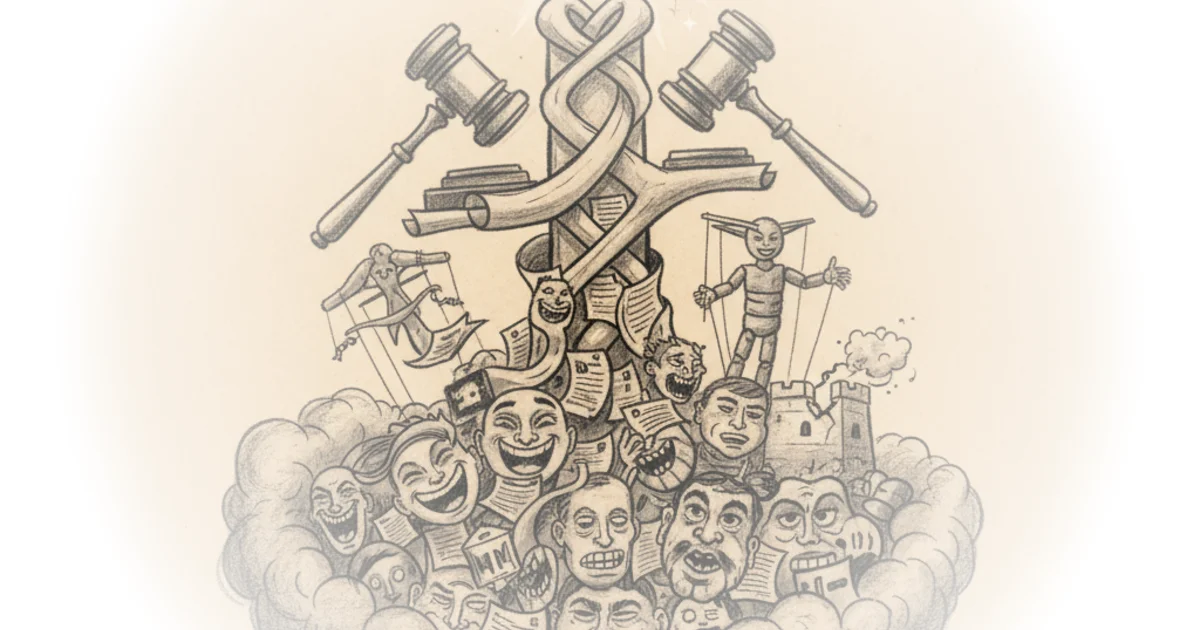
The commentary then shifts to the brutal economics of big law, where the path to partnership is described as a high-stakes game of "up and out." Stone explains that in major firms, associates have a narrow window—often 10 to 14 years—to prove their worth, or they are pushed out entirely. He illustrates the fragility of this system with a meme about a minor error costing a lawyer "51 years," noting that "if you screw up one thing and you're on the partner track it's gonna cost you a lot of time potentially." This framing effectively communicates the hyper-competitive, zero-sum nature of corporate law, where a single misstep can derail a decade of effort. The pressure is so intense that Stone jokes about the only way to survive is to become a "puppet" in the courtroom, a metaphor for the loss of autonomy junior lawyers often experience.
The Reality of Litigation and Settlement
Moving beyond the law firm hierarchy, Stone tackles the public perception of litigation versus the statistical reality of settlements. He points out that while television shows feature lawyers like Harvey Specter winning cases daily, "98 of all cases settle before getting to trial." This statistic is crucial for understanding the legal landscape: the system is designed to resolve disputes quietly and efficiently, not through dramatic courtroom showdowns. Stone explains that many settlements are for "nuisance value," where it is simply cheaper for a corporation to pay off a claim than to defend it, regardless of the claim's merit.
"When you have a big class action verdict or a big settlement there's a lot of money because you're aggregating lots and lots of small claims... the people that really benefit from that are of course the class-action plaintiffs attorneys."
Stone defends the utility of class actions, arguing they ensure that large corporations follow the law when individual infractions are too small to litigate. However, he candidly admits that these attorneys often reap massive rewards, taking a "chunk of that maybe 30 of that that chunk." This nuanced take avoids the common populist trap of demonizing class action lawyers while acknowledging the inherent conflict of interest in their compensation models. He also touches on the importance of clear communication, suggesting that "there should be law school classes about how to explain things clearly in non-legalese to clients," a gap in legal education that leaves many clients confused and anxious.
Professional Decorum and the Human Element
The piece concludes by addressing the human side of legal practice, from the absurdity of opposing counsel sending emojis to the complex social dynamics within the judiciary. Stone emphasizes that professional correspondence must remain decorous because "your correspondence is going to end up in front of the judge," and losing that respect can be fatal to a case. He illustrates the power dynamic with a vivid image of a lawyer being "clowned" by a judge, noting that the only appropriate response is to "sit there and you take it." This highlights the absolute authority of the bench and the need for lawyers to manage their egos. Furthermore, Stone touches on the "rule against perpetuities," a notoriously difficult property law concept, joking that it is "the hardest thing to learn in your property law class" and a source of confusion even for seasoned practitioners.
"If the judge start clowning you you just sit there and you take it and you say yes sir may i have another thank you sir i have another cause there's nothing that you can do."
Stone also addresses the high turnover in big law, noting that once an associate gives notice, their productivity plummets. This reflects a broader issue of burnout and the transactional nature of modern legal employment. He even touches on the personal lives of judges, referencing the reported tension between justices regarding mask mandates, to illustrate that the judiciary is not immune to the same human friction found in any workplace.
Bottom Line
Devin Stone's commentary succeeds because it uses humor not to trivialize the law, but to humanize the people who practice it, revealing a profession defined by exhaustion, high stakes, and a constant struggle to maintain decorum. The strongest element is his ability to translate complex procedural realities—like the motion for summary judgment or the rule against perpetuities—into relatable, often painful truths for those inside the system. The piece's biggest vulnerability is its reliance on the specific culture of big law, which may not fully resonate with those in public defense or solo practice, yet it remains an essential read for understanding the institutional pressures shaping American justice.