In a medical landscape saturated with quick fixes and oversimplified advice, Rohin Francis dares to admit a humbling truth: despite centuries of human movement, we still don't truly understand why muscles seize up. This piece stands out not for offering a cure, but for exposing the profound gap between common experience and scientific certainty, challenging the reader to reconsider the "useless but interesting" nature of basic biology.
The Myth of the Simple Fix
Francis begins by dismantling the most pervasive explanation for muscle cramps: dehydration and electrolyte imbalance. He notes that while YouTube is full of videos listing risk factors like "excessive exercise" or "medication," they fail to explain the actual mechanism. "They don't actually tell me anything about what is going on inside my muscles to cause them to lose the fuing plot," Francis writes, capturing the frustration of patients who are told to drink water when their blood tests remain normal. This framing is effective because it validates the reader's skepticism toward generic medical advice, suggesting that the problem lies not in their personal habits, but in the limits of current medical research.
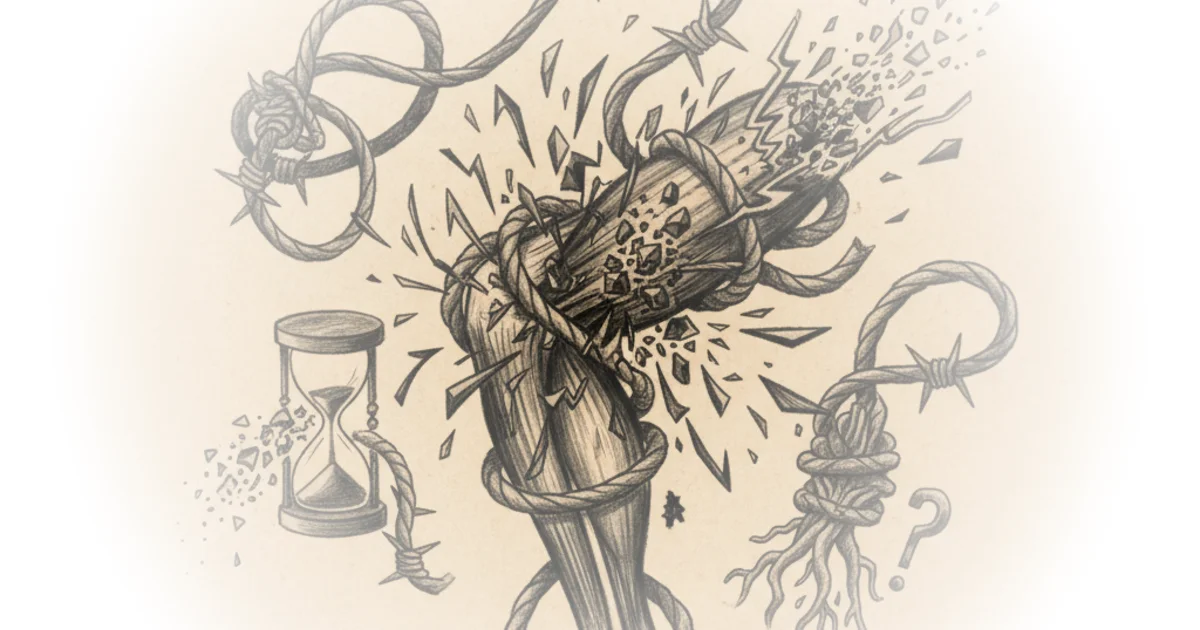
The author's personal stake elevates the inquiry from academic curiosity to urgent necessity. He describes his own suffering not as the fleeting pain of a sports injury, but as a lingering agony where "the slightest flex of my calf muscle... literally just moving my foot a millimeter downwards" triggers a reaction that leaves him in pain for days. "I know in that Split Second that I'm going to be in pain for a week and there's nothing that I can do to stop it," he admits. This anecdote serves as a powerful counterpoint to the clinical definition of cramps as merely "transient temporary contraction," highlighting a disconnect between textbook descriptions and the lived reality of chronic sufferers.
The Science of the Seizure
To understand the mechanism, Francis breaks down the complex physiology of muscle contraction into accessible terms, relying on a collaboration with Dr. Mike Todorovich. He explains that muscle shortening requires a precise dance between proteins called myosin and actin, unlocked by calcium and fueled by ATP. "There are two things that skeletal muscle must release for muscle contraction to occur that is both calcium and ATP," the author summarizes, stripping away the jargon to reveal the fundamental requirements for movement.
This clarity sets the stage for the central conflict in cramp research: a shootout between two competing theories. The first, the "dehydration hypothesis," is an old idea that Francis dismisses as potentially "nonsense" or a typo-ridden concept that doesn't align with the reality of healthy athletes. Instead, he leans toward the "neuromuscular hypothesis," which suggests the issue lies in the nervous system's control over the muscle rather than the muscle's internal chemistry. "For something that is so common the Wikipedia entry is remarkably brief," Francis observes, pointing out that the lack of a proposed mechanism reflects a broader issue where "there isn't much funding" for research that doesn't promise a profitable pharmaceutical breakthrough.
"I love the fact that there are still these really fundamental questions about basic things in human biology that remain unanswered."
Critics might argue that dismissing the electrolyte theory entirely is premature, as blood tests may not reflect intracellular conditions, and some studies do show correlations in specific populations. However, Francis's insistence on distinguishing between correlation and causation remains a vital reminder that common wisdom is not always scientific fact.
The Unanswered Question
The piece concludes not with a solution, but with an invitation to acknowledge the mystery. Francis admits that despite his deep dive into the literature, the "tender lump" that persists for days after a cramp remains unexplained. He questions whether this is a form of "evil version of muscle memory" or actual tissue damage, noting that "this isn't something that is well documented or talked about in a scientific way." By highlighting the silence in the medical literature, he forces the reader to confront the limitations of modern medicine, even in the face of such a universal human experience.
Bottom Line
Francis's strongest asset is his refusal to pretend that science has all the answers, turning a mundane complaint into a compelling critique of research priorities. The piece's biggest vulnerability is its reliance on the absence of evidence to support the neuromuscular hypothesis, leaving the reader with more questions than solutions. For the busy professional, the takeaway is clear: the next time your leg seizes up, it might not be a lack of water, but a fundamental flaw in how our nervous system talks to our muscles—a mystery that science is only just beginning to solve.