In an era where political discourse is suffocated by apocalyptic comparisons to the 1930s, Yascha Mounk offers a necessary corrective: we are not living through history's darkest hour, but rather misreading the resilience of established democracies. This piece cuts through the alarmist noise by distinguishing between fragile new regimes and systems with deep institutional roots, arguing that our current turbulence is being mistaken for terminal decline.
The Trap of Historical Analogy
Mounk begins by dismantling the pervasive narrative that today's political fractures mirror the interwar period. While scholars often point to parallel crises—democracy in retreat, radicalized parties, and economic instability—the author argues these comparisons are "rooted in a superficial reading of that era and a flawed historical analogy." The danger here is not just academic; as Mounk notes, quoting Justice Benjamin N. Cardozo, metaphors intended to free our thinking can "just as easily end up enslaving it."
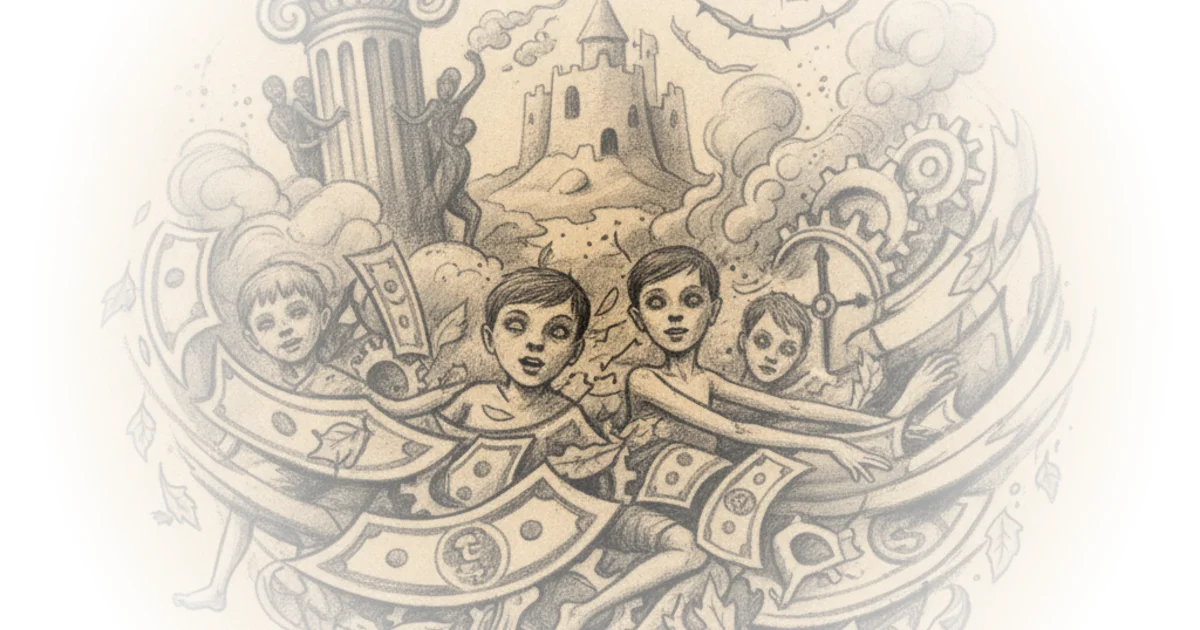
The article effectively challenges the assumption that current democratic backsliding is unique in its severity. Mounk points out that while global democracy peaked around 2015 and has since dipped, this downturn is largely confined to weaker democracies or reflects authoritarian regimes shedding superficial democratic features, rather than a collapse within well-established systems. This reframing is crucial for busy observers who need to distinguish between genuine existential threats and manageable political friction.
"The interwar analogy... conflates the structural fragility of brand new post-1918 democracies... with the very different situation of long-established systems today."
The Forgotten Resilience of Old Democracies
A significant portion of Mounk's argument rests on a historical correction that is often overlooked: the interwar period was not a universal failure of democracy, but a specific collapse of new democracies. The author highlights that countries like Denmark, Sweden, and the United Kingdom weathered the storms of the 1920s and 30s without falling to extremism because their democratic institutions had deep roots.
In contrast, nations like Germany and Italy were grappling with the trauma of World War I, where "around ten million men died in the trenches" and millions returned home scarred. This context created a powder keg of violence, exemplified by events like "Bloody May" in Berlin in 1929, which left 33 civilians dead, or the 89 demonstrators killed in Austria just two years prior. These were not mere political disagreements but civil conflicts fueled by hyperinflation and mass unemployment.
Mounk writes that in these older democracies, a strong foundation allowed the center to hold: "both political parties and the broader population came to cultivate mutual respect and to internalize the basic principle of democracy: 'sometimes we win, sometimes we lose.'" This insight is powerful because it shifts the focus from preventing collapse to reinforcing the specific cultural habits that prevent it. It suggests that the solution isn't just structural reform but the cultivation of a democratic mindset.
Critics might argue that this distinction between "old" and "new" democracies underestimates how quickly institutional norms can erode when faced with unprecedented economic shocks or digital disinformation campaigns, which did not exist in the 1930s. However, Mounk's emphasis on the survival of established systems provides a vital counterweight to fatalism.
"It mistakes turbulence for terminal decline."
The Cost of Complacency vs. Panic
While the article successfully argues against panic, it does not advocate for complacency. Mounk acknowledges that the trendline of the past decade is worrying and that challenges are real. However, he warns that adopting the wrong lens obscures what democracies actually require to defend themselves.
The author references popular works like How Democracies Die by Steven Levitsky and Daniel Ziblatt, noting their observation that the American system has "somehow managed to defy gravity." Mounk uses this to pivot toward a more nuanced conclusion: many countries have indeed defied gravity. The resilience of established democracies during crises is the most important lesson from history.
The piece effectively argues that by fixating on the collapse of Weimar Germany, we ignore the success stories of the era. This selective memory fuels a self-fulfilling prophecy where citizens and leaders expect failure, thereby weakening the very institutions they fear are crumbling. As Mounk concludes, relying on these false analogies risks "enslaving our thinking precisely when we need clear thinking most."
Bottom Line
Mounk's strongest contribution is the rigorous historical distinction between fragile new democracies and resilient established ones, offering a data-driven antidote to emotional panic. The argument's vulnerability lies in its reliance on institutional continuity; it assumes that the cultural habits of "old" democracies are immune to the novel pressures of the 21st century, such as algorithmic radicalization. Readers should watch for how these established systems adapt their internal norms rather than just looking for external signs of collapse.