David Smith doesn't just report on a speech; he amplifies a warning that Europe is already losing a war it refuses to acknowledge. The piece's most striking claim is that the continent is fighting two simultaneous conflicts: one of visible, kinetic destruction in Ukraine, and a second, invisible war of cognitive manipulation targeting the very minds of European citizens. This isn't abstract geopolitical theory; it is a forensic account of how a small nation like Moldova has become the testing ground for a new era of authoritarian aggression.
The Two Wars
Smith frames President Maia Sandu's address to the Parliamentary Assembly of the Council of Europe not as a diplomatic formality, but as a desperate plea for institutional relevance. He notes that while the Council of Europe is often confused with the European Union, its mandate is distinct: to act as the "line of defence" for human rights and democracy. Smith writes, "The Council of Europe was never meant to be a comfort zone. It was meant to be a line of defence." This distinction is crucial because it shifts the conversation from economic integration to existential survival.
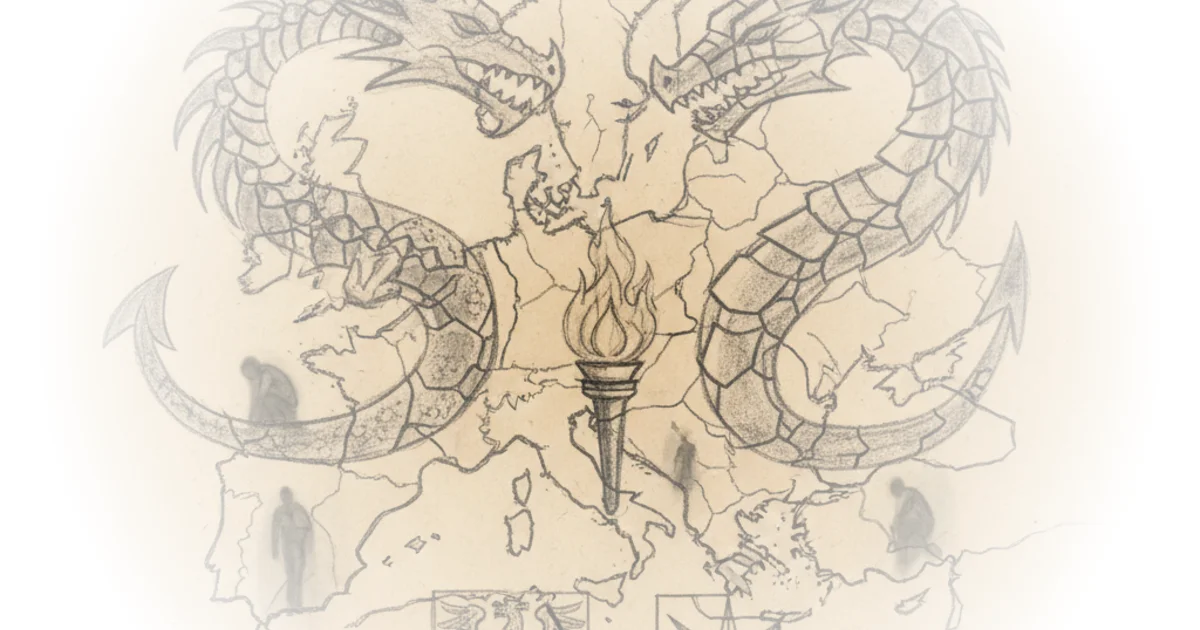
The author highlights Sandu's blunt assessment that the current European response is dangerously mismatched to the threat. "You do not respond to a patient in cardiac arrest by announcing a long-term public health strategy," Smith quotes, capturing the urgency of the moment. The argument here is that the slow, bureaucratic pace of Western institutions is fatal when facing an adversary that operates at the speed of algorithms and illicit finance. Critics might argue that long-term institutional reform is still necessary, but Smith effectively counters that without immediate stabilization, there will be no institutions left to reform.
You do not respond to a patient in cardiac arrest by announcing a long-term public health strategy.
The Invisible Front
The commentary then pivots to the more disturbing aspect of the coverage: the hybrid war. Smith details how Russia's strategy has evolved beyond missiles to target the psychological fabric of democracies. He paraphrases Sandu's description of "dark money" and "dark politics," explaining how illicit financial flows are used to scale manipulation and turn citizens against their own states. The evidence presented is chillingly specific: a network of just over 100 fake TikTok accounts generated 50 million views in a country of 2.4 million people.
Smith observes that this was not a spontaneous expression of public anger but a "coordinated network... operating for less than three months." The author's framing of this as a "cognitive war" is powerful because it forces readers to confront the reality that their information diet is a battlefield. "If left unchecked, those who control technology will increasingly control how people think," Smith writes, echoing Sandu's concern about the younger generation. This lands with particular weight because it moves the threat from the abstract concept of "fake news" to the concrete mechanics of algorithmic amplification and AI-driven disinformation.
The piece acknowledges that while Moldova successfully resisted this assault, the strategy is now being exported to Georgia and Armenia. Smith notes that in Georgia, the Kremlin "pulled Georgia back into its orbit by weaponising the fear of war." This suggests that the hybrid war is not a series of isolated incidents but a coordinated, transnational campaign designed to exploit vulnerabilities across the entire region. The human cost here is measured not in casualties, but in the erosion of trust and the loss of democratic agency.
The Call for Action
In the final section, Smith outlines the specific remedies proposed by the Moldovan presidency. The argument is that the Council of Europe must create a comprehensive legal instrument to address foreign information manipulation before damage is done. "We must act at the speed of the threat," Smith writes, summarizing the core demand. The author emphasizes that this requires protecting journalists, tracking illegal party financing, and governing the digital space with the same rigor as physical safety standards.
Smith draws a compelling analogy: "Electricity requires safety standards. Cars require traffic rules — especially near schools. The digital space is no different." This reframing of the internet as a public utility that requires regulation is a strong rhetorical move, countering the narrative that regulation is an infringement on freedom. Instead, he argues that these are "acts of democratic self-defence." The piece concludes by asserting that the Council of Europe was created for moments like this, not when democracy is comfortable, but when it is contested.
Critics might note that the reliance on international legal instruments can be slow and often lacks enforcement power against non-state actors or determined authoritarian regimes. However, Smith's coverage suggests that the alternative—doing nothing while the digital ecosystem is weaponized—is far worse.
Bottom Line
David Smith's commentary succeeds by stripping away the diplomatic veneer to reveal the raw, urgent reality of a continent under siege from both without and within. The strongest part of the argument is its refusal to treat the hybrid war as a secondary issue, instead presenting it as a direct threat to the survival of democratic systems. The biggest vulnerability lies in the gap between the proposed legal solutions and the speed at which technology evolves, but the piece makes a compelling case that the cost of inaction is the total loss of democratic resilience.