BobbyBroccoli uncovers a forgotten chapter in scientific history where ambition, regional insecurity, and the promise of unlimited energy collided in a single press conference that would eventually shatter reputations. This narrative isn't just about a failed experiment; it is a masterclass in how the desperate need for legitimacy can warp the scientific method, turning a university into a stage for a global hoax.
The Geography of Ambition
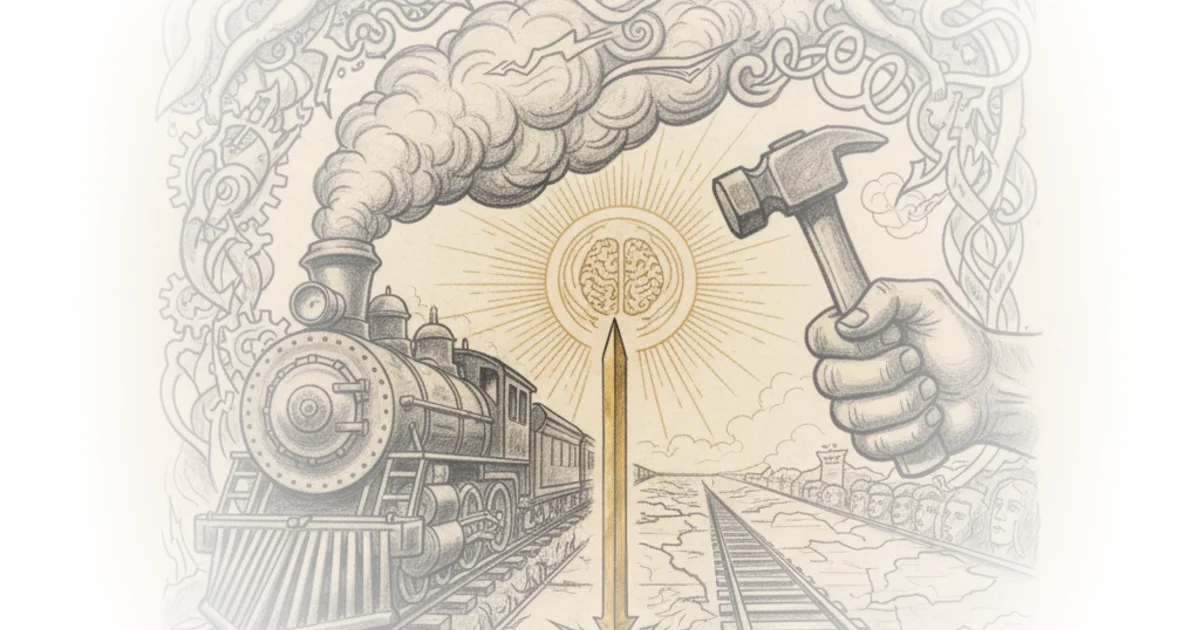
The piece opens by drawing a parallel between the 1869 Golden Spike ceremony and the 1989 announcement at the University of Utah, framing the latter as a desperate attempt to cement the state's place in the modern world. BobbyBroccoli writes, "Utah is not exactly the first place you think of when you hear about a scientific breakthrough." The author argues that the state's leadership, particularly Chase Peterson, the university president, was driven by a profound fear of being laughed at. "If you ask a lot of people in Utah what they fear it's that everyone is going to laugh at us," the text notes, highlighting a regional complex that prioritized perception over rigorous verification.
Peterson is portrayed not merely as an academic administrator but as a political operator who understood that headlines were currency. After a previous failure with the artificial heart, which BobbyBroccoli describes as "clearly a step forward" but ultimately a death sentence for the patient, Peterson needed a win that couldn't be ignored. The author suggests that the administration's hunger for a Nobel Prize created an environment where the pressure to succeed outweighed the need for proof. "One more solid announcement and you could maybe think about planning his next moves," BobbyBroccoli observes, implying that Peterson's political aspirations were inextricably linked to the university's scientific output.
The Mechanics of a Hype Machine
The narrative shifts to the internal dynamics of the chemistry department, where two professors, Stanley Pons and Martin Fleischmann, claimed to have achieved cold fusion. BobbyBroccoli details how the administration moved with unusual speed, locking down the lab and rushing a press conference before peer review could take place. The author notes that the decision to announce was made despite the scientists' reluctance, with one reportedly "on the verge of tears."
The core of the argument here is that the administration weaponized the media to force the issue. "Peterson knowing full well his words we broadcast across the country make sure that everyone knows this discovery happened at his school," the text states. This framing is crucial; it suggests the announcement was a political maneuver rather than a scientific milestone. The author highlights the specific language used by the scientists to sell the impossible: "sustained nuclear fusion reaction" and "considerably simpler than conventional techniques." BobbyBroccoli points out that the claim of getting "much more energy out than we're putting in" was the hook that captivated the world, even though the evidence was thin.
The administration needed a headline, and the scientists provided the spark, but the fire was fueled by a desperate need for respect.
Critics might note that the article leans heavily into the conspiracy of intent, potentially downplaying the genuine, albeit misguided, enthusiasm of the researchers themselves. It is possible the scientists truly believed they had a breakthrough, rather than being mere pawns in a political game. However, the author's focus on the institutional pressure remains compelling.
The Cost of the Impossible
The piece concludes by examining the immediate aftermath, where the promise of "unlimited radiation free energy" met the harsh reality of scientific replication. BobbyBroccoli describes the scene where a grad student, Marvin Hawkins, was left waiting for a partner who never showed up, symbolizing the collapse of the collaborative spirit. The author writes, "This was war," capturing the shift from scientific inquiry to a defensive struggle for survival.
The narrative effectively contrasts the grandiose claims with the mundane reality of the setup. "The golden spike is a symbol of the completion of a Monumental task," BobbyBroccoli writes, drawing a sharp line between the 1869 celebration of engineering and the 1989 celebration of a fabrication. The text emphasizes that while the 1869 spike was real, even if it was a prop for the photo, the 1989 energy breakthrough was a ghost. The author notes that the discovery was linked to the state's religious mythology, with the governor stating, "Miracles happen in Utah," a line that BobbyBroccoli uses to underscore the blending of faith and science that doomed the project.
The argument lands because it exposes the human cost of institutional hubris. The author details how the rush to announce led to the firing of a graduate student and the destruction of careers, all in the name of a breakthrough that never materialized. "The people he's waiting for right now had no interest in playing pretend nice for the media," the text says, illustrating the breakdown of trust that followed the initial hype.
Bottom Line
BobbyBroccoli's strongest move is reframing a scientific scandal as a story of regional identity and political ambition, showing how the need for respect can override the integrity of the scientific process. The piece's biggest vulnerability is its tendency to paint the administration as purely cynical, potentially oversimplifying the complex mix of hope and error that drives research. Readers should watch for how modern institutions handle similar pressures to announce breakthroughs before the data is ready, as the ghost of cold fusion still haunts the halls of science.