Alex O'Connor transforms a standard subscriber milestone into a profound meditation on identity, the illusion of choice, and the peculiar burden of modern intellectual life. Rather than simply celebrating a number, he dismantles the very premise of the question "when would you be born?" to reveal a startling truth about the nature of the self: you are not a generic consciousness that could have inhabited any era, but a specific biological event that cannot be replicated. This is not a celebration of fame; it is a rigorous philosophical check on the nostalgia that plagues our time.
The Illusion of the Time Traveler
The core of O'Connor's argument rests on a biological determinism that most casual thinkers overlook. When asked to choose a birth date, he rejects the premise entirely, noting that "even if it were the same people, but a month or two later, it just would have been a different child that was born." He argues that the specific sperm and egg cell that created him are non-negotiable prerequisites for his existence. To change the date is to cease existing entirely.
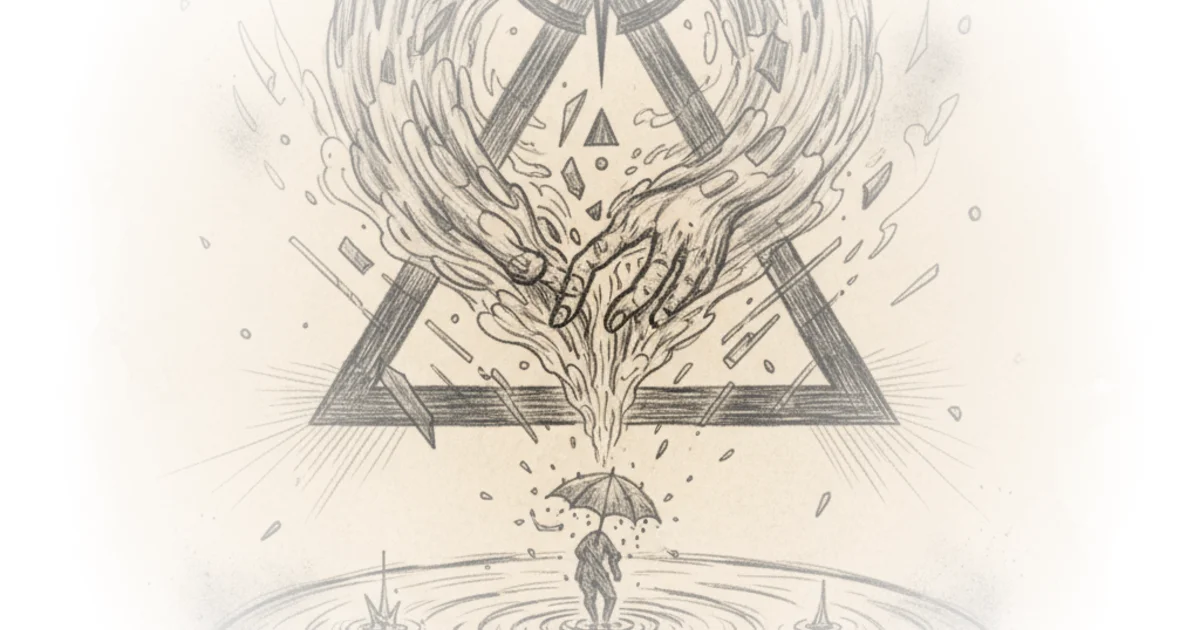
This is a powerful reframing. It forces the reader to confront the "non-identity problem" without using academic jargon. O'Connor writes, "If you think of it in terms of like, well, would you rather your parents conceived you 50 years before they did? Then you're kind of really asking, would you rather not have existed at all and somebody else existed in your place." This logic holds up under scrutiny; it exposes the selfishness of wanting to be "you" in a different time, which is a logical impossibility. Critics might argue that this ignores the philosophical concept of psychological continuity—that a version of you could exist with similar memories—but O'Connor's biological grounding is a more honest starting point for the average person.
"The only way to make sure that it was me would be to make sure that it's the same sperm and egg cell."
The Nostalgia Trap and the Digital Dilemma
O'Connor then pivots to the romanticization of the past, a common cultural reflex he dismantles with brutal honesty. He acknowledges the allure of "Paris in the '60s" or "Victorian London" but immediately counters with the visceral reality of "the smell of the sewage rotting in the street" and "rampant disease." He suggests that our historical imagination is a curated highlight reel that ignores the suffering inherent in those eras.
However, he offers a nuanced critique of the present as well. He admits that while we have undergone a "genuinely qualitative shift" in quality of life, the internet has introduced a new kind of misery: algorithmic addiction. He observes that "nobody I know I think would say, 'Yeah, you know what? I'm happy about the amount of time I spend on my phone.'" This is a crucial distinction. He doesn't advocate for abandoning technology, which he notes is impossible in a social context where "everyone around you needs to give up social media" for an individual to truly opt out. The argument is effective because it refuses the binary of "past was better" or "present is perfect," landing instead on a pragmatic acceptance of the current moment's specific trade-offs.
The Myth of the Polymath's Memory
Perhaps the most surprising revelation comes when O'Connor addresses his reputation for encyclopedic knowledge. He debunks the idea of a photographic memory, attributing his recall to intense, temporary focus and repetition. "I've got absolutely no problem repeating myself all the time," he admits, explaining that he remembers ideas because they keep surfacing in his work, not because they are etched in his brain forever.
This is a refreshing counter-narrative to the "genius" archetype often projected onto public intellectuals. He illustrates this by contrasting his ability to recall a friend's specific philosophical views with his inability to remember that same friend's birthday. "If we've ever spoken about it in any context, I'll remember what your view was," he says, noting that birthdays only stick if one makes a conscious effort. This humanizes the intellectual process, suggesting that expertise is often just the result of recent, laser-focused immersion rather than innate superiority. It reminds the audience that what looks like genius is often just the byproduct of doing the work.
"I seem to remember like this time when I was with a friend and it became clear that I'd forgotten when his birthday was... Ask me about any of your views, like on anything... I'll remember what your view was."
The Weight of the Platform
Finally, O'Connor reflects on the sheer velocity of his recent success, from a video garnering a million views in 24 hours to interviewing figures like Brian Cox and Michael Stevens. He describes a moment of dissociation where he would look at a screen and think, "Yeah, right, we're doing that aren't we?" He frames this not as a victory lap, but as a "duty to make stuff that's worthwhile."
This sense of responsibility is the emotional anchor of the piece. He acknowledges the stress of the "admin, a lot of travel, a lot of organization," but contextualizes it against the backdrop of a job he loves. He writes, "I've been given this really cool opportunity to speak to cool people and a platform and people who tune into my episodes. So it really kind of drives me to try to make quality content." This is a mature take on influence; he recognizes that the platform is a trust, not just a metric. While some might argue that the pressure to constantly produce high-quality content is unsustainable, O'Connor's gratitude suggests he views the burden as a privilege.
Bottom Line
Alex O'Connor's commentary succeeds by replacing the typical celebration of milestones with a rigorous philosophical inquiry into the nature of self and the reality of the present. His strongest argument is the biological impossibility of being "born again" in a different era, a point that effectively shatters nostalgic fantasies. The piece's only vulnerability is its reliance on the listener's willingness to accept a deterministic view of identity, but the practical wisdom regarding memory and the digital age makes it a compelling read for anyone navigating the modern intellectual landscape.