Michael Huemer delivers a jarring verdict on the very foundation of modern society: the state possesses no genuine authority, yet we obey it as if it were a moral imperative. This piece cuts through centuries of political philosophy to argue that our compliance isn't rooted in reason or justice, but in a dangerous cocktail of psychological conditioning and evolutionary survival mechanisms. For anyone tired of the endless debate over policy details, Huemer offers a more unsettling question: are we obeying the law because it is right, or because our brains are wired to submit to the person in the white coat?
The Psychology of Obedience
Huemer anchors his argument in the chilling results of the 1960s Milgram experiment, where ordinary people were willing to inflict lethal pain simply because an authority figure told them to. He notes that while most assume they would refuse such orders, "two thirds of people go all the way, administering three 450-volt shocks to a silent and possibly lifeless victim." This isn't just a historical curiosity; it is a blueprint for how modern citizens interact with the state. The author draws a direct line from the laboratory to real-world atrocities, pointing out that "Milgram explicitly draws the parallel to Nazi Germany, where people followed the government's commands to the point of murdering millions of helpless others."
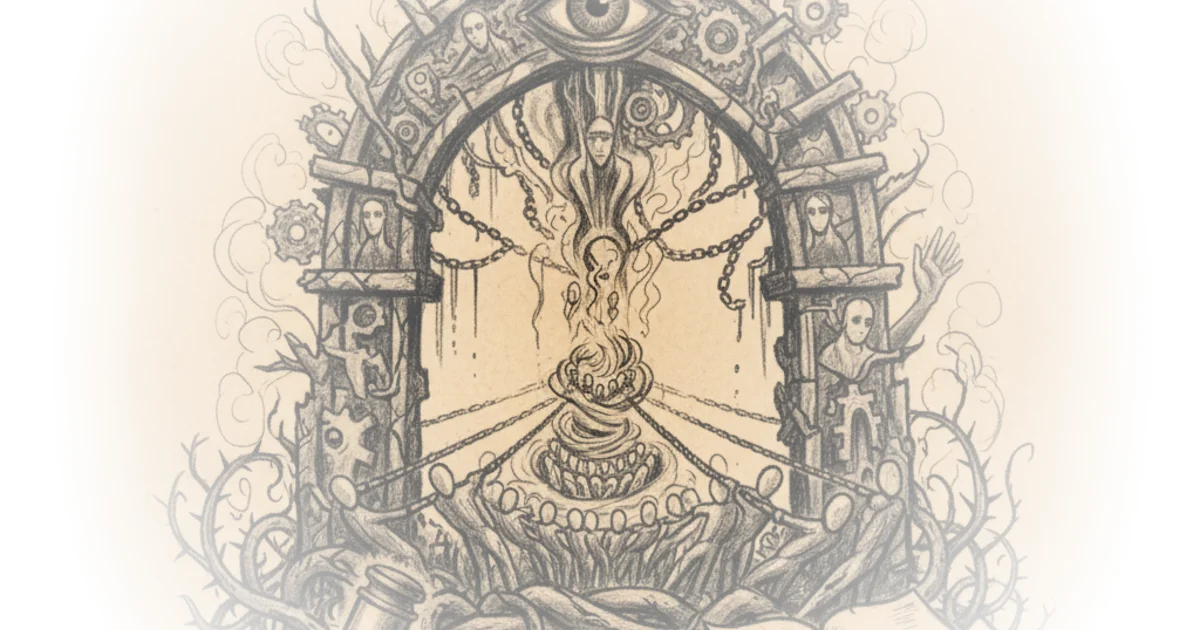
The framing here is stark. Huemer suggests that the belief in authority is not a rational conclusion but a psychological trigger. He writes, "People have a psychological drive to obey authority figures, even when their commands are obviously morally illegitimate." This drive explains why, as he observes, "it is nearly impossible to get a jury to consider nullification of bad laws, because almost all jurors think they 'have to' help enforce the law." The parallel to the Stanford prison experiment is implicit but potent; just as guards in that study quickly adopted abusive roles, citizens adopt the role of enforcer, suppressing their own moral compass to align with the institution.
People have a psychological drive to obey authority figures, even when their commands are obviously morally illegitimate.
Critics might argue that this psychological determinism underestimates the role of genuine civic duty or the practical necessity of social order. However, Huemer's point is that the feeling of obligation is often manufactured, not earned. He illustrates this with the My Lai Massacre, noting that while some soldiers refused to participate, "hardly anyone actually tried to help the villagers," and the one helicopter captain who did was initially "reviled as a traitor." The lesson is clear: the instinct to obey can override the instinct to protect the innocent.
The Bond of Captivity
Moving beyond simple obedience, Huemer explores a more disturbing phenomenon: Stockholm Syndrome. He describes the 1973 bank robbery in Sweden where hostages developed an emotional bond with their captors, eventually fearing the police more than the robbers. Huemer posits that this isn't an anomaly but a survival mechanism hardwired into our species. "Perhaps over our evolutionary history, humans developed a tendency to bond with and share the perspectives of those who hold great power over us," he suggests.
This evolutionary lens reframes the relationship between the citizen and the state. In a world without modern states, disobeying a tribal chief meant death; today, the government holds that same terrifying power. Huemer argues that "ordinary citizens experience something like Stockholm Syndrome with respect to their governments." The result is a populace that instinctively sides with the state, even when the state is the aggressor. This explains the difficulty in holding officials accountable, as the public often adopts the government's perspective as their own.
Rationalizing the Irrational
The final layer of Huemer's analysis tackles why we insist on believing in authority despite our actions being driven by fear. He turns to the theory of cognitive dissonance, which posits that people will change their beliefs to align with their behavior to avoid psychological discomfort. Since we obey laws out of fear of punishment, admitting this would make us feel like cowards. So, we invent a nobler reason. "We devise a more pleasant account: we obey out of morality," Huemer writes. "But to sustain this explanation, we have to adopt the belief that the government has a special sort of authority that entitles it to our obedience."
This is compounded by social proof and status quo bias. We look around and see everyone else obeying, so we assume the system must be legitimate. Huemer points to the "political aesthetics" of the state—statues, imposing buildings, uniforms, and rituals—as deliberate tools designed to trigger this deference. "All of this is designed to give us a general feeling of the great power and authority of the state," he notes. These aren't just decorations; they are psychological triggers that bypass critical thinking.
Bottom Line
Michael Huemer's most compelling contribution is the debunking of political authority as a rational construct, replacing it with a psychological profile of submission. While his argument risks oversimplifying the complex social contracts that hold societies together, it forces a necessary reckoning with the non-rational roots of our obedience. The strongest part of this piece is its ability to connect abstract philosophy to visceral human behavior, reminding us that the state's power often relies less on its legitimacy and more on our inability to say no.