This piece stands out because Dwarkesh Patel makes a provocative argument: Kepler's approach to discovering planetary motion laws was essentially what an AI model does — generate thousands of hypotheses, most of them wrong. And now that AI has made idea generation nearly free, the real challenge isn't finding theories; it's verifying which ones actually matter.
"Kepler was a high temperature LLM"
This is the thesis that makes the piece sing. It's not about whether AI can do mathematics — it's about how science itself has changed. The author argues that historically, we celebrated the "eureka moments" of idea generation. But now? The cost of generating hypotheses has collapsed to near-zero. What we need are new structures for verification and validation.
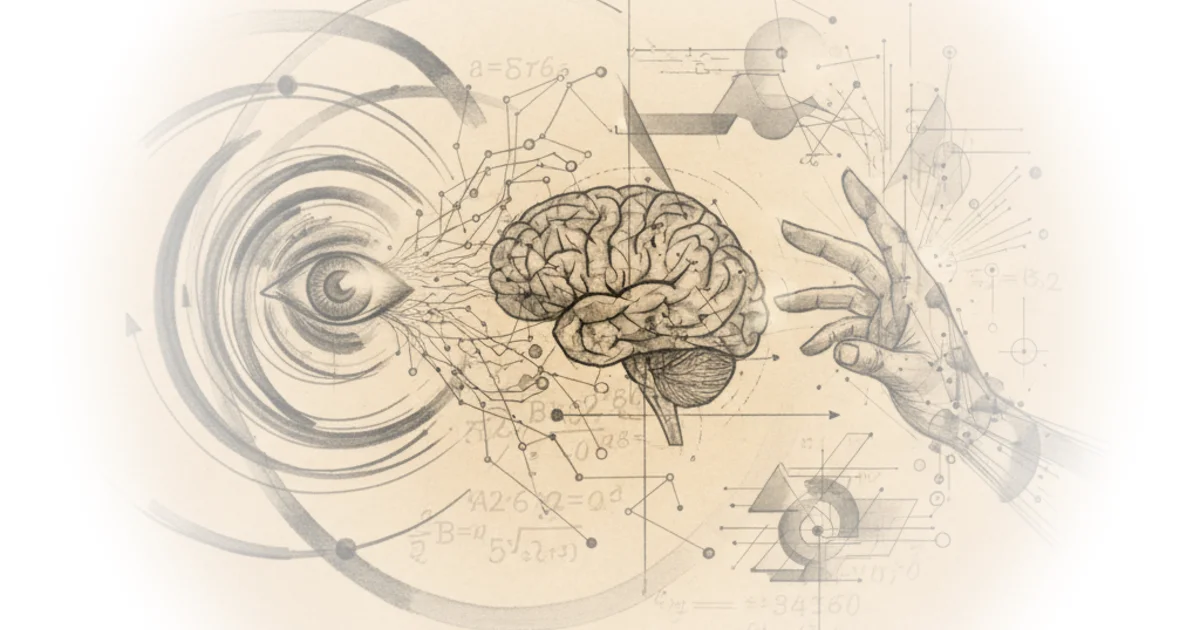
The historical setup is brilliant: Kepler building on Copernicus, who built on Aristarchus. Each one challenging the previous understanding that planets moved in perfect circles. Dwarkesh Patel writes that "Copernicus very famously proposed the heliocentric model that instead of the planets and the sun going around the earth that the sun was at the center." This creates the context for why Kepler's empirical approach mattered — he had Tycho Brahe's precise data, which was "10 times more precise than any previous observation."
The core argument is that traditionally, science worked like this: identify a problem, collect data, propose a hypothesis, then validate. But now we're in an era where you can generate thousands of theories for any given scientific problem — and the bottleneck has flipped.
As Dwarkesh Patel puts it: "AI has basically driven the cost of idea generation down to almost zero. In a very similar way to how the internet drove the cost of communication down to almost zero."
The historical parallel works because Kepler really did try many wrong theories before finding success. The author describes him trying "musical notes" and "platonic objects" — random relationships that didn't fit the data. He eventually got it right with three empirical laws, but even Kepler's third law was based on just six data points.
The Verification Problem
The strongest part of this argument is identifying what's actually broken in modern science. It's not that we can't generate ideas — it's that we're overwhelmed. "Human reviewers are already being overwhelmed. Many journals report AI submissions flooding their platforms."
This is the real shift Dwarkesh Patel identifies: we've always celebrated hypothesis generation, but now that's cheap. What remains expensive is verification — checking which ideas actually move science forward versus dead ends or red herrings.
Critics might note that comparing Kepler's empirical breakthrough to an LLM's random relationships oversimplifies both. Kepler had deep physical reasoning; AIs mostly generate statistical patterns without understanding. The analogy works as metaphor, but the article doesn't fully explore whether AI can ever produce genuine insights like Kepler's — versus just generating plausible-sounding nonsense.
Bottom Line
The piece's strongest move is reframing what science actually needs from AI. It's not help with idea generation — we have plenty of that now. What we desperately need are better systems to verify which ideas deserve attention. The historical parallel to Kepler works beautifully because it shows how empirical data (Brahe's observations) was the real constraint on progress, just as verification is now. The vulnerability? We haven't built those new structures yet, and Dwarkesh Patel doesn't tell us how to start. "ASIN": "0471496573" {"title": "The Road to Discovery