Yale University transforms a standard history lecture into a profound meditation on why the American experiment stalled, using Mark Twain's Huckleberry Finn not merely as a literary exercise, but as a forensic tool to dissect the collapse of Reconstruction. The author's most striking move is reframing the novel's controversial ending and its use of dialect as a direct commentary on the nation's failure to secure liberty for Black Americans after the Civil War, a connection rarely made in traditional history curricula.
The Raft as a Microcosm of Failure
The lecture begins by immersing the audience in the sensory experience of the Mississippi River, establishing the raft as a symbol of temporary freedom before the inevitable intrusion of societal corruption. Yale University writes, "It's about the longing to escape which undergraduates go through how many times a day? It's about the frontier in so many ways." This framing is effective because it immediately grounds a complex historical period in the universal human desire for autonomy, making the subsequent historical analysis feel personal rather than abstract.
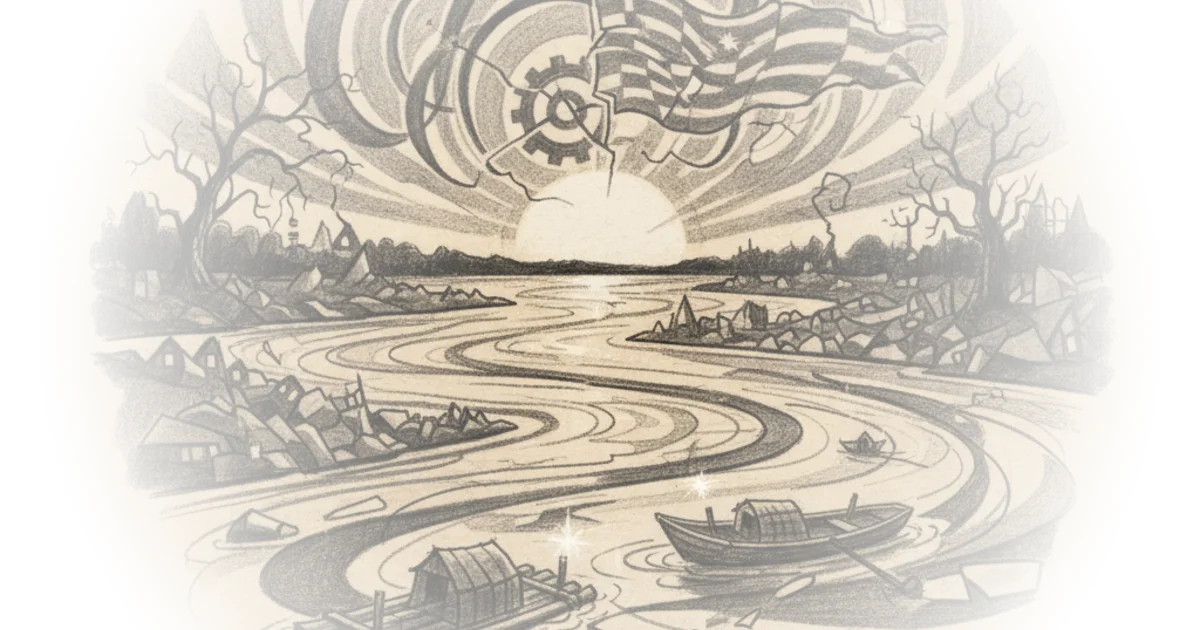
However, the author quickly pivots from the romanticism of the river to the harsh reality of the era. The core of the argument is that Twain's novel is a "moral protest" and a "story about the corruption of real life that they can only marginally avoid." Yale University notes that the book captures a specific moment in the Gilded Age when the author struggled for seven years to articulate the nation's trauma. The lecturer suggests that the destruction of the raft by a steamboat represents "modernity blasting the past," a powerful metaphor for how industrialization and the desire for white reconciliation crushed the fragile gains of Reconstruction. Critics might note that this literary interpretation risks oversimplifying the multifaceted political failures of the era into a single metaphorical collision, yet it provides a visceral entry point for understanding the speed of the backlash.
"If war among the whites brought peace and liberty to blacks, what will peace among the whites bring?"
The Defeat of Radical Republican Ideology
Shifting from literature to hard history, the commentary dissects the three-part worldview of the Radical Republicans who initially drove Reconstruction. Yale University outlines their ideology as rooted in a fierce unionism, a belief in black suffrage, and a conviction in "positive activist interventionist government." The lecturer emphasizes that these leaders believed the Bill of Rights had to be "federalized, enforceable by the federal government, not just by states." This is a crucial distinction, as it highlights the unprecedented attempt to use federal power to guarantee civil rights, a concept that remains a flashpoint in American politics today.
The author argues that this vision was doomed not by a lack of will, but by a fundamental shift in the American definition of equality. Yale University explains that while the Radical Republicans championed "equality under law," a modern Enlightenment concept, the nation was not ready for a third, deeper kind of equality that the 19th century merely flirted with. The lecturer points out that the defeat of Reconstruction happened with startling speed, rising and falling in roughly the same three-to-five-year window. The argument holds weight because it identifies the fragility of a system built on coercion against a defeated South without a lasting cultural shift in white consciousness.
Frederick Douglass and the Fear of Reunion
The lecture culminates with a poignant analysis of Frederick Douglass's 1875 speech, delivered just before the nation's centennial. Yale University highlights Douglass's fear that the upcoming celebration would be a "grand centennial hosana of peace and goodwill to all the white race," effectively erasing Black citizens from the national narrative. The lecturer underscores Douglass's prescient question about what "peace among the whites" would mean for Black Americans, a question that foreshadowed the Jim Crow era. This section is particularly strong because it uses Douglass's own voice to illustrate the anxiety of a people watching their hard-won rights dissolve into a political compromise.
The author also touches on the enduring legacy of the character Jim, referencing modern reinterpretations like James McBride's The Good Lord Bird and a new biography of Jim by Shelley Fisher Fishkin. Yale University writes, "Jim has been one of the most important, love him or hate him, like it or not, black characters in the history of fiction." This inclusion serves to remind the audience that the story of Reconstruction is not a closed chapter but a living narrative that continues to be reimagined and contested in contemporary literature.
Bottom Line
Yale University's lecture succeeds by weaving literary analysis with historical rigor, demonstrating that Huckleberry Finn is an essential text for understanding the political betrayal of Reconstruction. The argument's greatest strength is its ability to humanize the abstract political failures of the 1870s through the lens of Twain's fiction and Douglass's warnings. However, the piece leaves the reader with an unresolved tension: if the nation was not ready for true equality then, what does that imply for the ongoing struggle for racial justice today? The most important takeaway is that the "peace among the whites" Douglass feared was not just a historical event, but a recurring pattern in American history that demands constant vigilance.