Nate Silver doesn't just critique the NBA's current draft system; he proposes dismantling it entirely in favor of a high-stakes auction model designed to eliminate tanking and restore competitive integrity. By replacing the lottery with a currency of Acquisition Rights Capital, Silver argues we can solve the league's most persistent incentive problem: the financial reward for losing. This is not a minor tweak to the ping-pong balls; it is a fundamental restructuring of how talent is distributed, backed by data that suggests the current system actively punishes teams for trying to win.
The Tanking Incentive
Silver opens with a blunt assessment of the regular season's decline in quality, noting that "a full third of the league — five teams in each conference — basically gave up on the season at some point between October and February." He argues that the league's current hesitation to act stems from a confusion between losing and tanking, a distinction that has allowed perverse incentives to fester. The author points out that "about half the games on any given night 'feature' a tanking team," rendering the product unwatchable for fans willing to pay premium prices.
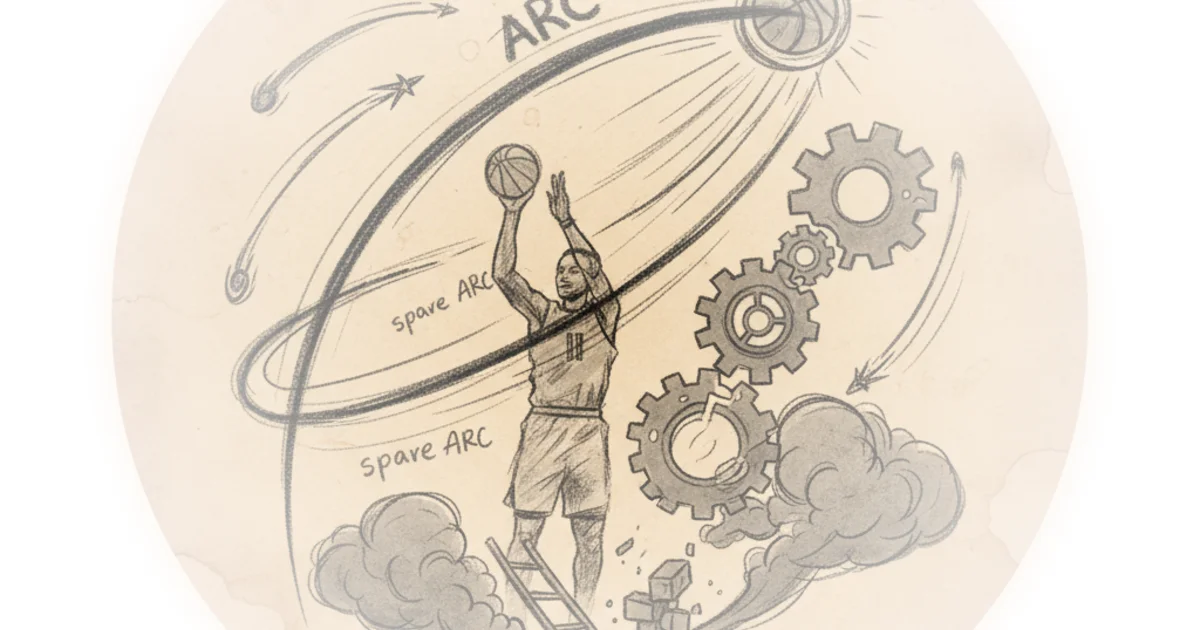
The core of Silver's argument is that the current draft rules create "weird cliffs in the system and perverse incentives" that encourage teams to lose intentionally to secure a higher pick. He suggests that the league's proposed solutions are merely "tinkering around the edges with the current rules, full of the same kinks and quirks that will be exploited by future Sam Prestis and Daryl Moreys." This critique lands hard because it acknowledges the strategic sophistication of modern front offices; they will always find a way to game a system that rewards failure. By reframing the issue as an institutional design flaw rather than a moral failing of specific owners, Silver makes a compelling case for a radical overhaul.
Critics might argue that an auction system favors wealthy franchises with deeper pockets to hoard capital, potentially widening the competitive gap. However, Silver anticipates this by capping bids and distributing capital based on performance, aiming to protect the league's "middle class" rather than just the worst teams.
"Losing isn't the same thing as tanking, and perhaps it's fine to reward the former but not the latter."
The Mechanics of ARC
Silver's proposed solution is the Acquisition Rights Capital (ARC) system, a mechanism where teams bid on players using a currency allocated based on their season finish. "The draft would be replaced with an auction-type system, where teams bid on eligible players each June with Acquisition Rights Capital or ARC," he writes. This shift transforms the draft from a random lottery into a strategic market where teams can carry over capital, trade it in whole units, and target specific players rather than hoping for a lucky draw.
The author details how this system would flatten the odds, noting that "the steepest part of the curve, in terms of the expected value gain from dropping an additional position in the standings, is roughly between the 20th and 23rd positions" under the current rules. In his model, this incentive to lose is reduced by roughly half. Instead, the system rewards teams that make the playoffs with more capital, while ensuring the bottom three teams receive a flat allocation, similar to the current 14 percent chance for the top pick but without the volatility of the lottery balls.
Silver emphasizes that this approach allows for "more flexibility to tweak the knobs to the league's desired levels," such as penalizing tanking by deducting capital rather than stripping picks entirely. He illustrates this with the example of Steph Curry, suggesting that under this system, a team with spare ARC could "steal a player like him" rather than relying on a lottery win. This connects to the broader concept of fungibility, where capital becomes a universal asset rather than a team-specific pick, simplifying trade negotiations significantly.
"Every fantasy football nerd's favorite solution, an auction rather than a draft, provides for a lot more flexibility to tweak the knobs to the league's desired levels."
Strategic Depth and Fairness
The auction format introduces a new layer of strategy, particularly regarding the "max bid" cap of 100 ARC. Silver notes that "the #1 overall pick is worth about twice as much as the #7 pick," meaning the top prospects will often exceed the maximum bid a single team can make. This forces teams to make difficult decisions: do they save their capital for multiple solid players, or risk a tie-breaker lottery for a generational talent?
He argues that this reduces the element of luck, stating that "bad teams would still be rewarded with better capital, but they wouldn't be quite as subject to the literal bounces of the lottery balls." Furthermore, the system includes rules to prevent a single franchise from dominating the top tier repeatedly, such as limiting a team to winning a max bid "at most 2 times in any 3-year window." This addresses the concern of perpetual dynasties while still allowing for the occasional breakout success.
Silver also touches on the historical context of draft value, referencing how the second round has become increasingly irrelevant, with the "back half of the second round literally zeroes out." His system eliminates the second round entirely, allowing teams to bid on players until their capital is exhausted or they reach their roster limit. This mirrors the efficiency seen in other sports markets, where value is determined by player performance rather than draft slot number.
"If there's a player they really like — say, Steph Curry in 2009 — they can grab him, provided he's not a max player."
Bottom Line
Silver's proposal is a bold, data-driven attempt to align the NBA's incentives with the goal of competitive balance, effectively removing the financial reward for tanking. While the complexity of an auction system and the potential for wealthy teams to outspend others remain valid concerns, the argument that the current lottery is broken is undeniable. The strongest part of this piece is its ability to translate abstract economic incentives into a concrete, actionable mechanism that could fundamentally change how the league operates. Readers should watch for how the NBA responds to the growing frustration with tanking, as Silver's ARC system offers a plausible, if radical, path forward.