More Perfect Union delivers a chilling portrait of Larry Ellison not merely as a tech mogul, but as the architect of a modern surveillance state where data is the ultimate currency. The piece's most startling claim is that Ellison's pursuit of the TikTok deal is less about national security and more about cementing a feedback loop where his company profits from the very monitoring systems he champions. This is a narrative that connects the dots between corporate greed, government overreach, and personal ideology in a way that demands immediate attention.
The Digital Landlord
The author frames Oracle's business model with surgical precision, moving beyond the typical "big tech" critique to expose a specific mechanism of control. More Perfect Union writes, "This is America's digital landlord... Instead of oil, you know, he's trafficking in data." This distinction is crucial; it shifts the conversation from resource extraction to the ownership of the infrastructure itself. The commentary suggests that Ellison's early days were defined by opportunism, noting how he and his partners essentially stole a concept from IBM to build a billion-dollar empire. The argument holds weight because it traces the lineage of Oracle's dominance back to a pattern of aggressive acquisition rather than pure innovation.
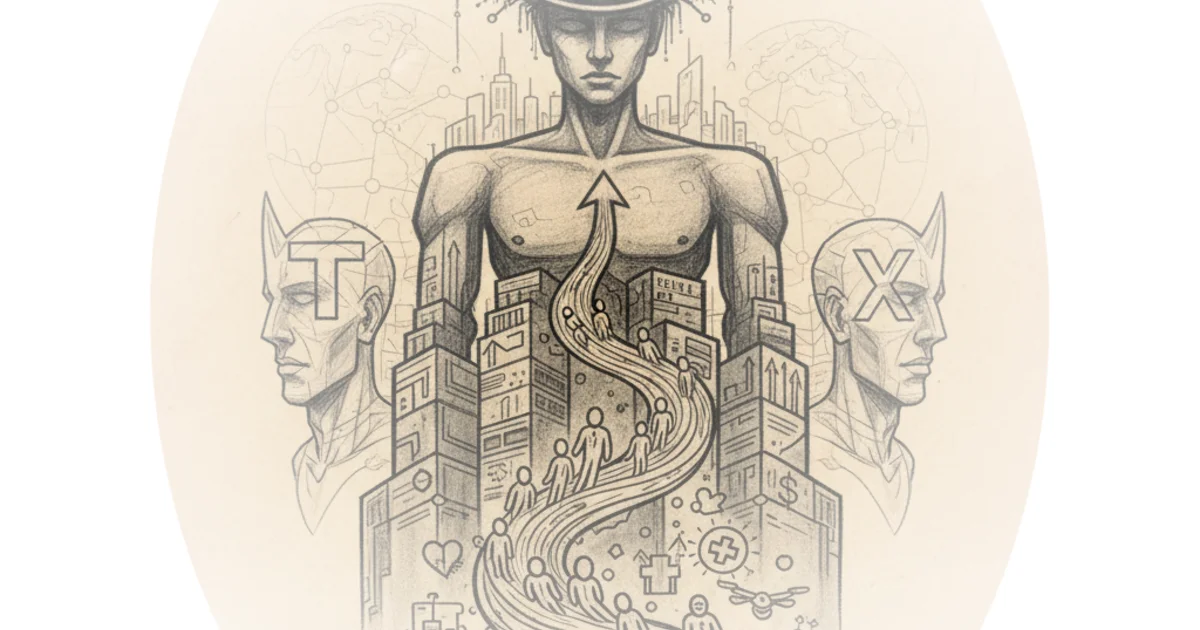
The piece highlights how Oracle has become indispensable to the global economy, embedding itself so deeply that leaving their ecosystem is nearly impossible. As More Perfect Union puts it, "Oracle doesn't have customers and as hostages." This metaphor lands hard because it accurately describes the "lock-in" effect of enterprise software, where the cost of switching becomes prohibitive. The author illustrates this by describing how Oracle gives away products to get a "foot in the door" before raising prices, a strategy that turns public and private institutions into captives. Critics might argue that market competition exists and that Oracle's dominance is simply a result of superior reliability, but the text effectively counters this by detailing how the company actively "exsanguinates competition" through predatory contracts and litigation.
They manage to find their way into just about everywhere... and through buying up their customers and making it hard to get off their software, they were able to spread like a fungus.
The Surveillance Ideology
The commentary takes a sharp turn when examining Ellison's personal philosophy, revealing a man who views privacy as a quaint obstacle rather than a fundamental right. More Perfect Union writes, "Some people have compared it to the oil boom and the railroad boom. Larry Ellison is the robber baron of this era, but instead of oil, you know, he's trafficking in data." This historical parallel elevates the stakes, suggesting that the current data economy is replicating the worst excesses of the Gilded Age. The author points to Ellison's dismissive reaction to the Snowden leaks, quoting his belief that citizens can simply "get rid of the government" if they dislike surveillance. This quote is jarring and serves as the emotional core of the piece, exposing a profound disconnect between the billionaire's worldview and democratic norms.
The text connects this ideology to tangible products, such as body cameras that are "always on" and AI systems designed to lock down schools. More Perfect Union notes, "We think we can absolutely lock down schools. The second someone pulls out a gun immediately alert recogn use AI cameras to immediately recognize that." The author argues that Ellison's solution to violence is not prevention, but increased surveillance that generates revenue. This framing is effective because it exposes the conflict of interest: the problem (school shootings) is the market opportunity for the solution (surveillance tech). A counterargument worth considering is that such technology could genuinely enhance safety, but the piece rightly emphasizes the potential for false positives and the erosion of civil liberties in the process.
The Geopolitical Web
Perhaps the most distinctive part of the coverage is the deep dive into Ellison's political entanglements, specifically his relationship with the Tony Blair Institute and the state of Israel. The author reveals that Ellison's support for surveillance is not just a business strategy but a deeply held political belief. More Perfect Union writes, "TBI is deeply entwined with Oracle... essentially offering altruistic solutions and then offering Oracle as the remedy for their problems." This section weaves a complex narrative where think tanks, political donations, and corporate sales strategies merge into a single machine. The evidence presented, including leaked emails and board overlaps, suggests that the push for digital ID systems and surveillance in countries like Rwanda and Indonesia is a coordinated effort to expand Oracle's market share.
The piece also touches on the TikTok deal, reframing it as a vehicle for Ellison to control American data under the guise of national security. As More Perfect Union puts it, "The Tik Tok deal will add our favorite Brain app to the giant blob that already controls most of our media and sets up the dominoes for a full-blown surveillance state." This argument is compelling because it challenges the prevailing narrative that the deal is purely about protecting US data from China. Instead, it posits that the deal is about consolidating power in the hands of a single entity with a pro-surveillance agenda. The author's ability to link Ellison's personal donations to Marco Rubio and the Tony Blair Institute to the broader push for digital surveillance adds a layer of political context often missing from tech reporting.
Make money, buy power, change the rules so you can make more money. Rinse and repeat.
Bottom Line
More Perfect Union's strongest asset is its ability to connect the dots between Ellison's personal ideology, Oracle's predatory business practices, and the broader geopolitical push for surveillance. The piece's biggest vulnerability is its reliance on a singular narrative of intent, which may overlook the complex, often chaotic nature of corporate decision-making. However, the evidence presented regarding the interconnectedness of the Tony Blair Institute and Oracle is too significant to ignore. Readers should watch for how the TikTok deal unfolds, as it may well be the first major test of whether Ellison can successfully merge his surveillance ambitions with American national security policy.