Jonathan Rowson offers a radical reframing of our current crisis: the accelerating collapse of modernity isn't just about time moving too fast, but about our metaphysical blindness to the power of space. While most analysts focus on the tyranny of the clock, Rowson argues we have forgotten how to use physical and conceptual space as a form of resistance. This is not a standard policy critique; it is a philosophical intervention suggesting that our inability to slow down stems from a "space-shaped hole" in our collective imagination.
The Juggernaut and the Clock
Rowson begins by invoking sociologist Anthony Giddens, who famously described modernity as a "runaway world" driven by a "juggernaut" of industrialism and capitalism. Rowson writes, "Modernity is a juggernaut. It is not just a juggernaut, but one which we can to some extent steer." However, he quickly pivots to the mechanism of this runaway engine: the severing of time from space. In the pre-modern world, time and place were co-extensive; you bought bread on market day in the market square. Today, as Rowson notes, "when and where ceased to be co-extensive," allowing technology to "tame space, and denature time to a shallow present."
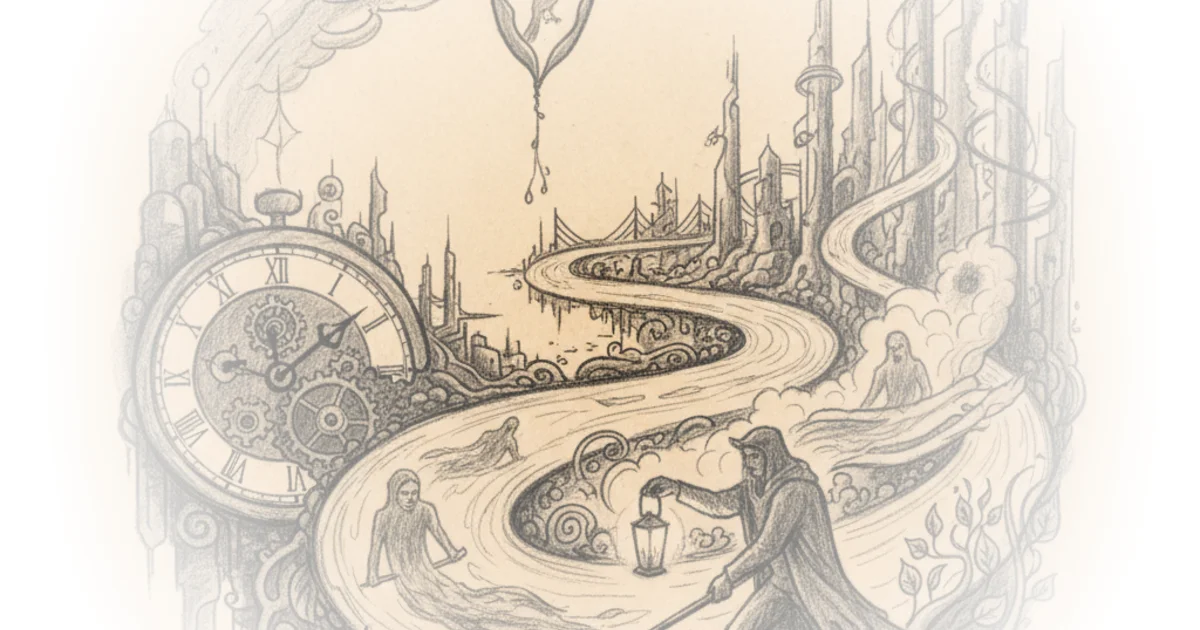
This framing is compelling because it moves beyond the usual complaints about digital distraction. Rowson suggests that the acceleration of time is only possible because we have surrendered space to a passive role. He cites David Harvey and Paul Virilio to show how speed kills depth, but then challenges the consensus. "As a discipline, Geography sees things differently," Rowson observes, introducing the work of Doreen Massey, who argues we have "needlessly accepted space as being inert and passive." This is a crucial pivot. By treating space as merely a container, we lose the ability to use it to resist the flow of time.
Critics might argue that this metaphysical turn is too abstract to address the very real, material drivers of acceleration like global supply chains or algorithmic trading. Yet, Rowson's point is that without a shift in how we perceive our environment, material changes will remain insufficient.
The Metaphysics of Resistance
The piece takes a fascinating detour into physics and Eastern philosophy to redefine what space actually is. Rowson leans heavily on Iain McGilchrist's The Matter with Things, quoting a passage that contrasts the relentless nature of time with the pliable nature of space. "Time is emotive; space is bland," Rowson writes, quoting McGilchrist, before immediately questioning this dichotomy. He points out that while time is single and irreversible, space is multiple and open to revision.
The most striking argument here connects the concept of mass to resistance. Rowson highlights McGilchrist's insight that "mass is the tendency of an entity to resist - changes in course or speed." From this, Rowson draws a profound conclusion: "nothing comes into existence except by means of resistance to flow." If space provides the mass that allows for resistance, then our modern crisis is essentially a failure to engage with space. We have created a "space-shaped hole in our metaphysics," leaving us with no way to push back against the juggernaut.
Perhaps the quintessential element of resistance is space, and we have created a space-shaped hole in our metaphysics.
Rowson then bridges Western science with Eastern traditions, specifically the Vedantic concept of Akash (ether or space). He contrasts the Western dismissal of ether after Einstein with the Indian understanding of space as a subtle holding phenomenon. "The air is in the space," his mother-in-law explains, a distinction Rowson finds vital. This isn't just poetic; it suggests that space is a "primary nutrient of soul food." He posits that mental illness and societal collapse are linked to a literal loss of space in our built environments and our attention spans.
Reincorporating the Jettisoned
The commentary culminates in a call to action that is less about policy reform and more about a shift in consciousness. Rowson suggests that the solution to the speeding up of modernity is not to destroy the juggernaut, but to slow it down by reclaiming space. He writes, "What if the injunction of our times is not to allow modernity to die, but to slow down the juggernaut by using space to resist the severing of time from space?"
This is a bold claim. It implies that practices like meditation, gardening, or simply "being in nature" are not just self-care but political acts of resistance. Rowson admits the piece is "not fully cooked" and "meandering," yet this very lack of polish serves his argument. He is modeling a different way of thinking—one that refuses to be efficient, one that allows for depth and detour. He urges readers to "learn to put the mind in the heart" and to ground themselves in practices that reconnect them to the local and the embodied.
A counterargument worth considering is whether this philosophical approach is accessible to those struggling with the immediate material precarity of modern life. For someone working three jobs, the luxury of "reconnecting with space emotionally" may feel out of reach. However, Rowson's argument is that the feeling of precarity is itself a symptom of the severed relationship with space, making the remedy as essential as the cure for the symptoms.
Bottom Line
Rowson's strongest contribution is the identification of "space" as the missing variable in our understanding of modernity's acceleration, transforming it from a passive backdrop into an active tool for resistance. The argument's vulnerability lies in its heavy reliance on metaphysical abstraction, which may struggle to translate into concrete political strategy for those demanding immediate systemic change. Readers should watch for how this reimagining of space influences future debates on urban planning, mental health, and the ethics of technology.
Perhaps only then can something new emerge: a modernity that is no longer a runaway engine, but a world we can finally inhabit.