Sabine Hossenfelder cuts through the noise of academic celebration to deliver a stark, data-driven warning: despite a massive surge in the number of scientists and publications, the actual rate of scientific breakthrough is collapsing. This isn't a story about eccentricity; it is a systemic diagnosis of why we are pouring more resources into research while getting less societal return, a paradox that threatens the very engine of future progress.
The Illusion of Growth
Hossenfelder begins by dismantling the comforting narrative that science is thriving simply because the numbers are going up. She points out that while the global population of scientists has risen steeply, this expansion has not translated into proportional innovation. "At first glance science seems to be doing exceptionally well," she notes, describing a landscape where literature doubles every few years and conferences offer free pens. Yet, she argues, this growth is a mirage. "All the effort that we put into science has fewer and fewer results."
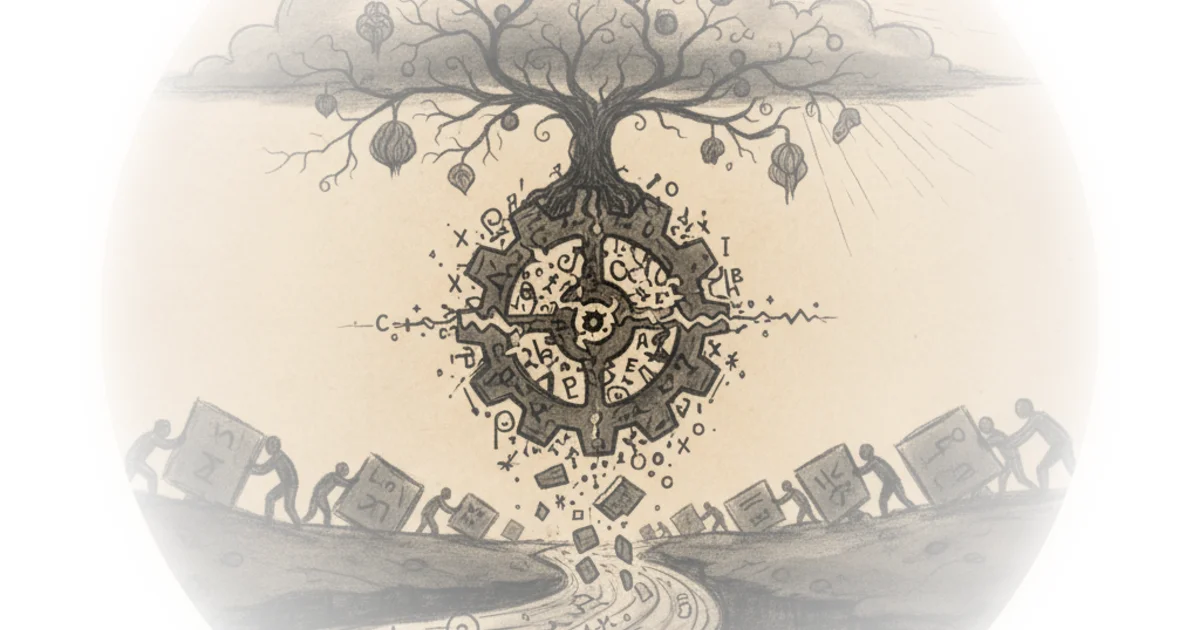
The evidence she marshals is compelling because it spans multiple disciplines. She cites economic data showing that total factor productivity has remained flat for decades despite surging research and development spending. In agriculture, more researchers have not yielded higher crop yields. In medicine, the number of new drugs approved by the Food and Drug Administration has dropped even as the workforce expanded. As Hossenfelder puts it, "we put more effort into research in terms of money and people but it just barely keeps the growth stable."
This disconnect is further illuminated by an analysis of 45 million papers, which found that "the number of disruptive ideas has noticeably gone down in many areas of science including the physical sciences chemistry computer science science and biom medicine." The data suggests a global phenomenon, not an isolated American failure. Critics might argue that measuring "disruptiveness" is subjective, but Hossenfelder counters that the trend holds regardless of the metric used. "Regardless of how they look at it they always find the same thing when it comes to research we're making increasingly more effort for Less in return."
The Low-Hanging Fruit Myth
A common defense against this decline is the idea that we have simply exhausted the easy discoveries. Hossenfelder rejects this fatalism. She references the argument that "the simple things have been done the low hanging fruits have been picked," but finds it implausible as a sole explanation. "The data Clearly say that it's an overall effect that happened at the same time in many different disciplines countries and economic sectors," she writes. If the problem were merely the nature of knowledge itself, the decline would not have hit agriculture, drug development, and physics simultaneously in the 1960s and 70s.
Instead, she suggests the issue is structural. The current system, dominated by academic research and bureaucratic funding, has lost the shared sense of purpose that drove the Apollo era. "What was different in the US during World War II and after with the Apollo missions... was a shared sense of purpose and enormous pressure," she observes. Without that urgency, the machinery of science has become sluggish. "Something went wrong in the 1960s or '70s globally it's a systemic problem."
Something went wrong in the 1960s or '70s globally it's a systemic problem.
The Bureaucracy Trap
If the problem isn't a lack of ideas or funding, what is it? Hossenfelder turns to the administrative burden that now strangles innovation. She highlights the frustration of venture capitalists and tech leaders who see bureaucracy as the primary blocker. She recounts a story from Elon Musk regarding SpaceX, where regulators demanded absurdly specific data on shark and whale densities before allowing a rocket launch. "We had to do the whale analysis and it's like okay yeah the whales will be fine too," Hossenfelder paraphrases, illustrating the absurdity of risk-averse regulation.
This sentiment is echoed by figures like Patrick Collison, who launched "fast grants" to bypass the slow, rigid grant-making processes of agencies like the National Institutes of Health. Hossenfelder describes the current academic grant cycle as a nightmare of compliance: "first you have to apply for Grants then you have to account for them then you have to write reports about what you did with them then you have to write reports on other people's reports and then you retire." This system incentivizes safety over discovery. With fierce competition for limited funds, researchers are forced to pursue "lowrisk mainstream research" rather than risky, transformative ideas. "This encourages them to pursue lowrisk mainstream research and plausibly explains the lack of novelty and disruptive ideas," she concludes.
Bottom Line
Hossenfelder's most powerful contribution is her refusal to accept the "low-hanging fruit" excuse, instead pointing a finger at the institutional sclerosis that prioritizes administrative compliance over genuine discovery. Her argument is strongest when she connects disparate data points—economic productivity, patent novelty, and drug approvals—to reveal a unified crisis of diminishing returns. However, her analysis leaves the ultimate solution somewhat open, noting that while bureaucracy is a clear culprit, the incentives for risk-aversion are deeply embedded in the funding ecosystem and will not be easily unraveled. The reader is left with a sobering realization: we are working harder than ever, but the system is designed to keep us running in place.