In an industry obsessed with the glossy finish of a grand opening, Emily P. Freeman offers a rare, unvarnished look at the chaotic reality behind the scenes. While most narratives focus on the culinary triumph, Freeman centers the story on the psychological toll of simultaneous expansion and contraction, arguing that the most critical ingredient for survival isn't a secret sauce, but radical self-grace. This piece matters because it strips away the romanticism of entrepreneurship, replacing it with a practical manual for managing the inevitable financial and emotional surprises of the trade.
The Cost of Imperfection
Freeman immediately dismantles the illusion of predictable budgeting, noting that "It's going to cost more than you think it will." She illustrates this with the brutal reality of renovating a second-generation space, where even a simple plan to "just paint" escalated into five-figure machinery replacements. The author's observation that "the only guarantee is that there WILL be surprises" serves as a stark counter-narrative to the polished case studies often found in business literature. By admitting to her own physical reaction to stress—"my waistline tends to expand in proportion to my stress"—she humanizes the high-stakes environment of restaurant management, making the financial strain feel visceral rather than abstract.
The argument extends to the psychological burden of decision-making, where choosing a paint color becomes a proxy for deeper insecurities. Freeman writes, "Choosing a shade of white paint can be harrowing and can invoke your deepest insecurities and self doubt." This framing is effective because it reveals how the minutiae of construction can paralyze even experienced operators. However, critics might note that while this vulnerability is relatable, it risks romanticizing the exhaustion of the owner who feels compelled to "bathe in" grace rather than addressing the systemic inefficiencies that cause such delays. The solution of ordering oversized sweatpants via delivery, while practical, highlights a broader issue: the lack of time for basic self-care in a sector that demands total immersion.
Perfect is the enemy of good. If your product is good people aren't going to be paying attention to the lack of decorative lighting and art.
The Mechanics of Opening and Closing
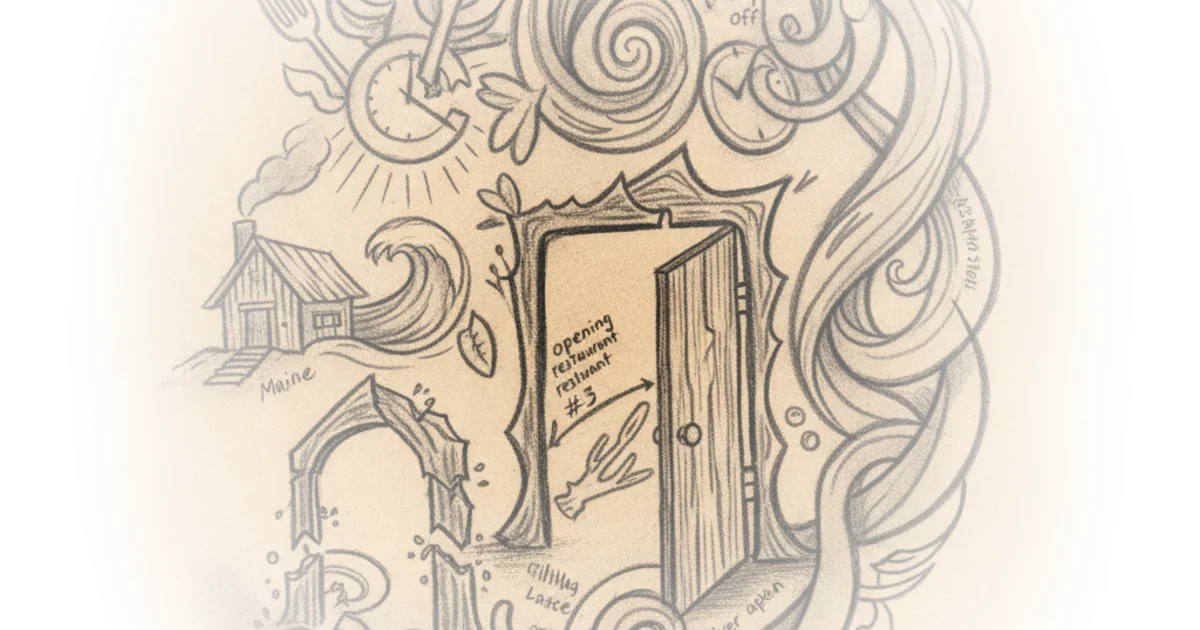
Moving beyond the emotional, Freeman tackles the logistical paradox of opening a new location while dismantling an old one. She argues that "It's going to be more work than you think," recounting a scenario where contractors left a job half-finished, forcing a "third time" cleanup just before the intended launch. Her solution is pragmatic: "Put a lockbox on the door. Give out the code freely." This advice challenges the traditional gatekeeping of commercial spaces, suggesting that trust and flexibility yield faster results than rigid oversight. The author's experience mirrors the operational complexities seen in the evolution of "virtual restaurants," where the physical footprint is minimized but the logistical coordination of delivery and preparation remains intensely demanding.
Freeman also addresses the fleeting nature of industry news, observing that "People move on quickly." She notes that even six weeks post-opening, the event feels like "old news," a testament to the accelerated pace of modern media consumption. This is a crucial insight for operators who might pin their success on a single press cycle. Instead, she advocates for a "reset" mentality, using the new space to "right the ship" by correcting overstaffing and swapping out inefficient systems. This aligns with the operational shifts seen in the "last mile" logistics of food delivery, where the speed of adaptation often determines survival more than the initial concept.
The Human Element in Business
Perhaps the most poignant section deals with the team dynamics. Freeman writes, "The team around you is either going to sink or swim," highlighting how the pressure of opening a new site reveals true leadership potential in staff like Jonathan and Zenai. She contrasts this with the isolation of working alone, noting that having real help made the process "significantly easier." Yet, she also confronts the inevitable backlash from the community. "Not everyone is going to be happy for you," she admits, recounting the mixed reactions to closing one neighborhood spot while opening another. This is a sobering reminder that business decisions, no matter how well-considered, will always have detractors.
The author's advice on dealing with city regulations is equally blunt: "Do not even try to understand the logic of what the city says you need to do. Just do it and play along like it makes sense." This resignation to bureaucratic absurdity is a common refrain among small business owners, yet it is rarely articulated so clearly. It underscores a systemic friction where innovation is stifled by outdated compliance frameworks. While some might argue this is an excuse to bypass due diligence, Freeman's context suggests it is a survival tactic in a landscape where the rules often lack internal consistency.
It is actually possible to get your security deposit back... deliver it that way and maybe you'll see your money back which can help to offset a bunch of those unforeseen opening costs.
Bottom Line
Freeman's strongest contribution is her refusal to separate the emotional labor from the financial logistics of restaurant ownership, proving that grace is a strategic asset in a high-stress industry. The piece's greatest vulnerability lies in its reliance on the author's specific resources and network, which may not be replicable for every operator facing similar crises. For the busy professional, the takeaway is clear: in a world of rapid change and constant pressure, the ability to pivot, accept imperfection, and prioritize the team is the only sustainable path forward.