In an era where animated explainers are trusted as the gold standard for science communication, a searing new critique exposes how billionaire funding may be quietly rewriting the narrative of global progress. The Hated One doesn't just question the motives behind popular educational content; they trace a direct financial pipeline from the world's wealthiest philanthropists to the data sources and specific policy solutions championed in these videos. This investigation forces a uncomfortable question: when the people paying for the research also own the stakes in the proposed solutions, is the audience watching education or a sophisticated marketing campaign?
The Architecture of Influence
The Hated One opens by dissecting a specific 2016 video that portrayed pharmaceutical giants as sudden heroes who voluntarily saved humanity from parasitic diseases. The author argues this narrative is a "whitewash take on real events" that "undesirably elevates the role of private entities." Instead of a spontaneous act of charity, the piece details how decades of neglect by corporations were only reversed after public pressure became unavoidable. The author notes that the initiative was actually driven by the World Health Organization, not the drug companies themselves, yet the video framed the corporations as the sole saviors.
The core of the argument is that this framing serves a specific financial interest. The Hated One writes, "this little stunt is really just a pocket change for them," pointing out that while the video highlighted a charitable donation, the pharmaceutical conglomerates took home nearly nine trillion dollars in profits over the same period. This evidence is compelling because it juxtaposes the heroic narrative with the stark reality of corporate balance sheets, suggesting the video's primary function was reputation management rather than historical accuracy.
This one video is the perfect culmination of everything that's wrong with billionaires funding media to get the coverage they need.
The author extends this critique to the funding model of the channel itself, revealing that what appears to be a viewer-funded independent studio is heavily subsidized by the Bill and Melinda Gates Foundation. The Hated One discovered a grant of $570,000 awarded in 2015, which they calculate covered the cost of at least eleven thousand dollars per video. This financial reality contradicts the channel's public persona as an independent voice. The author argues that this creates a structural conflict of interest where the content is inevitably aligned with the donor's agenda.
Critics might note that accepting grants does not automatically dictate editorial content, and many reputable organizations rely on foundation support. However, the author counters this by showing a pattern of specific topics—such as nuclear energy and alternative meats—that align perfectly with the donor's investment portfolio, suggesting the influence is more subtle than direct censorship but equally effective.
The Data Trap
Perhaps the most damning section of the piece is the investigation into the data sources used by the channel. The Hated One identifies a heavy reliance on "Our World in Data," a publication heavily funded by the same billionaires who sponsor the videos. The author points out that the channel cites this single source dozens of times, creating an echo chamber where the data and the narrative reinforce each other without independent verification.
The argument here is that the data itself is manipulated to fit a specific optimistic worldview. The Hated One writes, "many of the numbers from our world in data curses that relies on so much are complete garbage." They illustrate this by challenging the channel's claims about the decline of global poverty. The author explains that the data relies on the World Bank's definition of extreme poverty at $1.90 a day, a threshold that scholars argue is too low to reflect reality. If a more realistic line of $7.40 a day is used, the dramatic decline in poverty disappears, replaced by stagnation or even an increase.
The nature of innovation and Innovation the more time we give Innovation and Innovations like artificial meat the standards for equality of such data is profoundly lowered.
This section is particularly effective because it moves beyond accusing the channel of lying to showing how they are using flawed metrics to construct a misleading truth. The author highlights how this data manipulation serves to downplay the role of developed nations in climate change and overstate the viability of unproven technologies like carbon capture. The Hated One notes that these specific technologies are not just random scientific topics but are areas where the billionaire sponsors have invested millions, yet the videos present them as the definitive solution without disclosing the financial stakes.
The Silence on Conflicts of Interest
The final pillar of the critique focuses on the lack of transparency. The Hated One observes that the channel rarely discloses its sponsors until the very end of a video, if at all. The author writes, "Curtis Act is terrible at disclosing their sponsors," noting that most viewers would prefer this information at the start or during the introduction. This delay prevents the audience from contextualizing the information they are receiving.
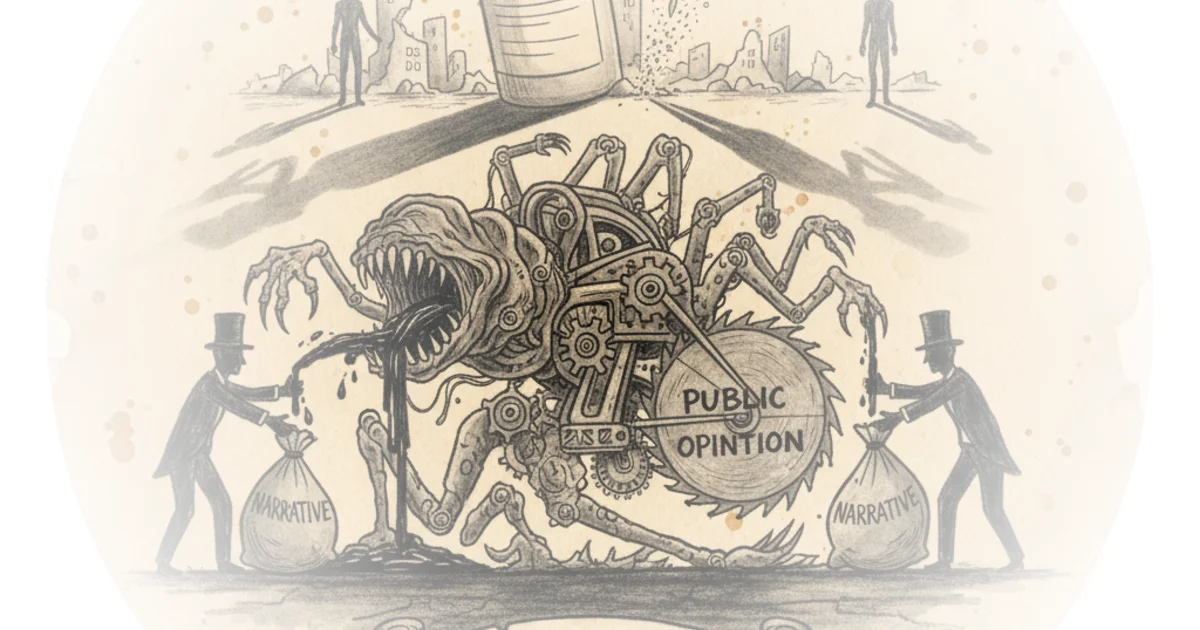
The author argues that this opacity is not accidental but a feature of the business model. By keeping the funding sources hidden until the last few seconds, the channel maintains an illusion of impartiality while advancing the interests of its backers. The Hated One points out that even when the channel discusses controversial topics like organic food or the safety of GMOs, the sources cited are often linked to the same network of billionaire-funded institutions. The author concludes that this creates a system where "the ultra wealthy are pouring hundreds of millions of dollars into media companies... to rig every step of policy making in their favor."
Critics might argue that the channel still provides valuable educational content and that the funding allows them to produce high-quality animations that would otherwise be impossible. Yet, the author's evidence suggests that the cost of this production is the uncritical promotion of the donors' specific economic and political interests, turning public education into a vehicle for private agenda-setting.
When billionaires want to open up the markets for their trade they'll fund media outlets that tell the audience how important Investments Innovations and economic growth are.
Bottom Line
The Hated One's investigation offers a necessary corrective to the uncritical acceptance of popular science media, demonstrating how financial incentives can subtly warp the presentation of global issues. While the argument relies heavily on the assumption that funding inevitably leads to bias, the specific examples of data manipulation and topic selection provide a strong case for greater transparency in educational content. The strongest takeaway is not that the channel is a fraud, but that the ecosystem of billionaire-funded media has created a feedback loop where the solution to a problem is always the one that generates profit for the person who paid for the research.