Eugene Sledge served in the First Marine Division during some of the most brutal combat in history. He fought at Peloo and Okinawa, experiences that would transform him into one of the most honest chroniclers of war. His book "With the Old Breed" became a classic, but as Dan Carlin explains, there was much more to the story.
The Book That Was Never Complete
When Henry Sledge reached out to Dan after mentioning his father on the show, he was working on something significant. Dan had encouraged him to continue writing and publish the work. "With the Old Breed" first appeared in the 1980s, around 83-84, and readers immediately recognized its power.
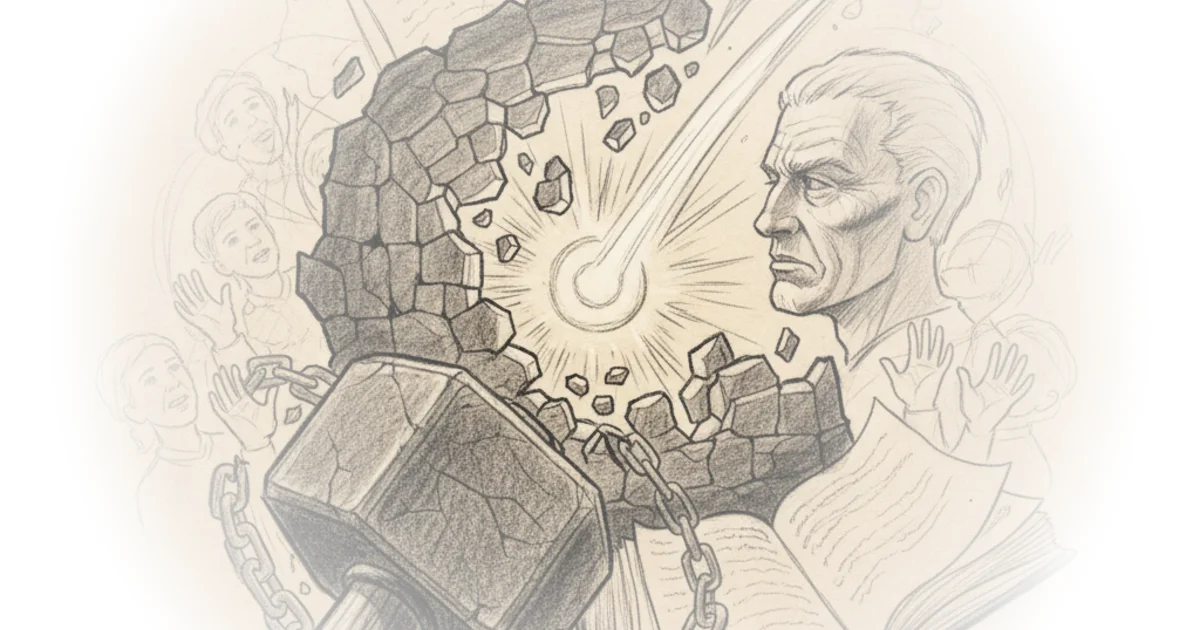
The book runs about 300 pages. What most people don't know is that the publisher limited it to roughly 300 pages, leaving out substantial material. Eugene Sledge had written extensively for his family—a healing exercise, really—detailed accounts of his experiences that simply never made it into print.
"He was writing it down for his family and to sort of, you know, it's an exercise in healing."
The publisher wanted only 300 pages. The rest remained hidden until Henry Sledge decided to include everything his father had written.
A Marine in the Pacific War
Eugene Sledge was a First Marine Division veteran who fought at Peloo and Okinawa—two of the most devastating battles in American military history.
Peloo is a tiny coral reef where the United States lost 1,252 men, with almost 5,000 wounded. Twelve thousand Japanese soldiers perished on that small spit of land. Okinawa was something else entirely—a large island with different weather, flora, fauna, and civilians. The casualties were staggering: 50,000 for the US, roughly 12,500 killed, while Japan lost nearly 95,000.
These numbers barely capture what these men faced. The Pacific theater demanded everything from its fighters in ways the European theater never did.
Two Theaters, Two Enemies
The challenges differed dramatically between theaters. In the European theater, American forces fought against a technologically sophisticated enemy—German equipment was often superior to American gear. The Germans organized more efficiently around machine gun sections and other military innovations.
The Pacific presented different horrors. The Japanese Navy was fantastic and sophisticated, though their army lagged behind somewhat. What they lacked in technology, they compensated with attitude—their willingness to throw lives away for trivial gains and their unquestioning obedience to authority made them terrifying opponents.
Eugene Sledge described the enemy as having two shifts: the day shift harassed Marines during daylight hours, then retreated to caves to sleep while the night shift emerged from those caves to crawl toward foxholes with bayonets in their teeth. This wasn't horror in abstract terms—it was visceral, constant, and deeply personal.
One of the most heartbreaking incidents involved Japanese soldiers sneaking into foxholes at night. Two Marines would share a hole—one sleeping, one on guard. In one incident, a Marine fell asleep while on watch. A Japanese soldier crawled in, creating chaos with knives. The sleeping Marine jumped up, ran out of the foxhole, and was immediately shoveled in the head by another Marine who thought he was the enemy—then shot in the head for good measure.
This is why Sledge's book hits so hard. It shows war as it actually was: chaotic, terrifying, and sometimesabsurd.
The Man Behind the Memoir
Henry Sledge grew up with a father who was both a hero and someone forever changed by conflict. He describes sitting in their living room, seeing the 3rd Marine Division insignia on the mantel, watching his father write late at night on legal pads by the fireplace—working on something for his sons.
His earliest memories include awareness that his dad served in the First Marine Division, in the Pacific. The war interrupted Eugene Sledge's life, and he had to pick up where he left off when he came home—struggling to be a productive member of society with the weight of everything he'd witnessed.
One of the best documentaries on the Pacific War is "Hell in the Pacific," a British production still available online. In it, Eugene Sledge's voice is the very first heard—he describes how lawmakers who send troops to combat don't know what it's like, not even those 100 yards behind the front line.
There's a story about coming home and applying for jobs. A woman asked what skills he learned in the Marine Corps. He answered with M1 rifle, 45 caliber pistol, machine gun, flamethrower—qualifications she'd never heard of. Her response was confused: "What are you doing? I'm talking about academic credit."
"Lady, there was a killing war going on and I was one of the ones who had to do some of the the killing."
She was embarrassed. He responded with understanding.
The Rest of the Story
Henry Sledge's new work includes everything left out of the original book—material his father wrote for family healing. His voice weaves between bold print (the father's words) and regular print (his own connecting material).
The conversation reveals what happened after Eugene Sledge came home, how he picked up dreams interrupted by war, how he worked out life with a background no one could fully understand.
This isn't just about military history. It's about the human cost of conflict—the things that couldn't be published in 300 pages, the stories too raw for initial release, the experiences that needed decades to process before becoming something others could read.
Critics might note that focusing on individual trauma risks softening the broader historical context—these soldiers weren't simply victims but participants in a massive historical event. The counterargument is that personal accounts often reveal more truth than strategic analysis ever could.
Bottom Line
This conversation offers something rare: access to the complete story behind one of America's finest war memoirs. Dan Carlin's interview with Henry Sledge reveals what was omitted from "With the Old Breed"—the full weight of what Eugene Sledge experienced and carried home. The strongest part is its honesty; the vulnerability is that no amount of detail can fully capture what combat actually felt like. For readers willing to listen, this is where war memoirs become most human.