The Hated One delivers a chilling diagnosis of a surveillance shift that has already begun: the era of relying on facial recognition is ending, replaced by a more insidious system that identifies you by your shoes, your gait, and the very shape of your body. This piece is notable not just for its technical specificity regarding tools like Veritone's "Track" and the government-funded "Farsight," but for its terrifying assertion that the data fueling this totalitarian machinery is being voluntarily uploaded by the public on social media platforms. In an age where privacy is often treated as a luxury, this argument reframes it as the last line of defense against a state that can now see you without ever seeing your face.
The Death of Facial Recognition
The Hated One opens with a compelling correction to a common misconception, noting that in the high-profile case of Luigi Mangione, "the police were not able to track him down based on any kind of facial recognition." Instead, the author explains, law enforcement relied on a tedious manual process of matching clothing, accessories, and height. However, the core of the argument is that this laborious work is now being automated by a new generation of AI. The Hated One writes, "What I'm about to show you is an extremely powerful tool that automates this work beyond anything you could possibly imagine or might have seen in popular media."
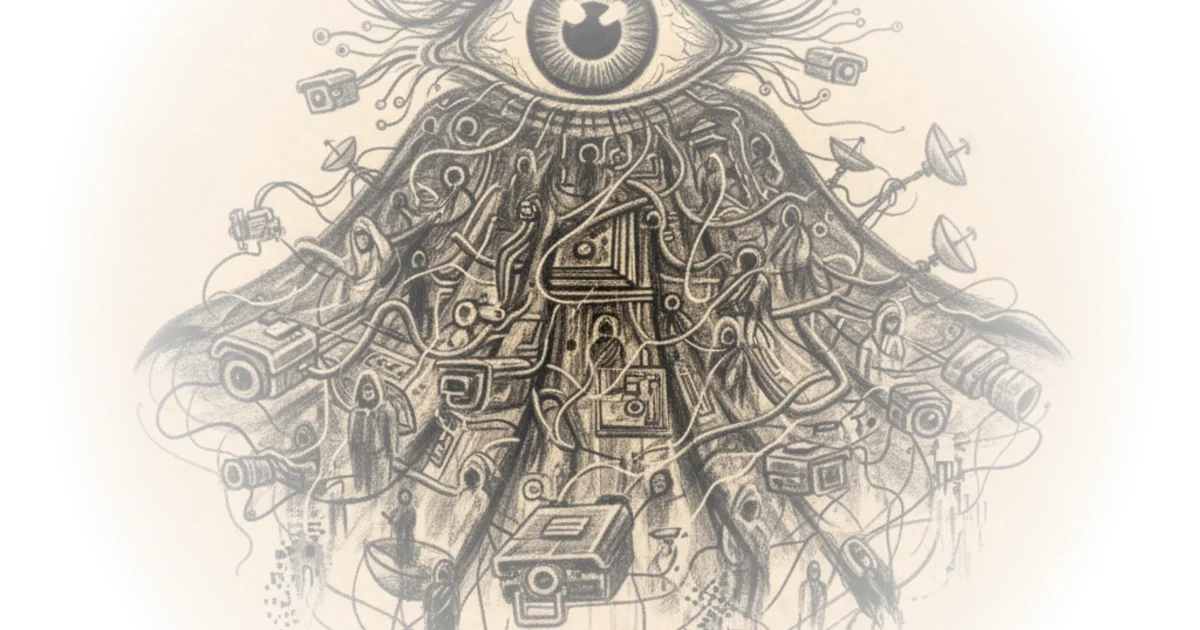
This shift from face to "whole body biometrics" is the piece's most critical insight. The author details how Veritone's "Track" software can follow a subject across different camera feeds by analyzing their gait, body, and footwear, rendering traditional countermeasures like wearing a hoodie useless. As The Hated One puts it, "Because track can follow so many features, it doesn't need to rely on faces at all." This is a devastatingly effective point because it highlights a loophole in current privacy laws; the author notes that "Track can be legally used even in cities and states that ban the use of facial recognition by the police." Critics might argue that the author overstates the immediate ubiquity of these tools, as full automation is still a year away, but the trajectory described is undeniably clear.
The Architecture of Total Surveillance
The commentary deepens as it examines the government's role in accelerating this technology through the Intelligence Advanced Research Projects Activity (IARPA). The Hated One describes a project called "Farsight," which combines gait, face, and a new "body recognition" feature that creates a 3D reconstruction of a subject's anatomy. The author writes, "Far side adds this third marker into the mix. Because it's relatively simple to thwart facial and gate recognition to offiscate your face without raising any suspicions, wearing a simple hoodie and thick shades, for instance, or maybe a scarf will do plenty."
This section effectively dismantles the illusion of anonymity. The author argues that while one can easily alter their walk or hide their face, "changing your body type cannot be easily done on the fly." The piece further implicates major tech corporations, suggesting that the US government is leveraging commercial data to build these systems. The Hated One states, "The most devastating part of this trajectory is that you have been unwittingly feeding the explosive growth of totalitarian surveillance by serving it your precious personal data on a silver platter." This is a powerful rhetorical move, shifting the blame from abstract government overreach to the individual's daily digital habits. However, the argument glosses over the fact that many of these data points are collected not just by users, but by third-party data brokers who sell information regardless of user consent.
The government doesn't just stop at the social media. They are also purchasing information from large data brokers like Thompson Reuters and Lexus Nexus. Now they store up to 10,000 data points on every single individual in that database.
The Feedback Loop of Polarization
Perhaps the most provocative element of the piece is the connection drawn between social media algorithms and the erosion of political resistance. The Hated One argues that the population is too distracted by "fake culture war distractions" to notice the encroachment of authoritarianism. The author writes, "But you've been deep to be too busy focusing on hating your fellow men. The solution is simple but hard. Stop living in a simulated reality and stop feeding the leviathan with your data."
The author contends that social media platforms are designed to create a "content casino" where users are hooked on dopamine hits, leaving them too exhausted to organize against the very systems that are watching them. As The Hated One puts it, "You're hooked, chasing that dopamine hit until you're too exhausted to continue, by which point you're too exhausted to do anything else either other than go to sleep so that you can wake up and go to work so that you can consume even more." This psychological analysis adds a layer of urgency to the technical threat, suggesting that the greatest vulnerability is not the technology itself, but the human mind's inability to resist algorithmic manipulation. A counterargument worth considering is that the author's call to abandon mainstream platforms for federated alternatives like Mastodon or Blue Sky may be impractical for the average user, potentially isolating them further rather than empowering them.
Bottom Line
The Hated One's strongest asset is the synthesis of specific, emerging surveillance technologies with a broader critique of digital behavior, creating a narrative that feels both technically grounded and existentially urgent. The piece's greatest vulnerability lies in its somewhat fatalistic tone, which assumes a population too brainwashed to resist, potentially discouraging the very civic engagement required to challenge these systems. Readers should watch for the 2026 deployment of fully automated live-video tracking, as that will mark the moment where the theoretical threat becomes an operational reality.
The goal post will always keep moving further and further. And so on and so on until one day within our generation, someone will inherit this absolute allseeing power and they will never give it up.