This piece cuts through the noise of tech antitrust coverage by focusing on a single, damning realization: the architect of Meta's empire knew for years that his strategy of buying rivals was a legal time bomb. The Hated One doesn't just report on the Federal Trade Commission's lawsuit; they weaponize Mark Zuckerberg's own leaked emails to show that the current monopoly charges were predicted, debated, and internally feared by the company's leadership long before regulators took action.
The Buy vs. Build Dilemma
The Hated One frames the core of the antitrust argument not as a complex legal theory, but as a simple, predatory business choice. The author explains that Meta faced two paths: innovate to compete or acquire to eliminate competition. The analysis suggests the latter was chosen specifically to avoid the risk of failure. "If you can buy them, then you have no competition," The Hated One writes, noting that this strategy allowed the company to decide whether to shut down rivals or monetize them at will. This is a sharp, accessible distillation of the "killer acquisition" theory that underpins the FTC's case.
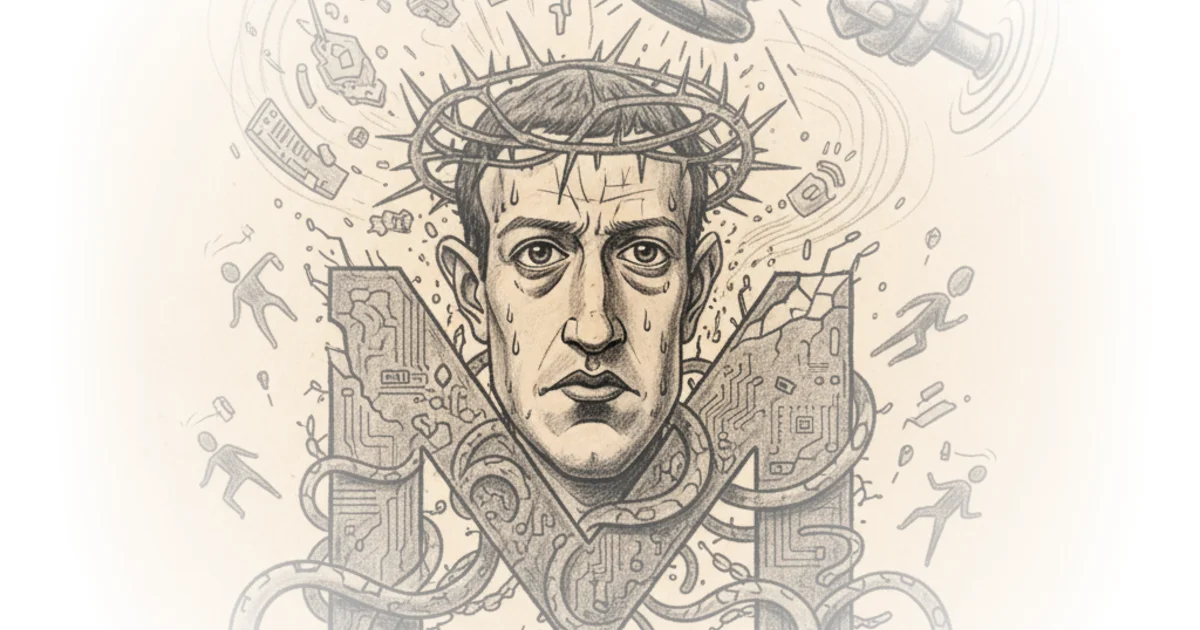
The commentary highlights the staggering scale of these purchases, pointing out that WhatsApp was bought for $19 billion despite having virtually no revenue and a privacy-focused encryption model that made it unmonetizable by Facebook's standards. The Hated One argues this proves the acquisition wasn't about current profits, but about neutralizing a future threat. "WhatsApp was becoming end-to-end encrypted... Facebook would not be able to monetize what you're writing about," the author notes, suggesting the purchase was purely defensive against a competitor that could not be beaten in the marketplace.
Critics might argue that the FTC's definition of the relevant market is too narrow, as Meta contends that TikTok and YouTube compete for the same user attention. However, the author pushes back, suggesting that the unique mechanics of TikTok make it a different beast, while the Facebook-Instagram dynamic remains a closed loop of dominance.
"If Instagram continues to kick ass on mobile or if Google buys them then over the next few years they could easily add pieces of their service that copy what we are doing now."
The Smoking Gun
The most compelling section of the piece relies on the leaked internal communications from 2011 and 2012. The Hated One uses these documents to demonstrate that Zuckerberg was acutely aware of Instagram's potential to cannibalize Facebook's user base. The author paraphrases the internal panic, noting that the leadership saw Instagram as a threat that could leave Facebook "very behind" in the mobile world. The strategy shifted from building a competitor to buying one. "He is saying that Facebook would be very behind on how its core use cases would evolve in the mobile world which is really scary and we might want to consider paying a lot of money for Instagram," The Hated One summarizes. This evidence transforms the lawsuit from a regulatory overreach into a case of corporate admissions.
The piece further strengthens its case by revealing that the company's own leadership considered the breakup inevitable. In 2018, Zuckerberg reportedly told executives that there was a "non-trivial chance" they would be forced to spin off Instagram and WhatsApp. The Hated One finds this admission particularly revealing, noting that the CEO was aware that the "family of apps" was a legal liability. "I wonder if we should consider the extreme step of spinning Instagram out as a separate company," the author quotes, highlighting the internal recognition that the current structure was unsustainable.
"While most companies resist breakups, the corporate history is that most companies actually perform better after they've been split up."
The Human Element
Perhaps the most distinctive angle The Hated One brings is the psychological portrait of the CEO. Rather than painting Zuckerberg as a cold, calculating algorithm, the author points to the CEO's emotional attachment to his acquisitions. The commentary finds it "hilarious" that Zuckerberg referred to the potential loss of these apps as a family tragedy. "He is literally going to cry over losing one of his apps because for him that's family," The Hated One observes. This framing serves to humanize the defendant while simultaneously underscoring the depth of his investment in maintaining the monopoly. It suggests that the resistance to breaking up the company is driven by ego and sentiment rather than just economic necessity.
The author also touches on the broader context of tech regulation, noting that the Trump administration initiated these investigations, which were then continued by the Biden administration. The piece draws a parallel to the Google antitrust case, where the government is also seeking structural remedies. The Hated One argues that the path forward for Meta is clearer than for Google because the assets are distinct, separate applications rather than integrated services.
Bottom Line
The Hated One's strongest contribution is the use of internal emails to prove that the monopoly was not an accidental byproduct of success, but a deliberate, calculated strategy of elimination. The piece's biggest vulnerability lies in its dismissal of the market definition debate; while the author argues TikTok is distinct, the legal outcome may hinge on whether courts view all social media as a single competitive arena. Readers should watch for whether the court accepts the "buy vs. build" evidence as proof of intent to monopolize, which could set a precedent for dismantling other tech giants.
"He is saying that Facebook would be very behind on how its core use cases would evolve in the mobile world which is really scary and we might want to consider paying a lot of money for Instagram."
The core of the argument is that the FTC's case is bolstered not just by market share data, but by the defendant's own admissions of fear and intent. The author effectively argues that the "family of apps" was built on a foundation of eliminating competition, and the leaked emails serve as the blueprint for the government's case. The emotional reaction of the CEO to the potential breakup adds a layer of irony to the legal proceedings, suggesting that the person who built the monopoly is now the one most afraid of seeing it undone.